
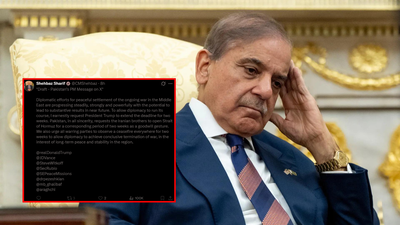
Pakistan Prime Minister Shehbaz Sharif briefly posted a “draft” message about the Iran conflict on his official X account on Wednesday, before quickly editing it. The post, which called for a two-week ceasefire and diplomatic pause, appeared just as the United States and Iran moved towards a temporary truce.The message initially appeared with the heading “Draft – Pakistan’s PM Message on X”, suggesting it had been posted prematurely. Although the label was quickly removed, the wording remained unchanged.
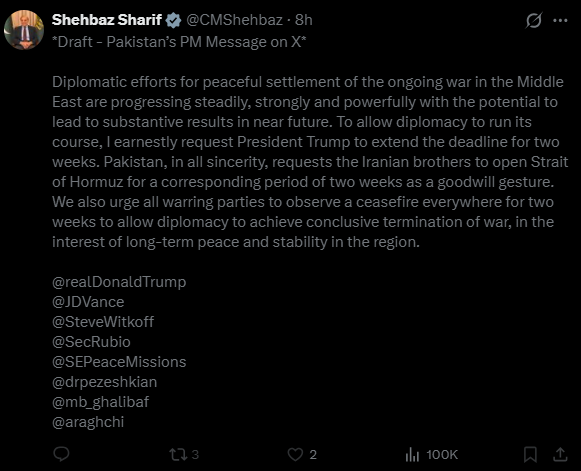
In both versions, Sharif urged Donald Trump to extend his deadline for military action by two weeks to allow talks to progress. He also appealed to Iran to reopen the Strait of Hormuz for the same period, describing it as a goodwill gesture. “We also urge all warring parties to observe a ceasefire everywhere for two weeks,” the post read, framing the pause as essential for “long-term peace and stability in the region”. Within hours, Washington and Tehran confirmed they had agreed to a two-week ceasefire, stepping back from the brink of a major escalation.The breakthrough followed a dramatic shift by Trump, who had earlier threatened sweeping strikes on Iranian infrastructure if Tehran failed to meet his demands. Instead, he paused planned attacks shortly before his own deadline, saying the decision was based on conversations with Sharif and Pakistan’s military leadership. “A two week period will allow the Agreement to be finalised,” Trump said, signalling cautious optimism.Iran’s Supreme National Security Council confirmed it had accepted the ceasefire and would begin talks with the United States in Islamabad. The deal reportedly includes provisions linked to the reopening of the Strait of Hormuz, a critical oil route that Iran had partially restricted during the conflict.However, uncertainty continues to cloud the agreement. Confusion emerged after Iran circulated differing versions of its proposed 10-point framework, particularly over references to its nuclear programme. Trump, who had initially described the plan as “workable”, later dismissed parts of it without elaboration.Despite the diplomatic momentum, violence has not fully subsided. Missile alerts and strikes were reported across the region, including in Israel and Gulf states, even after the ceasefire announcement. The US military has halted offensive operations but continues defensive actions, while Israel and Iran have both accused each other of ongoing attacks.