
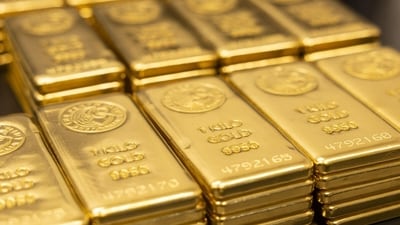
At the end of January 2026, gold prices hit an all-time high of $5,600. Post that, there was a big correction of around 20%. At the end of February 2026, Israel and the US attacked Iran, leading to a lot of economic uncertainty. Yet, gold prices haven’t seen much of an up move. In this article, we will examine why gold prices have corrected and continue to trade at lower prices despite the ongoing US-Iran War.
Gold’s role in times of uncertainty and inflation
Investors allocate money to gold for various reasons. However, two of the important reasons include:
- Safe haven during times of uncertainty
- Hedge against inflation
With its past performance track record, gold has earned a reputation as a safe haven during times of uncertainty and as a hedge against inflation. In the past, during times of war, pandemic, sovereign debt crisis, global financial crisis, etc., gold has performed well and rewarded investors who put their faith in it. Outperformance during such times has earned gold the tag of a safe haven during times of uncertainty.
Similarly, during times of high inflation, when paper money loses its purchasing power, people turn to gold. During such times, gold acts as a store of value. That has earned gold the tag of a hedge against inflation.
How has gold performed?
In the past, while gold has acted as a safe haven during times of uncertainty and a hedge against inflation, this time, it is not playing that role to its full potential. The US-Iran War, which has driven crude prices higher, has created significant uncertainty. Also, the high crude oil prices have started stoking inflation across the global economy. Yes, despite the global uncertainty and higher inflation, gold prices have corrected and have stayed subdued.

The chart above shows how gold prices peaked out at the end of January 2026. At the end of February 2026, the US-Iran War began and has been ongoing for the last more than 6 weeks. Yet, gold prices are subdued, trading in the $4,500 to $4,800 range.
Due to high crude oil prices, inflation has begun to rise in many countries. As a result, many global central banks that were in an interest rate-cutting cycle have either paused or are indicating that future interest rate hikes are likely. However, despite inflation rising, gold prices, which act as a hedge against inflation, haven’t moved up much.
Why are gold prices not moving up?
In the earlier section, we discussed how the US-Iran War has created economic uncertainty and how high crude oil prices are driving inflation higher. Yet, gold prices are not rising, as they have reacted in similar scenarios in the past. Some reasons why gold prices are not moving up include the following.
1. Central bank buying has slowed
Over the last few years, central banks of various countries have been the biggest buyers of gold. Over the three years from 2022 to 2024, central banks cumulatively bought more than 1,000 tonnes of gold every year. In 2025, they bought around 860 tonnes of gold.
However, so far in 2026, the gold purchases from central banks have slowed significantly. Infact, some central banks have sold gold. For example, the central banks of Russia, Turkey, and some others have sold some gold from their reserves in 2026. The central bank of Poland has indicated that it plans to sell some gold from its reserves.
So, when demand from the largest gold purchasers slows significantly, and some of them sell gold, it is bound to have an adverse impact on the gold prices.
2. US Dollar strength
There is an inverse relation between the US Dollar Index and gold prices. The strengthening of the US Dollar makes it expensive for foreign currency holders to buy gold, thereby reducing demand. Thus, when the US Dollar Index strengthens, gold prices fall.
Since the start of the US-Iran War, the US Dollar Index has strengthened. The strengthening of the index may have partly contributed towards the fall in gold prices.
3. Rise in Government bond yields
The US-Iran War led to a spike in crude oil prices, raising fears of increase in inflation. As a result, US 10-year Treasury yields climbed from around 3.96% at the start of the war to levels of 4.44%, before cooling to some extent. Along with the US, the yields on Government bonds increased in many other countries.
When the yields increase, some investors prefer to shift money from gold to Government bonds. With attractive yields available, some investors prefer allocating fresh money to Government bonds rather than gold. Gold is a non-interest earning asset. The rotation of some money from gold to Government bonds, and allocation of some fresh money to Government bonds rather than gold, may have partially contributed to the fall in gold prices.
4. Price correction after 2 years of rise
Over the last 2 years, gold prices have risen sharply. In April 2024, gold prices traded around levels of $2,300. From there, over the 2 years, the prices more than doubled, topping out at around $5,600 before cooling down to the current $4,500 to $4,800 range.
So, while the current around 20% price correction may look huge, one should note it has come on the back of a more than 100% rise. After such a huge rise, giving up some gains is expected. Even after the recent correction, the gold prices are far higher than last year or the last couple of years.
The current scenario of the US-Iran War, US trade war, economic uncertainty, and fears of rising inflation, among other factors, creates a perfect environment for gold prices to rally. Yet, gold prices have corrected due to the combination of factors we have discussed. If and when central banks, the biggest gold buyers, start purchasing gold in adequate quantities cumulatively, the gold price may start rising again.
What should investors do?
As an investor, you must follow the asset allocation strategy. You may allocate a small portion (5% to 15%) of your overall investment portfolio to gold. If you are accumulating a specific quantity of gold for a financial goal, such as marriage, consider buying gold ETF units regularly or starting a SIP in a gold mutual fund.