
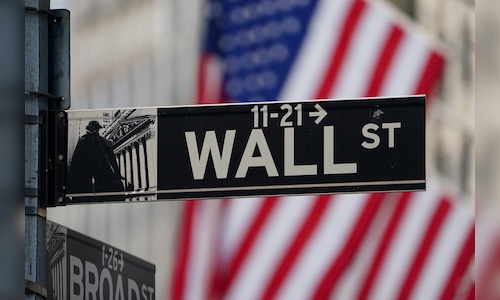
A global risk-on surge swept across Wall Street after Iran declared the Strait of Hormuz “completely open” for commercial traffic, erasing much of the fear that had gripped energy and equity markets through weeks of Middle East conflict.
Brent crude dipped below $90 for the first time in more than a month, and the dollar slid against every major peer — even as the contours of any US-Iran deal remained unresolved.
The Hormuz news removed the last major overhang from a market that had been grinding higher despite the war. A fresh wave of AI enthusiasm, a stronger-than-expected earnings season and growing bets that the Federal Reserve will cut rates again before year-end had already powered the S&P 500 Index toward its biggest monthly advance since 2020 — even as the US campaign against Iran entered its seventh week. With the Strait now reopening, economists said the risk of a prolonged oil shock dragging on global growth has sharply receded.
Some on Wall Street suggested investors exercise caution and wait for a fully flushed out deal and other details to emerge.
“I would not be trading on these headlines,” Victoria Fernandez, Crossmark Global’s chief market strategist, told Bloomberg Television. “Let’s see how these things progress and then next week you can start to do some shifts to put a little bit more risk in your portfolio.”
The S&P 500 rose 1.2% Friday, notching a third week of gains of more than 3%. The Nasdaq 100 logged a 13-day winning streak, fueled by a rally in semiconductor companies riding the AI wave, the longest stretch of gains in nearly 13 years.
Oil prices fell after a social media post attributed to Iran’s foreign minister said the passage for commercial vessels through Hormuz, a critical chokepoint for global energy supplies, was open. A 10-day ceasefire between Israel and Lebanon is also in effect.
Separately, President Donald Trump said a naval blockade will remain in full force and in effect until a deal is reached. The president previously claimed that Iran has made key concessions in negotiations with the US. Axios reported that one element under discussion involved the US releasing $20 billion in frozen Iranian funds in exchange for Tehran giving up its enriched uranium stockpile. Trump later posted “no money will exchange hands in any way, shape, or form.”
Sarah Bianchi at Evercore ISI expects long-term risks, including the status of Iran’s nuclear program, to linger.
“The Iran crisis appears to be moving toward a tentative and fragile resolution that, even if reached, will leave many core issues unresolved even as it alleviates some near-term market overhang,” Bianchi, a former trade official, wrote.
Some Gulf Arab and European leaders said that a US-Iran peace deal could take about six months to come together. Treasury yields dropped with the rate on the benchmark 10-year down to 4.24%.
“Now that the dust appears to be settling on events in the Middle East, market attention will once again focus back on the fundamentals, in particular earnings given that the season has just started,” said Daniel Murray, deputy chief investment officer at EFG Asset Management. “Earnings expectations are buoyant, consistent with solid underlying macro trends.”
Turning Tides
It took the S&P 500 just 11 days to lurch from an oversold reading to Thursday’s arrival in overbought territory. That has only been outpaced by a rally in 1982. Explanations for the abrupt change in momentum point to a combination of hedge unwinding, systematic buying and short covering by hedge funds in macro products.
While the Nasdaq’s winning streak has propelled the index to fresh all-time highs, tech valuations remain near their 10-year average. Earnings estimates have been rising in concert with stocks, keeping forward price-to-earnings ratios at low levels.
“This reset provides a more constructive entry point in equities, particularly across large-cap quality growth,” said Scott Rubner, Citadel Securities head of equity and equity derivatives strategy.
Netflix Inc. slumped after an underwhelming forecast. Alstom SA shares slid the most in over two years in Paris after the manufacturer withdrew financial guidance for this fiscal year. An index of Asian shares snapped a three-day streak of wins.
Next week, in addition to tracking progress on a peace deal ahead of the Tuesday expiry of the US-Iran ceasefire deal, traders will be watching a confirmation hearing for Kevin Warsh, Trump’s nominee to lead the Federal Reserve.
Warsh’s comments could indicate if he plans to pressure central bank members to cut interest rates this year, according to Ian Lyngen at BMO.
“We maintain that the direction on monetary policy rates at this stage in the cycle will be dictated by the performance of the real economy during the spike in energy prices,” BMO’s head of US rates strategy wrote. “It’s much too soon to estimate the extent of the damage done to the global economy and how higher energy costs will impact the US consumer.”