
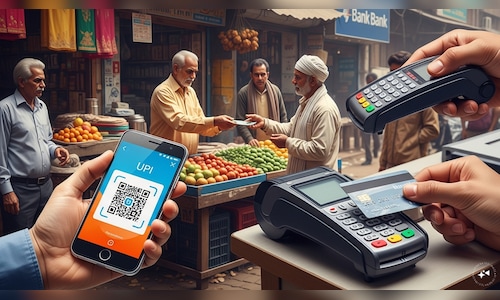
UPI accounted for about 81% of digital retail payments in FY25, according to industry estimates, supported by rapid merchant onboarding, near-universal QR adoption, and expanding smartphone penetration.
In March 2026, the platform processed 22.64 billion transactions, reflecting continued growth in both peer-to-peer and merchant payments.
UPI consolidates position in everyday transactions
Industry participants say UPI has become the default mode of payment for everyday purchases, particularly in retail, dining, and small merchant transactions, where ease of use and low transaction costs have driven adoption.
Raman Khanduja, CEO and Co-founder of Mintoak, said the shift reflects a structural change in payment behaviour.
UPI now processes over 13 billion monthly person-to-merchant transactions, significantly exceeding card-based volumes, he said. Debit card usage at merchant outlets has declined sharply over the years, falling from about 250 million transactions in February 2017 to around 90 million in February 2026.
He added that banking access expansion, smartphone penetration, policy measures, and widespread QR deployment have contributed to UPI’s position as a default retail payment method.
Debit cards decline; credit cards remain concentrated in high-value use cases
The impact of UPI has been most pronounced in debit card usage, which industry experts say is limited to ATM withdrawals and specific legacy use cases.
Arbaaz Jamal, Director and COO at InstiFi, said UPI has replaced debit cards in most low- and mid-value transactions due to its cost efficiency and acceptance infrastructure.
At the same time, he noted that credit cards continue to retain relevance in categories such as travel, premium retail, and large-ticket purchases, where credit access, reward structures, and EMI options remain key drivers.
Credit cards are therefore maintaining a differentiated position in the ecosystem rather than experiencing uniform displacement.
Cards retain role in premium and credit-linked consumption
Experts across the sector emphasised that cards continue to play a distinct role in high-value and structured-credit transactions.
Dilip Modi, Founder and CEO of Spice Money, said credit cards remain relevant for use cases such as travel bookings, subscription services, EMI-based purchases, and premium consumption categories, where rewards and credit availability influence payment choice.
He noted that the established loyalty ecosystems and consumer trust associated with cards continue to support their usage in specific segments.
Convergence between UPI and credit instruments increases
A key development shaping the payments landscape is the increasing integration between UPI and credit products, particularly through RuPay credit cards and credit-on-UPI functionality.
Akash Sinha, CEO and Co-founder of Cashfree Payments, said the relationship between UPI and cards is evolving toward convergence rather than substitution.
He noted that UPI now accounts for a significant share of retail payments, while cards continue to serve specific use cases such as high-ticket spending and reward-driven consumption. Initiatives such as RuPay credit card integration with UPI and credit lines on UPI are expanding access to formal credit through UPI interfaces.
As of early 2026, approximately 16% of credit card spending flowed through RuPay, with a substantial portion routed via UPI channels, according to industry estimates cited by executives.
Outlook: Differentiated coexistence across payment rails
Industry experts expect UPI to continue expanding its share in everyday and mid-value transactions, while credit cards retain their position in premium and credit-intensive categories.
Debit cards are expected to see further structural decline in merchant transactions, while credit cards are likely to persist due to their role in structured credit, rewards, and high-value spending.
At the same time, experts indicate that the ecosystem is moving toward greater integration, with credit products layered onto UPI infrastructure, leading to a more interconnected rather than competitive payments landscape.
ALSO READ | Travelling out of India: You may need to file Form 157 in these cases