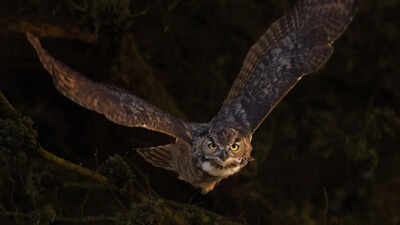
Great horned owls are one of those birds people think they know until they actually see one up close. Big eyes, ear tufts, and a heavy, almost cat-like presence. Their size often surprises people, especially when they are perched silently in a tree at dusk. These owls live across a huge range in the Americas and seem to adapt to almost any environment. Experts say they are among the most widespread owls in the region. Still, the question most people ask first is simple: how big do great horned owls actually get, and what is their wingspan like in real life? The answer is a bit more varied than expected, depending on sex, region, and subspecies. Great horned owls are bigger than most people expect, especially when seen in real life instead of pictures. Thick bodies, wide wings, and a calm but powerful presence. Size, wingspan, and silent movement work together to make them one of the most efficient predators in the skies.
Great horned owl size , weight, and regional differences
Great horned owls are not tiny forest birds at all. They are solid, bulky raptors. Most adults measure somewhere between 18 and 25 inches in length. That’s roughly the size of a small hawk, maybe even bigger when seen stretched out on a branch. Weight is where things get interesting. They can be as light as 2 pounds, but some females push up to around 5.5 pounds. Females are usually the heavier ones. They just grow bigger, more powerful. Males stay a bit smaller, a bit leaner.Regional differences matter too. Owls in colder northern regions, like parts of Canada or Alaska, appear bulkier. Warmer-region birds can look slightly smaller. Not a strict rule, but experts say it shows up often enough.
How big is a Great horned owl’s wingspan
The wingspan is where people really pause. Great horned owls can stretch from about 3.3 feet to nearly 4.75 feet across. That’s almost human arm-span territory in the larger individuals. The shape is broad and rounded. It gives them that slow, floating flight style that people often notice at night. They don’t look fast in the air, but they don’t need to be. That weight range isn’t just numbers on paper. It actually affects how they behave. Heavier females tend to dominate in hunting and territory. The difference also shows up when they land. A heavier owl makes a more noticeable drop onto branches or prey. Still quiet, but you can sometimes sense the force behind it. Subspecies play a role, too. There are reportedly around 15 recognised subspecies. The Subarctic ones in Canada are often described as the largest. Smaller populations exist in warmer regions, and they just don’t carry the same bulk.
How far Great Horned Owls spread and how fast they fly
Great horned owls have a huge range. North America is their stronghold, from Alaska all the way down into Mexico. But they don’t stop there. They stretch into Central and South America, too. One can find them in forests, deserts, open fields, and even city outskirts. It almost feels like they don’t care too much about the setting, as long as there’s food and a place to hide during the day. Their flight is another part of their size story. Despite being heavy birds, they move with surprising silence. Feather structure plays a big role here. Soft edges, fine serrations, all of it reduces sound in the air.They can fly around 25 mph normally, sometimes pushing up to 40 mph when needed. Not the fastest birds in the sky, but speed isn’t really their strategy.