Brent crude closed at $108 a barrel overnight after a 2% advance, while the US Crude variant, West Texas Intermediate (WTI) is currently trading near the $97 a barrel mark.
Reports indicate that US President Donald Trump convened a meeting to discuss Iran’s proposal but maintained red lines on any deal, including preventing Iran from obtaining a nuclear weapon.
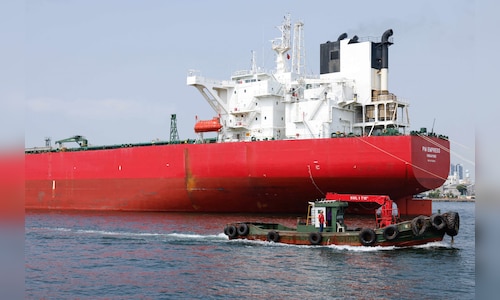
Despite a ceasefire being in place for most of the month, a blockade by the Strait of Hormuz which both the US and Iran claim to have enforced, the daily transit of ships through the key energy chokepoint has come down to near-zero. Crude, natural gas and oil product flows have all been impacted, thereby raising prices and stoking fears of inflation.
According to Iran’s media, Foreign Minister Abbas Araghchi would convey to Pakistan that the conflict could end if the US lifts its blockade, agrees to a new legal framework for traffic transit through the strait and issues a guarantee that Iran will never face any military attack in the future.
US Secretary of State Marco Rubio indicated that Iran still wants to retain control of the Strait of Hormuz, which technically is International Waters, and that is something not acceptable to the US.
Meanwhile, Goldman Sachs now expects oil prices to average around $90 a barrel in the fourth quarter of the current financial year, higher than its previous forecast of $80. The firm now sees Gulf exports normalizing only by end-June from mid-May earlier. On the flip side, Morgan Stanley sees oil average $110 a barrel this quarter, $100 in the next and $90 in Q4.
(With Inputs From Agencies)