
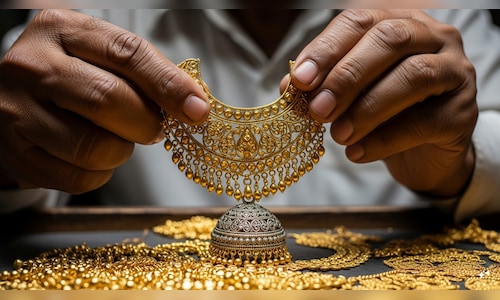
On the Multi Commodity Exchange of India, gold prices edged higher but remained below the ₹1.49 lakh per 10 gram mark, while silver traded lower, struggling to hold above ₹2.43 lakh per kg.
The domestic trend mirrored global markets, where spot gold hovered around $4,530 per ounce after declining more than 2% in the previous session. Spot silver remained below $73 per ounce, indicating subdued momentum across precious metals.
Analysts said domestic bullion is being shaped not just by global price trends but also by currency movements, which are cushioning volatility in rupee terms.
“Gold pricing is influenced by the inverse relationship between the US dollar and bullion. As the dollar strengthens, gold prices typically fall, but this also weakens the rupee, creating a natural hedge in India,” said Aamir Makda, Commodity & Currency Analyst at Choice Broking.
Renisha Chainani, Head of Research at Augmont, said the dollar/rupee exchange rate acts as a key stabiliser for domestic prices. “When global prices fall but the rupee also weakens, the two moves partially offset each other in INR terms,” she noted.
This dynamic has helped limit downside in local bullion even as global headwinds persist. Analysts pointed to elevated crude oil prices, a firm US dollar and rising bond yields as key factors weighing on gold and silver internationally.
“Gold prices remain under pressure from a stronger dollar, elevated yields and rising inflation expectations driven by higher oil prices,” said Manav Modi, Commodities Analyst at Motilal Oswal Financial Services, adding that a weaker rupee has helped cushion domestic prices.
Market participants also highlighted a lag in how global price movements transmit to Indian markets.
“Differences are usually due to rupee movements, import duties, local demand trends and exchange timing, which get factored into Indian prices with a lag,” said Satish Dondapati, VP & Fund Manager at Kotak Mutual Fund. He added that such divergences are typically short-term, with domestic prices eventually aligning with global benchmarks.
Despite ongoing geopolitical tensions and supply disruptions in key oil-producing regions, bullion has struggled to sustain gains as expectations of prolonged higher interest rates reduce the appeal of non-yielding assets.
Analysts said near-term direction for gold and silver in India will depend on global cues, particularly movements in crude oil, the US dollar and upcoming US economic data, while currency trends are likely to continue playing a cushioning role in domestic pricing.