
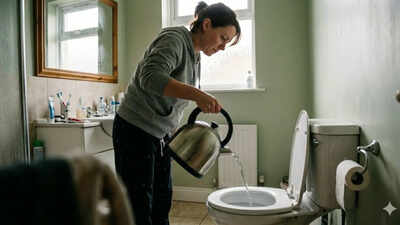
Bathroom problems in apartment buildings tend to arrive quietly at first. A toilet drains a little slower than usual. Water rises slightly higher in the bowl before settling back down. Someone pours another chemical cleaner into the pipe and forgets about it until the same thing happens again a week later.That is partly why simple maintenance tricks continue circulating between tenants, landlords and plumbers. One of the most repeated involves hot water and washing-up liquid poured into the toilet bowl before a blockage fully develops. The method is not presented as a repair for serious plumbing faults, but as a way of loosening light build-up before it turns into a larger problem. The idea sounds straightforward enough, although plumbers usually make a distinction between hot water and freshly boiled water.
Why plumbers warn apartment owners against pouring boiling water into toilets
Extremely hot water can create problems for toilet bowls and pipe fittings, especially if the plumbing is older or already weakened. Sudden temperature changes may place stress on porcelain and seals. It makes a similar point in its own unclogging guide, recommending hot water that has cooled slightly rather than water taken directly from a rolling boil. In apartment buildings, this matters more than many residents realise. Older flats often contain ageing pipework hidden behind walls and under flooring, with small repairs accumulating over decades. A harsh chemical cleaner might pass through once without issue, then slowly weaken fittings over time. Excessive heat can create similar risks. The safer version of the trick usually involves allowing boiled kettle water to sit briefly before pouring.
How apartment owners use the hot water toilet trick to stop minor clogs
- Pour a small amount of dish soap or washing-up liquid into the toilet bowl first.
- Heat water until hot, but avoid using freshly boiling water. The caution against pouring extremely hot water directly into toilets is that sudden heat may damage porcelain or older pipe fittings.
- Carefully pour the hot water into the bowl from waist height rather than directly splashing it into the base.
- Leave the mixture untouched for several minutes so the soap and heat can begin loosening softer waste material inside the pipe.
- Watch the water level gradually. In minor clogs, the toilet may begin draining more naturally after sitting for a while.
- Avoid repeated flushing if the water level rises unusually high; this can increase the risk of overflow during a blockage.
- The method is generally used for lighter clogs before the problem becomes severe enough to require plungers or professional plumbing assistance.
Why apartment toilets keep clogging despite regular cleaning
Shared drainage systems inside apartment blocks behave differently from isolated household plumbing. A small blockage further down the line can affect several units at once, even if residents assume the issue belongs only to their own bathroom.Grease, wipes, excess toilet paper, and hygiene products gradually narrow pipe interiors. In some buildings, mineral deposits also reduce water flow over time. Small warning signs often appear long before a complete blockage happens. Repeated flushing during a clog can worsen overflow risk instead of clearing the pipe. That is one reason many plumbers advise residents to stop flushing once water begins rising unusually high in the bowl.The hot water trick is usually treated as an early intervention rather than a fix for severe obstruction. If the toilet remains backed up, produces gurgling sounds or affects nearby drains, plumbers generally consider that a sign of a larger issue deeper in the system.
Why apartment residents prefer hot water tricks over chemical cleaners
A large part of the method’s popularity comes from practicality rather than novelty. Most flats already contain the basic items involved: hot water, soap, and a bucket or kettle. There is also less concern about storing tools in compact bathrooms.The method does not promise to repair damaged plumbing or remove solid obstructions. It simply aims to loosen lighter waste accumulation before the situation escalates into overflowing water, emergency maintenance calls or blocked communal drainage lines.