
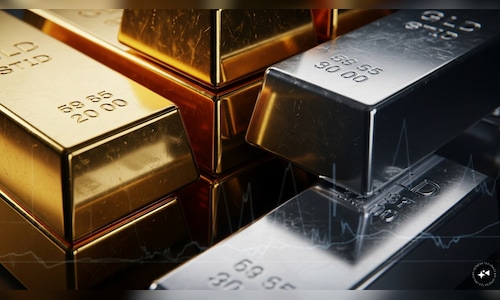
COMEX gold was trading at $4,697.80 per ounce, down 0.19%, while COMEX silver fell 1.44% to $88.085 in early trade on May 14. Earlier in the session, spot gold had edged higher as the dollar weakened, making bullion cheaper for holders of other currencies.
Market participants are closely tracking geopolitical developments, inflation signals from the United States, and the broader impact of the West Asia conflict on commodity prices.
US producer prices recorded their biggest increase in four years in April, reflecting higher costs for goods and services and reinforcing concerns around persistent inflationary pressures.
The bullion market is also reacting to developments in India after the recent import duty hike on gold, which has significantly altered domestic buying trends. According to Reuters, gold discounts in India widened to record levels of more than $200 an ounce as elevated prices and weaker demand triggered investor selling.
Industry experts said the sharp rise in prices has changed consumer behaviour rather than eliminated demand altogether.
“Given the high price of gold, it is evident that buyer behavior has changed, rather than demand has decreased. Contemporary consumers are becoming more thoughtful and are seeking jewellery products that are high-quality, multifunctional, and valuable both emotionally and financially,” said Dishi Somani, Founder, Dishis Designer Jewellery.
She added that Indian consumers continue to view gold as a valued asset, especially during weddings and festivals, while demand is shifting toward lightweight and wearable jewellery products that also serve as long-term investments.
Analysts also cautioned investors against chasing the rally purely on momentum after gold’s strong gains over the past two years.
“Gold has already had a very strong 18–24 month run, so I would be careful about investors entering purely out of momentum at these levels,” said Paramdeep Singh, Founder, Long Tail Ventures.
He added that Prime Minister Narendra Modi’s recent remarks on India’s rising gold import bill reflect broader macroeconomic concerns, with the country’s annual gold import bill remaining above $70 billion.
“Gold still works as a hedge, but usually not beyond 10–15% of a portfolio. The bigger mistake is treating precious metals as the core wealth creation engine. Over long periods, productive assets compound far better than non-yielding assets,” Singh said.
Meanwhile, the recent surge in gold and silver exchange-traded funds (ETFs) highlighted a shift in investor preference away from physical bullion toward financial instruments tracking precious metals.
“Gold ETFs surged up to 15% and silver ETFs rose sharply as MCX gold jumped 6.34% and silver climbed 6.97% following the duty hike announcement. This is textbook demand-channel substitution — as physical becomes costlier, investors instantly price in ETFs as the cheaper, cleaner route,” said Renisha Chainani, Head of Research at Augmont.
She noted that gold ETF inflows had already risen 186% year-on-year in the first quarter of 2026, suggesting that the move toward ETFs reflects a structural trend accelerated by policy changes rather than a short-term reaction.
–With agencies inputs