
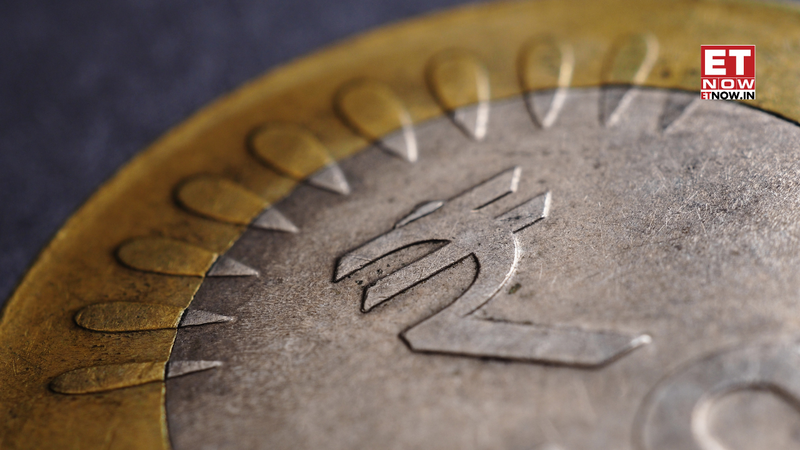
Rupee vs Dollar: The Indian rupee could weaken further and approach the psychologically significant 100 mark against the US dollar within the next six months if external pressures, particularly elevated oil prices, persist, according to Anil Kumar Bhansali, Head of Treasury and Executive Director Finrex Treasury Advisors LLP.
The Indian rupee slipped to a fresh record low on Thursday, May 14, breaching the 95.85 mark against the US dollar as sustained external pressures continued to weigh on the currency. The local unit opened marginally weaker at 95.73, down 2 paise from its previous close of 95.7050. In the prior session, the rupee had already touched a lifetime low of 95.7950, reflecting persistent pressure from elevated oil prices and global factors.
While refraining from giving a definitive forecast, Bhansali noted that the trajectory of the rupee will largely depend on evolving global and domestic conditions.
Highlighting the key trigger, he said, “If this impasse with Iran continues for a longer period of time, then oil prices will remain higher. And oil prices remaining higher means continuous buying of oil… continuous buying means inflows are lower and you will see rupee approaching 100 quite fast.” In such a scenario, the depreciation could happen “within a period of, say, six months,” underlining how closely currency movements are tied to geopolitical developments and energy costs.
Notably, on Thursday, Brent crude climbed 0.30 per cent to trade at USD 105.96 per barrel, while U.S. West Texas Intermediate (WTI) crude rose 0.23 per cent to USD 101.25.
Oil prices have remained highly volatile, with concerns mounting over potential supply disruptions at the Strait of Hormuz, a critical maritime chokepoint that handles nearly 20 per cent of global oil flows, heightening inflation risks for economies worldwide.
Earlier on April 30, Brent climbed near a multi-year high of USD 126 a barrel, gaining nearly 7 percent intraday, extending the momentum built on the back of a strong surge earlier. Before, on March 9, Brent crude surged over 27 per cent to trade at a multi-year high of USD 119 a barrel amid escalating Middle East tensions.
However, the outlook is not entirely one-sided. Bhansali said that policy intervention could slow or even reverse the rupee’s slide. “If government of India doesn’t take any further steps… then the pressure continues,” he said, while listing potential measures such as tweaking FII tax norms, reducing outward remittance limits under the Liberalised Remittance Scheme, and attracting fresh inflows through instruments like foreign bonds or NRI deposit schemes. “If such types of measures are taken, then we can see the rupee’s depreciation pausing…the dollar will be moving down,” he added. On the technical side, he also observed that “the dollar is quite overbought at the current level,” suggesting that a pullback cannot be ruled out.
The structural challenge, however, remains India’s dependence on external capital. “Our main problem is that we are a capital-deficient country…we always require some sort of inflows,” Bhansali said, explaining that heavy imports of oil and gold continue to widen the trade deficit.
With capital outflows persisting in recent months and IPO inflows drying up, the burden on the currency has intensified. “All these reasons are sufficient enough for the rupee to slowly move towards 100,” he said.
Oil prices remain the most critical variable in this equation. According to Bhansali, “below USD 90 per barrel, we could be quite a bit comfortable,” while anything “beyond USD 120 barrel, we are going to face huge current account and trade deficit.” Even current levels around USD 100-plus are seen as a strain. “It is not sustainable but it is okay, we will be able to manage some of the things,” he said, adding that higher costs are already feeding into inflation, which has climbed to 8.6 per cent. Another pressure point is the payment structure for crude imports: “We have to pay for the oil in cash… that’s the reason why you would see dollar-rupee buying every day by oil companies,” he explained, which keeps the rupee under persistent pressure.
(Disclaimer: The above article is meant for informational purposes only, and should not be considered as any investment advice. ET NOW DIGITAL suggests its readers/audience to consult their financial advisors before making any money related decisions.)