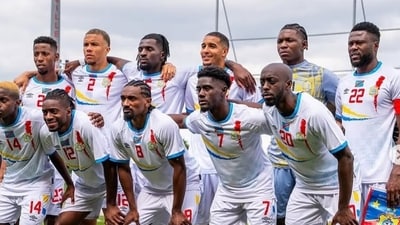
The 2026 FIFA World Cup is less than a month away, and the tournament has already been hit with some controversies. The spotlight is on Iran’s participation and the high cost of World Cup tickets. Now, in the latest controversy, the Democratic Republic of Congo national football team have cancelled a planned pre-World Cup training camp at home after the country was hit by an Ebola outbreak, according to reports.
The outbreak was declared in eastern DR Congo last Friday and has reportedly already caused 130 deaths from around 600 probable cases.
Also Read: Aston Villa end 30 year trophy drought as Unai Emery wins fifth Europa League title
The DR Congo training camp for the World Cup was set to begin in Kinshasa for three days, but has now been relocated to Belgium, according to AFP. It is also reported that no domestic player has been selected for the national squad.
Strict screening process or total ban?
The United States has banned non-Americans who have been in DR Congo, Uganda or South Sudan in the previous 21 days from visiting due to the outbreak. A US official informed AFP that the team will be allowed to travel to the country for the World Cup. The official claimed that the team had been training in Europe, so they are probably not subject to the ban. But if they were in the country over the last 21 days, they could be subjected to strict screening rather than a complete ban.
DR Congo will be based in Houston during the tournament and will also play their first Group K match against Portugal there, on June 17. Then they travel to Guadalajara to face Colombia on June 24, before returning to the US to play Uzbekistan in Atlanta on June 28.
The WHO has already declared the outbreak a public health emergency of international concern. The latest outbreak is challenging because it involves a rare strain of Ebola for which there is no vaccine, and cases have been found in an area affected by conflict.
Ebola is a rare but deadly disease. It is caused by a virus. Ebola viruses infect animals, typically fruit bats, but among humans, it can sometimes start when people eat or handle infected animals. Symptoms appear within 2 to 21 days and come suddenly. The symptoms start like the flu, with fever and headache. As the symptoms progress, vomiting and diarrhoea develop and can lead to organ failure. Some patients also develop internal and external bleeding.
The Ebola virus spreads from one person to another by contact with infected bodily fluids such as blood or vomit.