He added that SEBI’s rule changes have made buybacks “more palpable from a taxation perspective and more market-friendly.”
The trend comes after regulatory changes effective April 1, which have made buybacks more attractive and transparent.
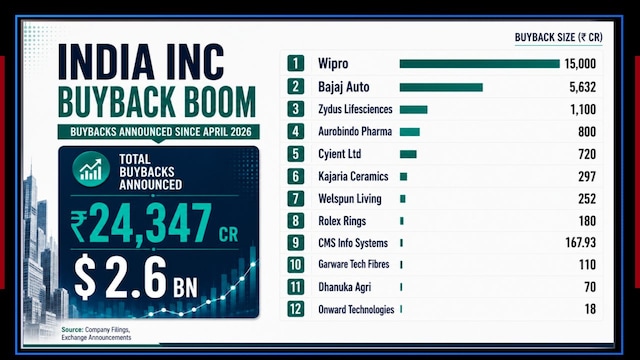
Companies have already announced buybacks worth nearly ₹25,000 crore since April, led by large deals from companies such as Wipro and Bajaj Auto, while several mid-sized firms have also joined the trend.
Divyansh Nasa, Partner at EY-Parthenon said the recent rise in buybacks is being driven by three major factors — tax clarity, cash surplus with companies, and regulatory changes that have made buybacks more predictable and fair for stakeholders.
He noted that nearly ₹25,000 crore worth of buybacks had already been announced and the trend is growing.
However, he also flagged a key concern for founder- or promoter-heavy companies. According to Nasa, the 12% surcharge on promoter capital gains from buybacks could make some companies reconsider the route. Instead of buybacks, such firms may prefer dividends or inorganic growth opportunities (acquisitions) to deploy cash.
Shah framed the surcharge as an intentional design choice by SEBI. “What SEBI has done is disincentivise promoters from participating in buybacks,” he said. “It creates a clean process — the company buys back from public shareholders, promoters step aside, and the result is a more transparent and fair mechanism for value return.”
Analysts expect the trend to remain concentrated in capital-light industries. Shah pointed to technology and select pharma companies as the most likely candidates for further announcements — businesses with strong free cash flow and limited near-term capital expenditure needs.
Banks and infrastructure companies, by contrast, are unlikely to participate: their growth trajectories demand that cash stay on the balance sheet.
The signal that a buyback sends matters as much as its size, Shah cautioned. A repurchase communicates to investors that management believes the stock is undervalued — but it simultaneously signals that the company has no immediate plans for large acquisitions or capacity expansion. “Companies need to be very calibrated about what messaging investors are grasping from this method,” he said.
For the entire discussion, watch the accompanying video