Shah also sees energy security, electric vehicles, defence manufacturing and export-oriented engineering businesses emerging as the next big investment themes in a post-war world. He says rising focus on indigenisation, biofuels and manufacturing exports could create long-term opportunities, while platform businesses remain one of the strongest growth pockets in the market.
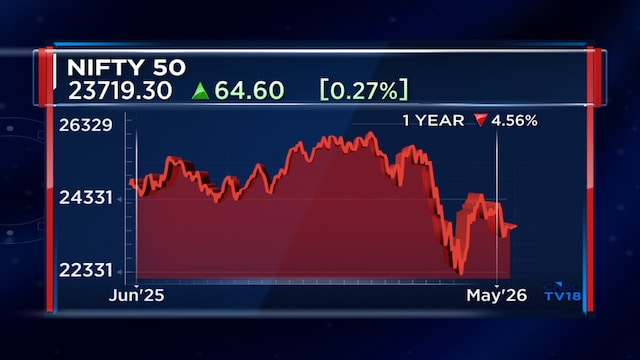
This is an edited transcript of the interview.Q: How are you feeling about the markets? Earlier this week, there was every reason for markets to break the 23,300 mark. The rupee was falling, outflows were continuing, and markets looked brittle. But there seems to be buying at lower levels, and broader markets have outperformed. What’s your take?
A: The big takeaway for me is that earnings continue to remain rock solid. That’s honestly the biggest consolation and comfort. It reinforces the conviction that, on a bottom-up basis, the market is not doing all that badly — in fact, it’s looking strong.
Purely from an earnings point of view, which is ultimately the fuel for the rally, one derives a lot of comfort. Especially in the second half of the earnings season and with results coming in during May, numbers have been very comforting and very strong.
Apart from that, there was fatigue around the war, the Strait of Hormuz and oil prices. But I think people are now largely reconciled to all of that. It’s not really moving the market or the needle much anymore.
Q: The platform businesses you track closely have surprised positively. Whether it was Lenskart Solutions or others, the numbers have been good. What’s the broader sense from your investment companies, and what has worked for them?
A: Quite phenomenal. Platform companies have essentially been the standout space. This is the pocket growing at 30%, 40%, even 50% year-on-year. None of them is talking about losing market share. Most of them have reported improvement in margins and stronger cash flows.
Q: How has management commentary and body language been?
A: Phenomenal. Nobody is talking about any slowdown. The biggest quick commerce player is still talking about 60% growth. The social e-commerce player is also talking about very strong growth. We had beauty and personal care companies — one platform company and one product company — both reporting 20-30% growth. These are phenomenal numbers.
Also Read | Swiggy
Q: Is it tempting to double down on any of your holdings?
A: I think all of them look attractive, especially because most have seen price corrections. Many are down 20-40% from their 52-week or all-time highs, while the businesses themselves are getting better.
The only overhang is stock supply. Every few days, there’s a block deal creating pressure, but the market is absorbing it. So I clearly believe this remains a standout space.
Q: Anything that stands out in food delivery? Eternal and One 97 Communications (Zomato) have struggled, and Swiggy is near its 52-week low. What’s the call there?
A: Swiggy’s challenge is the curse of being number two. The number-one player continues to perform extremely well. The leader probably has around 60% market share from a revenue point of view and 70-75% share of the profit pool.
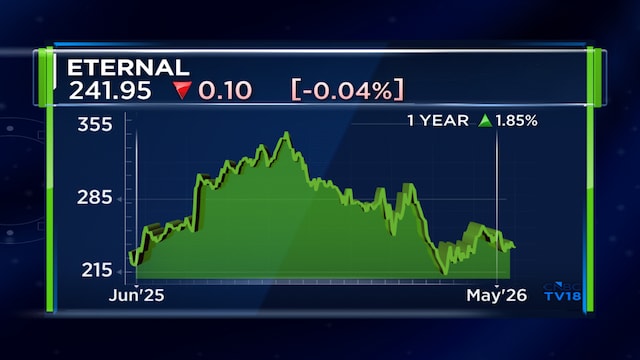
But as businesses, these companies are still compounding at 20%, earnings before interest, taxes, depreciation and amortisation (EBITDA) margins are improving, and there is operating leverage in the business. Competition is coming in, but progress remains slow. So overall, that space still looks very good.
Q: You’ve been bullish on platform companies for a while. Can you list some names you own?
A: Across the board, we own several of them, especially the leaders — Eternal, PB Fintech (Paytm), Angel One, Billionbrains Garage Ventures, Honasa Consumer (Groww) and others.
I actually think this resembles the 1990s in India when IT services companies represented the “new economy”. Those companies went on to compound at a 50-70% compound annual growth rate (CAGR) for years and created a bull market that lasted nearly a decade.
If I use that as a benchmark, this collection of platform companies resembles that phase. Maybe not all are growing at 50-70%, but all are growing at a hyper pace. More importantly, they have now realised the importance of cash flow. Most are no longer burning cash.
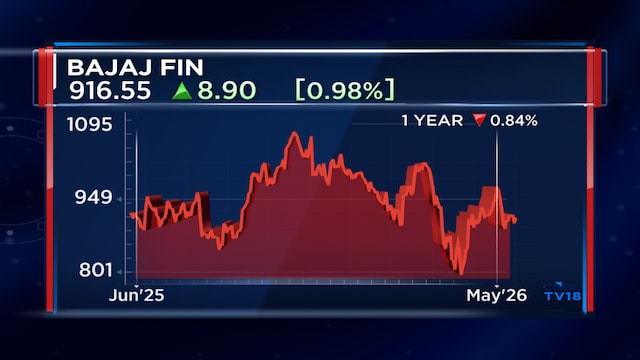
Take Bajaj Finance, for example. We own Honasa as well. Despite selling pressure in the market, promoters are buying; performance has been rock solid, cash flows are positive, and they are even paying dividends now.
The complaints markets had four to five years ago — cash burn, no cash flows — have largely been addressed. Now you have growth plus price corrections. I think it’s a great place to be.
Q: What about valuations across the board?
A: The challenge with growth stocks is that valuations will always look expensive if you look only a few quarters ahead. But whether it’s platform companies, new-age businesses, defence or energy companies, investors who looked only one or two quarters ahead missed the bus.
You need a two-year, three-year or even five-year perspective. Unlike value investing, where you look at past earnings, growth investing requires understanding the business, the opportunity size and what the company could become several years from now.
 Q: Any specific thoughts on fintech? Insurance Regulatory and Development Authority of India (IRDAI) is proposing reforms to lower insurance costs and increase penetration. Could that create challenges for PB Fintech?
A: That has already been an overhang, and that’s why the stock corrected from ₹2,200 levels to around ₹1,700-1,800. The impact is already reflected in the stock price.
There may still be knee-jerk reactions, but overall, the issue is well understood and well analysed by the market.
Q: Any thoughts on the Magnificent Seven (Alphabet, Amazon, Apple, Meta Platforms, Microsoft, Nvidia, and Tesla) companies globally?
A: Equity markets are ultimately about growth. These companies created technology, intellectual property and relevance. A 20-fold increase over 20 years reflects that.
Also Read | Maruti Suzuki India
Every market goes through something similar. Ten or fifteen years from now, people may look back at the companies that IPOed in India over the last five years and realise that, despite criticism around valuations and initial public offering (IPO) pricing, many of them created phenomenal value.
Q: In your 30 years in markets, is there one stock you missed out on?
A: One big miss for me was Centrum Capital. I was too obsessed with valuations and large banks. Having seen earlier credit downcycles, I felt banks were safer than non-banking financial companies (NBFCs). That turned out to be a major miss.
 Q: What are the next big themes in the post-war era?
A: Energy security is clearly emerging as a major theme. It’s no longer just about decarbonisation or climate change; it’s about ensuring energy security.
The electric vehicle space is attractive. Companies providing engineering solutions around compressed biogas, ethanol and related areas also look very interesting.
Exports are another major opportunity. Companies that have rupee-denominated costs but export globally could see strong gains. Look at Centum Electronics — domestic growth was low single digit, but export growth was in the 20s. That’s phenomenal for a company of that scale.
Manufacturing exporters are going to be a very exciting space. Defence also remains a strong long-term theme.
Watch the full conversation here

Q: Can you name some defence stocks you own?
A: We own names like Centrum Capital and Centum Electronics. It’s a space we continue to track closely and believe will evolve further.
Q: Some argue defence stocks are overvalued while chemicals could be the next big opportunity. Your view?
A: There could be some overvaluation in defence, I wouldn’t disagree entirely. But I think it’s simplistic to compare only current profit growth and market cap.
Also Read | Cement prices may rise as companies battle soaring costs: HDFC Securities
The next five years for defence could be significantly bigger than the last four years because of indigenisation, defence security and agreements India has signed with countries like Israel. Once government orders accelerate, it could become an avalanche.
In chemicals, one has to keep an eye on China’s scale and competitive intensity. Defence does not face those same headwinds.