The company posted a 78% year-on-year rise in net profit at ₹65 crore for the March quarter, compared with ₹37 crore a year earlier. Revenue rose 27% to ₹705 crore from ₹555 crore in the corresponding quarter last year, while EBITDA increased 28% to ₹459 crore. EBITDA margin remained elevated at 65.1%, compared with 64.9% a year ago.
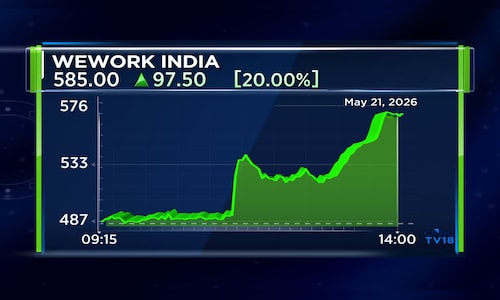
Investor sentiment remained upbeat following the earnings announcement, with shares of WeWork India surging 20% to ₹584.15 on the NSE during Wednesday’s trade.
The company also highlighted significant balance-sheet improvements during FY26. Free cash flow from operations rose 44.3% year-on-year to ₹585.5 crore, while WeWork India turned net debt negative for the first time, ending the year with a net debt position of minus ₹11.7 crore. Its borrowing cost declined 225 basis points year-on-year to 8.5%, while its credit rating was upgraded by two notches from A− to A+.
Managing Director and CEO Karan Virwani said FY26 marked a “defining year” for both the company and the broader flexible workspace industry. He added that WeWork India enters FY27 from its “strongest opening position” yet, backed by deep demand visibility, strong operating leverage and improving returns on capital.
Virwani also said the company is increasingly positioning itself as a full-stack enterprise workspace platform rather than merely a co-working operator, as India’s growing AI and GCC ecosystem fuels demand for agile and scalable office infrastructure.
WeWork India operates premium flexible workspace centres across major Indian cities, catering to enterprises, start-ups and global capability centres.
First Published: May 21, 2026 2:07 PM IST