There is no sporting spectacle quite like the FIFA World Cup. Yes, there are the Olympics. There is the Cricket World Cup too. But nothing matches the excitement and emotion that football’s grandest tournament delivers every four years. Every edition has produced unforgettable moments, stirring debates and heartbreaking stories. Yet, few scenes compare to what unfolded on July 16, 1950, when tournament favourites Brazil suffered a stunning defeat to Uruguay against all odds and expectations.
Seventy six years ago, nearly two lakh people made their way to Maracanã Stadium to witness the clash between hosts Brazil and Uruguay. Brazilian supporters arrived expecting nothing less than a coronation, as the hosts did not even need to win the final match of the group stage. A draw would have been enough for Brazil to become world champions for the first time.
The build-up to the contest saw almost no one giving Uruguay a chance. Local newspapers had already declared Brazil the winner. Songs were written, while commemorative watches and medals had been prepared with Brazil’s triumph engraved on them in advance. The nation stood ready to celebrate, with even politicians preparing victory speeches.
What followed, however, became immortalised as the “Maracanazo” – the blow of the Maracanã.
The build up
Brazil entered the contest against Uruguay in sensational form. They had just crushed Sweden 7-1 and demolished Spain 6-1 in their previous matches. Their style seemed modern, joyful and unstoppable. Uruguay, meanwhile, were viewed as underdogs punching above their weight, but to say they were feared would have been a stretch. Many inside the stadium believed the match was little more than a formality.
For the first half, the tension was heavy but manageable. Then, just after halftime, Brazil struck. Friaça scored in the 47th minute, and the stadium erupted. Flags waved, drums thundered, and strangers embraced each other in celebration. The title suddenly felt within touching distance, and the fans could barely wait for the final whistle.
But that was when Uruguay decided to play party poopers.
What happened next
Uruguay were expected to buckle under pressure. But nothing of the sort happened. Led by captain Obdulio Varela, they began imposing their own style of football, frustrating Brazil. Varela famously picked up the ball after Brazil’s opening goal and argued with the referee, a deliberate attempt to drain the crowd’s momentum and calm his teammates’ nerves.
Then came Uruguay’s equaliser. In the 66th minute, Juan Alberto Schiaffino scored after a swift move down the right flank. Suddenly, unease spread around the stadium. A draw still favoured Brazil, but the confidence of the hosts slowly began turning into fear.
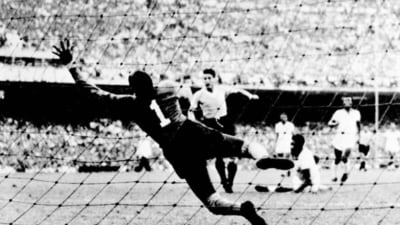
When the pressure peaked, football once again proved that nothing is guarantee. In the 79th minute, Alcides Ghiggia burst down the flank again. The entire stadium expected a cross. Brazil goalkeeper Moacir Barbosa shifted slightly in anticipation. Instead, Ghiggia fired the ball low into the near post. Just like that, Uruguay led 2 1.
Silence swallowed the Maracanã. The final whistle did not merely end a football match. It shattered a national myth. Contemporary reports reveal that people openly wept in the stands. Some fainted. Radio commentators fell silent. A few accounts even spoke of suicides linked to the shock, although the exact numbers remain debated.
For Brazil, the defeat became about far more than sport. It touched identity, pride and the dream of becoming a modern global power. The nation had believed the World Cup was destiny. Instead, it turned into humiliation witnessed by the largest crowd football had ever seen.
No individual carried the burden more painfully than Barbosa. The goalkeeper became the scapegoat for decades. He once said, “In Brazil, the maximum sentence for a crime is 30 years. But I have been paying for something I did not commit for 50 years.”
The psychological scar ran so deep that Brazil abandoned their white shirts after the defeat. The famous yellow jersey, now one of football’s most iconic symbols, emerged partly from the ashes of the Maracanazo.
More than seventy years later, the Maracanazo still occupies a unique place in football history because it combined scale, expectation, drama and national heartbreak in a way few sporting events ever have. Brazil did not merely lose a football match. An entire country had begun celebrating before the ending had been written. Football has witnessed countless upsets. Few have left a wound this deep.
Ghiggia, the hero for Uruguay, had once famously said, “Only three people have silenced the Maracanã: Frank Sinatra, the Pope, and me.”