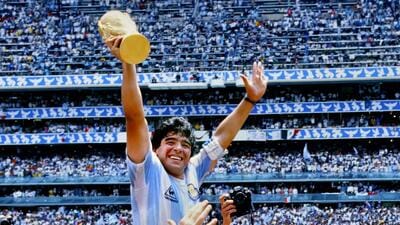
Kolkata: They made Italy world champions after 42 years but Paolo Rossi’s goals would struggle to make the longlist of memorable strikes in the World Cup. They were not in the range of, say, Carlos Alberto’s goal in the 1970 final, the cannonball of a shot finishing a move to which all Brazil outfield players contributed, Saeed Al Owairan’s mazy, 69 metre run in 1994 or Kylian Mbappe’s stupendous and powerful volley in the last final.
Yet, Rossi would be central to any conversation on the World Cup in India. Not because of the slightly built centre-forward’s brilliant comeback after being banned for involvement in betting – a charge he denied till his death in 2020 – or a preternatural ability to find space and remain calm in the penalty box. But because his brace against Poland in the semi-final of the 1982 edition was the first live telecast of a World Cup match in India.
More small men dazzled with Pierre Littbarski and Alain Giresse scoring, Jean Tigana running the midfield and Manuel Amoros hitting the framework in the epic West Germany-France semi-final that followed. In shorts so short that they were barely visible over the “Les Bleus” shirt, India saw the artistry of Michel Platini and Karl Heinz Rummenigge’s ability to haul West Germany from the brink of defeat leading to the first penalty shootout in World Cup history. Marco Tardelli’s primeval scream after making it 2-0 in the final stayed in the mind as India had not seen anything like this. Fabio Grosso stoked those memories in the 2006 semi-final connecting two generations of champion Azzurri sides.
The Nehru Cup, an invitation tournament started in 1982, served as the perfect entrée. Like the 2017 under-17 World Cup that gave India a glimpse of Phil Foden and Ferran Torres, the 1982 Nehru Cup had a precocious teen in Enzo Francescoli. At the time, international football was mostly consumed through newspapers (usually with one sports page), short-wave news bulletins, news reels in cinemas or if the FIFA film on the World Cup was playing at a theatre near you.
The Asian Games – Ravi Shankar’s composition, Big B’s baritone, PT Usha, MD Valsamma, Geeta Zutshi, Rita Sen blazing the track, heavyweight boxer Kaur Singh’s gold and the 7-1 defeat to Pakistan in the men’s hockey final — was months away. A soporific Test series against England had ended and between Prakash Padukone’s world championship title and Kapil Dev taking that catch, the football World Cup suddenly reached Indian homes. Amid power outages, it was love at first sight.
Doordarshan then played full match recordings giving India a glimpse of Diego Maradona – and Claudio Gentile doing ungentlemanly things to him – Laszlo Kiss being the first substitute to score a hat-trick, and that memorable Italy-Brazil match. Even on black-and-white television sets, Brazil looked vibrant. Zico sent Gentile the wrong way and found Socrates who ambled in to beat Dino Zoff at the near post; Falcao scored a screamer (off a Socrates pass) but by then, Rossi had transmogrified into a goal machine. “We lost our identity because we lost in those World Cups,” Zico told HT in 2014, referring to the defeats in 1982 and 1986.
Four Christmases, Sunday Oliseh had once said with a sigh, is how long you had to wait between two editions. Like the former Nigeria midfielder, India couldn’t wait for the next one to come along. This time, it would be a month-long extravaganza with good old DD showing all the matches.
India knew as much about television rights and broadcast fees then as it did about a team whose chant went: “We are red/We are white?/We are the Danish dynamite.” Coached into playing free-flowing football by the late Sepp Piontek, Denmark were the pace-setters of 1986; Argentina the real deal.
India had seen Carlos Bilardo and some of his team in the Nehru Cup. Jorge Burruchaga, Ricardo Guisti, Nery Pumpido had come for the 1984 edition as had Kiss’s Hungary and Wlodzimierz Smolarek and Wojcicki Roman’s Poland. Not many videos would have been available of La Liga and Serie A so like the three Peters (Beardsley, Reid and Shilton) and two Terrys (Butcher and Fenwick) India saw magic in real time. “Cosmic kite,” said commentator Hugo Morales after Maradona’s second goal against England; “one from the days when dribbling was the vogue,” wrote Brian Glanville.
Maradona almost did an encore against Belgium. After West Germany again clawed back from the dead – Karl-Heinz Rummenigge leading from the front –and with Lothar Matthaus shackling him, Maradona had a quiet final. Till he found Burruchaga with a pass as good as the one he played for Claudio Caniggia four years later the last time Argentina met Brazil in the World Cup. Before Lionel Messi’s delivery for Nahuel Molina, they were unarguably the best assists for Argentina in a World Cup.
Having missed the chance to see “Der Kaiser” in his pomp, India saw Franz Beckenbauer when he had become “Der Professor”. 1990 was about Paul Gascoigne’s tears, Gary Lineker finding his inner Rossi, Cameroon’s upset win against Argentina and Roger Milla’s hippy-hippy shakes. It was also about Maradona’s Argentina banking on Sergio Goycochea’s penalty-saving skills to be one win away from doing what no team has done since 1962 and only once before that in World Cup history: retain the title. France were Emiliano Martinez’s left foot away from doing that in 2022.
By then, the internet had democratised access. You could see Eusebio engineering Portugal’s comeback against North Korea in 1966 or Garrincha having fun at USSR’s expense in 1958. Club and international football were a remote click away and players communicated to fans through Instagram. Memorable though they were, that changed how the world consumed Zinedine Zidane inspiring France in 2006, David Beckham’s retribution against Argentina, Andres Iniesta’s tribute to his late friend Dani Jarque, James Rodriguez’s spectacular goal against Uruguay, Brazil’s meltdown against Germany and Mbappe’s breakout tournament.
With Rossi, India went to a place it had not been to before. One that felt lived-in by the time Messi wearing a bisht bounced with the bald, gold statuette.