Crime dramas are always safe bets. Everyone knows this. So do creators and consumers. This year was no different: wherever you turned in 2025, there was yet another crime-thriller-murder-mystery being laid out, almost as an assembly line, across all streamers. In the flood, a handful of series managed to refresh tropes, giving us smartly-written stories and characters.
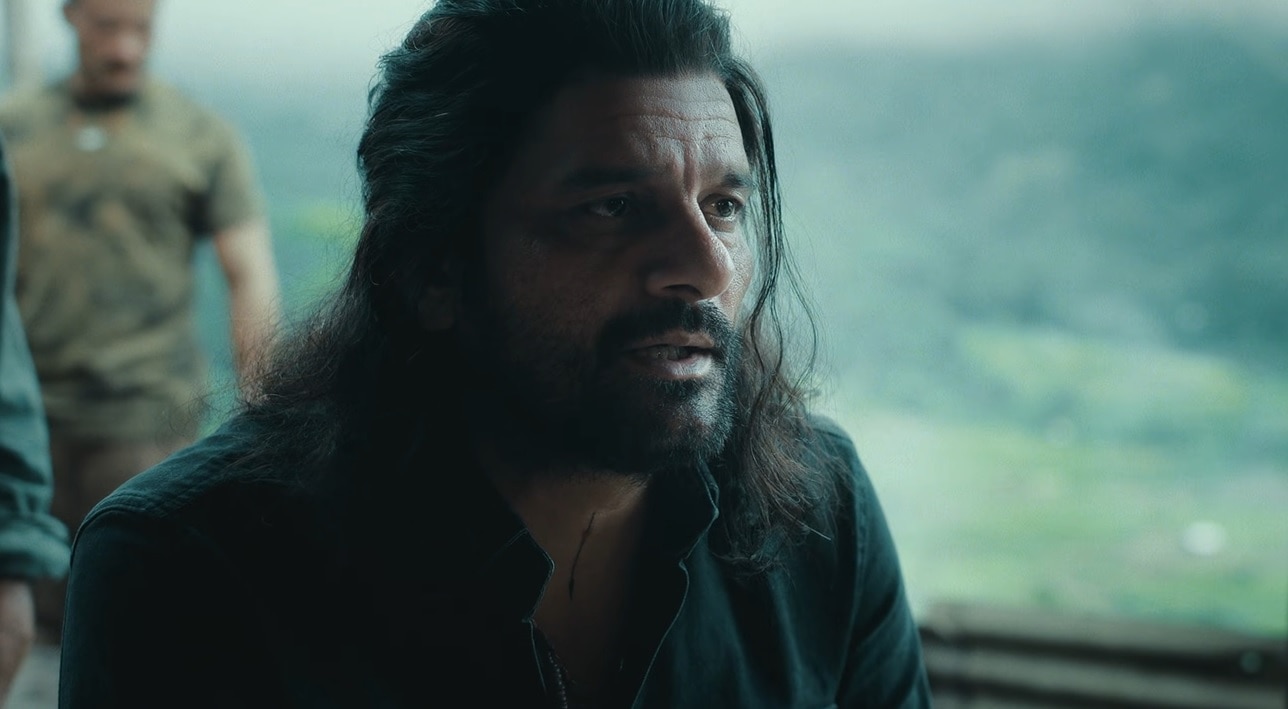
Paatal Lok: It’s been nearly a year since I watched Paatal Lok 2, and I haven’t forgotten Inspector Hathi Ram Choudhary’s craggy face, and that revelatory conversation in the jeep with his colleague ACP Ansari, before that shocking tragedy intervenes.
Paatal Lok 1 came out in 2020. In the five years intervening, many things have changed: newbie cop Ansari (Ishwak Singh) is now Hathiram’s senior, and the action has shifted from Jamuna paar to faraway Northeast. But the moral centre of the darkness — paatal lok– stays constant in Hathiram’s steadfast demeanour: Jaideep Ahlawat is one of the best things to have happened in our streaming life.
The series itself has scaled up, but continues to match the intrigue of the first part, and that’s a hard one to pull off for a sequel. The Northeast is green and verdant and yet the dense forests hide men with guns, and dark secrets. Ishwak Singh– as good as he was in the first part, as are Gul Panag and Nikita Grover– is joined by Tillotama Shome, in an Assamese officer’s part, and a host of other characters which include filmmakers Nagesh Kukunoor and Jahnu Barua. Writer Sudip Sharma and director Avinash Arun Dhaware give us a layered world, and complex motivations: it took five years for the second part, and it was well worth the wait.
Black Warrant: Based on Tihar jailor Sunil Kumar Gupta’s memoir of the same name, Black Warrant takes us inside the largest high security prison in Asia, unravelling the details of some of India’s most horrific crimes and their perpetrators assigned to the death row after all their mercy petitions have been rejected. Gupta, whose 35 years at the helm resulted in a slew of prison reforms, co-authored the book with journalist Sunetra Choudhary: the show’s make-or-break moment comes early when the gentle, almost frail Zahan Kapoor shows up as Sunil, on the first day of his job, and keeps showing up, with growing conviction, taking full charge of his prison, and the men who live each day as if its their last.
Directed by Vikramaditya Motwane, Black Warrant has an excellent ensemble: Anurag Thakur and Paramvir Singh Cheema are the rough-and-tough companions to the gentle Sunil, Rahul Bhat plays a senior cop, Sidhant Gupta as the mincing lady killer Charles Sobhraj, as well as Tota Roy Choudhury and Joy Sengupta all get to do their job, and we stay engaged all through this prison drama.
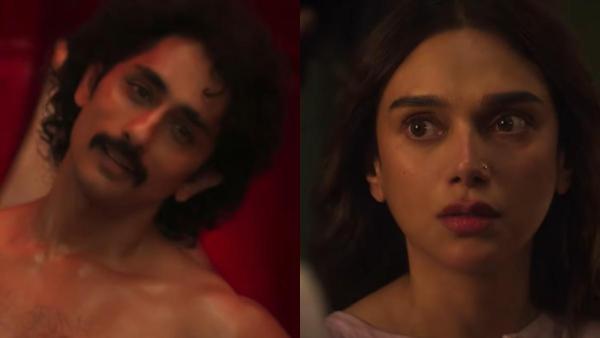
Black, White & Grey: Love Kills is a sharply-observed mockumentary, which revolves around two young lovers on the run, chased by a bounty hunter, as well as by the things that oppose true lov: parental opposition, class differences, and of course, the not-so-hidden scourge of caste, even if it’s not explicitly spelled out.
Story continues below this ad
The show, directed by Pushar Sunil Mahabal, didn’t have recognisable faces, and that worked for it: Mayur More and Palak Jaiswal played Boy and Girl (smartly, no names are assigned, so as to make the duo relatable across regions and languages). Deven Bhojani as the dogged hunter and Tigmanshu Dhulia as the visually-impaired ex-cop add flavour, and Sanjay Kumar Sahu, the actor playing ‘real’ boy, leaves quite an impression in this innovative show, its stylistic device cleverly blurring the line between truth and fiction.
Real Kashmir Football Club, directed by Mahesh Mathai and Rajesh Mapuskar, is based on an inspiring real-life story, which makes sure that performance and plot are in sync with the pleasingly low-key story-telling. Mohammad Zeeshan Ayyub and Manav Kaul– the first a jaded journalist, the second a liquor business owner — play the two Srinagar-based men who come together to create a football club in a conflict-ridden region thirsting for respectable income generation schemes.
As befits these underdog stories, the team is suitably rag-tag. Problems keep cropping up but the indefatigable Ayyub is one of those guys who doesn’t have ‘no’ in his vocabulary, and keeps everything going. A sulky local star player. A radical leader who likes to keep his ‘boys’ under his thumb. Parents who don’t understand the importance of sports. Unhelpful officials in Delhi. All succumb to Ayyub’s persuasion. The result : an understated but quietly enjoyable sports drama.
The Hunt, directed by Nagesh Kukonoor, re-created with great felicity the conspiracy behind the assassination of Rajiv Gandhi. There have been many other films made on the same subject but what this show, based on journalist Anirudhya Mitra’s book ‘Ninety Days’, nails both the laxity and urgency the team is beset with, depending on where the pressure it faces is coming from : credit-hogging babus who are everywhere ; so are insiders who were complicit. Or at least that’s what the show hints at.
Story continues below this ad
A terrific ensemble, led by Amit Sial, Sahid Vaid, Danish Iqbal, Shafeeq Mustafa and others, brings back a time and place in recent Indian history: the killing of this prime minister had long-reaching consequences, which we are still dealing with today.
And these are my 5 honorable mentions/ runners up
Khauf means fear. In the Pankaj Kumar-Surya Balakrishnan series, it stands for the fear that women live with. All the time. At home. On the road. In educational institutions. In broad daylight. Predators are everywhere, nowhere and no one is safe.
It’s most striking feature is its gothic design, with light and shadow playing a part in creating the sinister atmosphere. It goes sideways after a point, but if I close my eyes, I can still see the working women’s hostel and the dark lane leading to it, where most of the action takes place: its lead actor, Monika Panwar, inhabits her role fully (as she does in Anurag Kashyap’s Nishanchi). One of the best new faces of the year.
Delhi Crime 3 brings back Madam Sir Shefali Shah and her trusty colleagues, Rajesh Tailang, Rasika Dugal, Anuraag Arora, Jaya Bhattacharya and others, pitting them against a brand new antagonist, in the shape of human trafficker Huma Qureshi. While the novelty factor has worn off, this bunch of doughty cops, who never take their eyes off their target, keep us mostly with them, this time rescuing hapless young women from a fate worse than death.
Story continues below this ad
Family Man 3 is a return of Manoj Bajpayee as our super-smart agent Srikant Verma Don Quixote, along with his trusty Sancho Panza, played by Sharib Hashmi. This time, the duo are directed to murky goings-on in Nagaland, with rebel leaders within the borders finding support from arms-runners outside of the country. New baddies– Nimrat Kaur, Jugal Hansraj, Jaideep Ahlawat– and old hands– Seema Biswas and co turn up– but not one of them can out-smart our fave jasoos, whose heart has twin beats: for his wife Priyamani, despite him still smarting from season 2’s betrayal, and, of course, for his country.
Jaideep Ahlawat as Rukma in The Family Man season 3.
Maharani 4, the long-running– and much too stretched– show about canny politicians, venal businessmen and their cohorts, created by Subhash Kapoor and directed by Puneet Prakash, tried to infuse freshness by getting in new faces, Rajeshwari Sachdev and Darsheel Safary, with uneven results. One of things that was most striking was that it came out really close (coincidence or not?) to the real-life polls in Bihar; part of the interest continues in figuring who resembles real life netas in Dilli and Patna.
The other — a terrific sequence which felt as if it mirrored actual happenings– involved a leader’s yes men threatening TV channel owners with grave consequences unless they stop showing ‘khabars’ showing their man In Bad Light. Huma Qureshi and Shardul Bharadwaj share nice sequences as ma-beta, as do Kani Kusruti and Pramod Mahajan as mentor-mentee.
I didn’t love Aryan Khan’s Bads of Bollywood, whose plot felt like it was cobbled from Om Shanti Om, and Luck By Chance. Taking us into the innards of the Mumbai film industry isn’t new : what rescued this much-touted series was the non-stop parade of top-flight stars, which included Khan’s own superstar father SRK. Yes, there’s Aamir in here, as well as Salman and Karan and SS Rajamouli and Ranbir and Ranveer.
Story continues below this ad
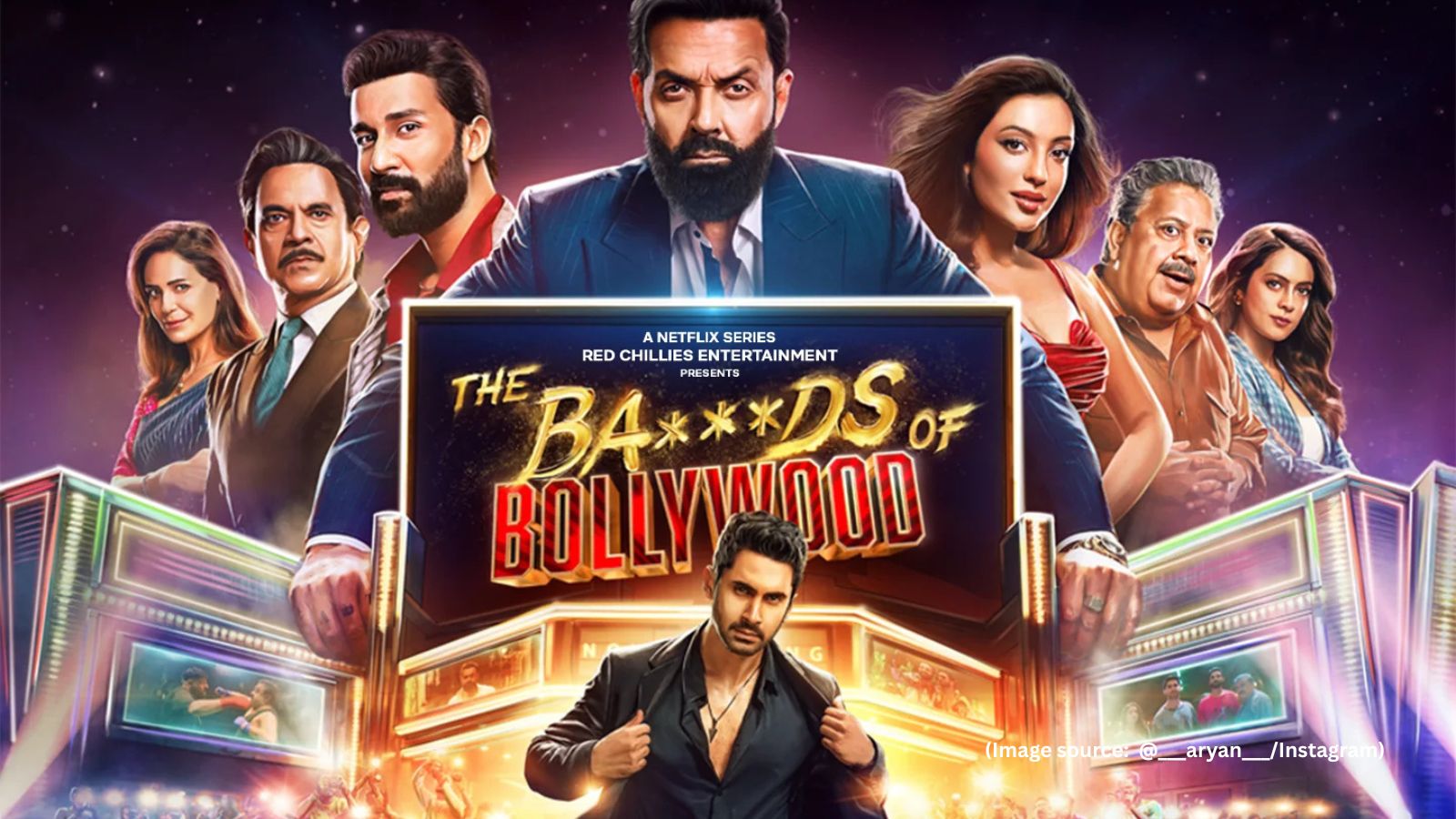 Aryan Khan made his directorial debut with the series The Ba***ds of Bollywood.
The bigger roles are divvied up among Emraan Hashmi and Bobby Deol and Manoj Pahwa and Mona Singh and Lakshya and Raghav Juyal and so on. That Khan Jr, being the ultimate insider, could pull in all the biggest stars to show up for his show is no surprise; what is surprising is how neither the plotting nor the execution leapt off the screen. The best part, of course, was how it faced down SRK’s– and Aryan’s– ‘enemies, and showed up the syncretic nature of Bollywood : full on ba—ds behaviour they may exhibit, but they are all equal opportunity offenders, no religious or gender bias here.
And here’s my nudge wink question: why wasn’t this show called ‘Who’s Your Daddy?’