
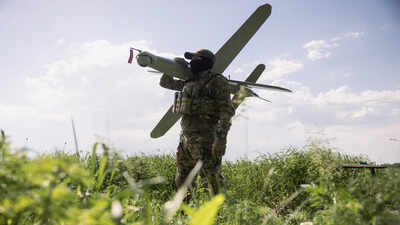
Drones are seen as the most important category of weapons in modern warfare. Ukraine’s success in holding back the Russian onslaught and Iran’s ability to upend how nations have thought about air defence are credited to the use of drones.An important aspect of the usage of drones in combat is the cost-effectiveness of these systems. This, among other reasons, has made the drone a near-ubiquitous weapon system across theatres.As drones are proliferating, so are Counter‑Unmanned Aerial Systems (C‑UAS). These systems are becoming integrated solutions designed to protect airspace from drones launched by adversaries. Many of these systems are now increasingly depending on non-kinetic means.This means instead of depending on guns and missiles, these systems use advanced electronic and directed‑energy technologies to detect, track, identify and neutralise these aerial threats.
Detection and Tracking
Modern C‑UAS platforms combine radar, radio‑frequency scanners, electro‑optical cameras, infrared sensors, and acoustic arrays. By fusing data from multiple sources, they create a real‑time picture of the airspace.Machine learning algorithms distinguish drones from birds or aircraft, reducing false alarms and improving response speed. Swedish firm Saab claims that their Giraffe radar can detect a flying object with a small drone-sized Radar Cross Section (RCS) at an instrumented range of up to 75 km.
Electronic Identification
AI‑powered systems analyse flight patterns and communication signals to determine whether a drone is friendly, commercial, or hostile.This step is critical before engaging, especially in crowded environments like airports or stadiums.
Directed‑energy weapons
High‑energy lasers have demonstrated the ability to destroy drones. These systems disable drones by burning through propulsion systems or electronics.Unlike missiles, lasers strike at the speed of light, minimise collateral damage and dramatically reduce per‑shot costs from lakhs of rupees to a few hundred. The DRDO has developed the 30-kilowatt Mk-II(A) high-power laser weapon to neutralise drones and missiles.
Electromagnetic Pulse (EMP) systems
High‑Power Electromagnetic (HPEM) weapons emit pulses that fry onboard electronics. This “soft‑kill” method can neutralise multiple drones at once, making it ideal against swarms. Since it targets circuitry rather than airframes, it avoids debris and kinetic impact.This type of system is termed very effective against a swarm drone attack, in which all the drones can’t be targeted individually. The DRDO is developing a Ground-Based High Power Microwave (HPM) system aimed at neutralising the electronics of unmanned aerial vehicles (UAVs) which are as far as 5 km away.
Portable Jammers
Lightweight jammers give ground personnel mobility. By disrupting GPS or communication links, they force drones to land or return to their origin. Modern jammers are compact, energy‑efficient, and precise, enabling rapid response in dynamic urban or battlefield settings.The Indian Army has demonstrated such items that are both hand-held and backpack-mounted.