
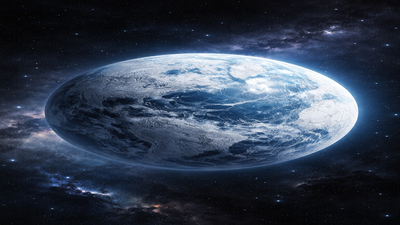
Imagine a time when the blue planet looked nothing like it does today. A time when the oceans were frozen over, the continents were locked in a thick sheet of ice, and the sun reflected off a world almost entirely white. This is not science fiction, but a real time in Earth’s past, a time referred to as the “Snowball Earth” period. Scientists believe that between 700 and 600 million years ago, Earth underwent a time of extreme glaciation. New research is helping us understand how Earth survived these extreme times and how it may have contributed to the emergence of complex life.
Snowball Earth explained: When the planet froze over
The ‘Snowball Earth’ hypothesis, as proposed by Caltech geologist Joe Kirschvink, indicates that there were global glaciations during the Cryogenian period, approximately 700 to 600 million years ago, such that ice sheets reached as far as the equator.The idea of global glaciations was first proposed due to the presence of glacial deposits in areas that are currently considered to be tropical, which should not occur under normal climatic conditions.From geological studies, it has been indicated that once ice sheets expanded to a certain point, a strong feedback cycle took hold. This is due to ice having a reflective quality, so as more of the planet became frozen, more solar energy was deflected, resulting in a further drop in temperature.This ice-albedo effect likely triggered a runaway glaciation that resulted in a planetary icebox, according to researchers at Utah State University.This led to a frozen world with glaciers covering the continents and the potential for an ice-wrapped ocean.
What caused Snowball Earth? New scientific insights
The precise cause of Snowball Earth is one aspect that has led to much scientific debate. New information is emerging, which is helping scientists develop a more accurate idea of the events that led to Snowball Earth. One theory is that the trigger that led to Snowball Earth was a sudden reduction in the quantity of carbon dioxide present in the atmosphere. Carbon dioxide is a greenhouse gas, and its presence is essential for global warming.Recent studies published in Aeon have suggested that climate instability was a major factor, where there were extreme changes between high and low levels of CO2, which led to Snowball Earth.As per Phys Org, new research published in 2026 indicates how unusual factors may have led to the extreme cold. Scientists have found evidence of glaciers in ancient rocks, which shows that there were indeed glaciers at low latitudes, suggesting that there was indeed Snowball Earth. The models have shown that if the oceans had been completely locked beneath a layer of ice, then there would have been no climate activity. However, some models suggest parts of the ocean may have remained unfrozen, then there would have been climate activity.This led to the debate about the fully frozen Snowball Earth, as opposed to the partially thawed Slushball Earth.
Life during a frozen Earth: Survival against the odds
A global ice age of this scale prompts the following query: How did life manage to survive?Scientists suggest that life persisted in refuges under ice cover or in deep ocean environments due to life’s adaptation to such extreme environments. For instance, life forms such as microbes could have adapted to such extreme environments and continued evolving.Instead of Snowball Earth ending life on Earth, it might have played a crucial role in shaping life as we know it today. This is according to research on EBSCO, which indicates that such extreme environments could have served as an evolutionary filter, allowing only life forms that are extremely adaptive to survive.After the ice cover melted, there was a dramatic transformation on Earth. For instance, nutrients resulting from glacial erosion might have fueled a growth spurt in marine life, which could have led to more complex life forms.
How did Earth escape the deep freeze
One of the greatest mysteries about Snowball Earth is how the planet eventually warmed up. If the Earth were locked in a global ice age, how would the ice melt?The key to this is volcanoes. Even though the world was locked in a global ice age, volcanoes were still erupting, spewing carbon dioxide into the atmosphere. Over time, this built up because there was not much rainfall to wash it away. Eventually, there were enough greenhouse gases to start warming up the planet.This is explained by a study published in Nature Geoscience, which states that this accumulation probably triggered a ‘greenhouse spike,’ where there would have been a melting of ice, thus ending the Snowball Earth period. This warming could have been extreme, with tropical temperatures increasing rapidly after millions of years of deep freeze.This is further supported by geological evidence. ‘Cap carbonates,’ which are composed of a type of rock called carbonate, are found above the glacial deposits. According to research done by Harvard University, this indicates a sudden shift from icy to warm oceans.
Why Snowball Earth still matters today
However, Snowball Earth is not just an ancient event, but it also offers valuable insights into how the Earth’s climate system has been operating throughout history.It offers valuable insights into how sensitive the Earth’s climate system is to fluctuations in greenhouse gas levels, as well as how it can become unstable due to feedback mechanisms. It also offers valuable insights into how life on Earth is capable of thriving in the most extreme climatic conditions imaginable.Today, as scientists strive to understand climate change, Snowball Earth offers valuable insights into how drastically the Earth’s climate system can change given the right climatic conditions, which can help scientists understand more about how it might behave in the future.Finally, Snowball Earth is more than just a frozen page in the history of the Earth; it is a valuable lesson in how dynamic, fragile, and resilient the Earth’s climate system is.