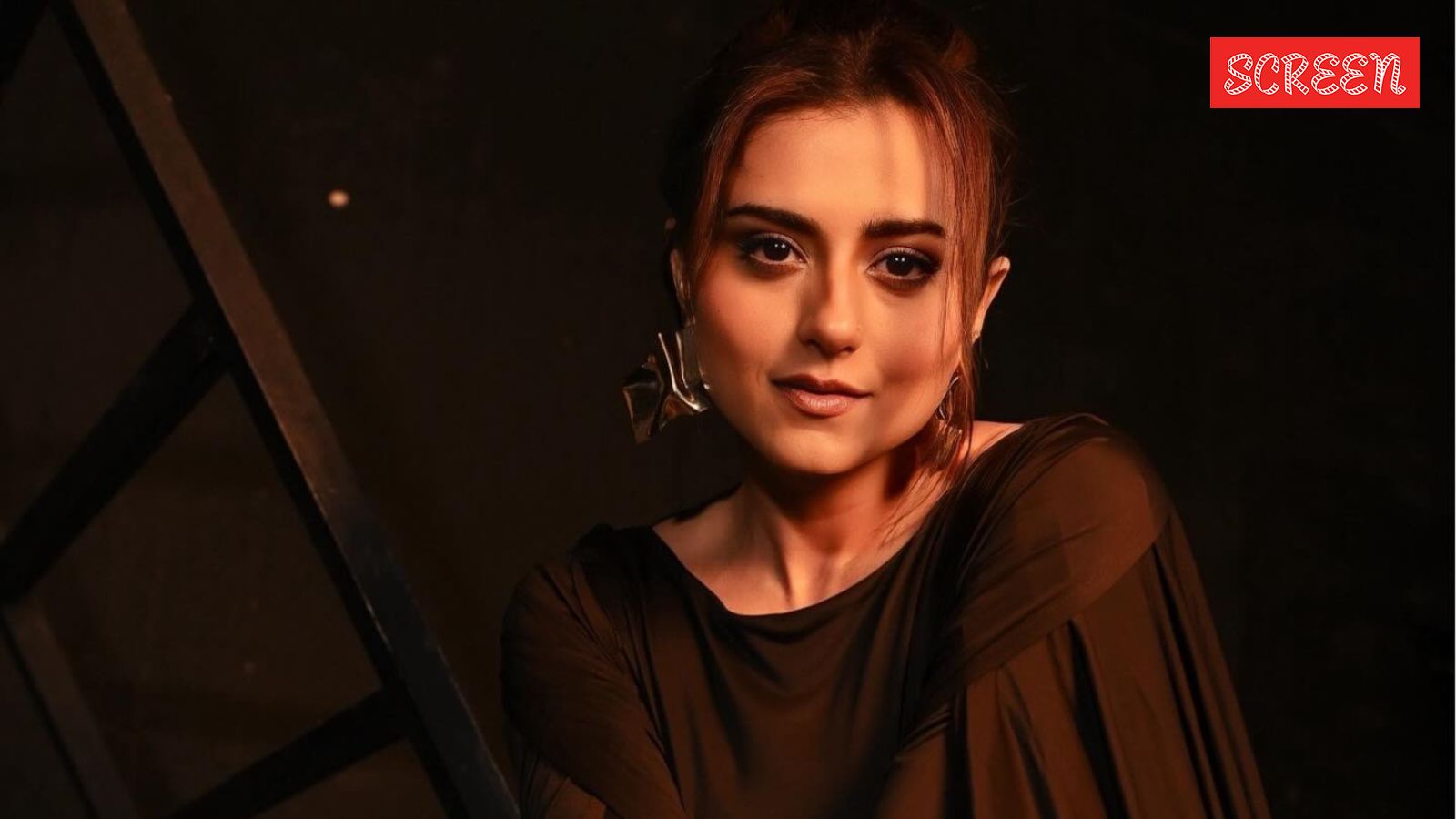
Bhumi Pednekar recently confessed to taking a 10-month break after the release of Netflix India show The Royals, for which she received her share of flak. While she’d already shot for her new Prime Video India crime thriller show Daldal and Danish Aslam’s Adhoore Hum Adhoore Tum opposite Imran Khan, she admits that she feels reenergized as an actor going into a courtroom drama this March.
In an exclusive interview with SCREEN, the cast of Prime Video India show Daldal — Bhumi Pednekar, Aditya Rawal, and Samara Tijori — and makers — Suresh Triveni and Amrit Raj Gupta — talk about creating a slow-burn thriller show and switching from sunshine to darkness.
Bhumi, you shot for Daldal right after The Royals. While you’ve said that you took a break from acting after the criticism for the latter, you’ve been appreciated for your performance in the former. Do you have second thoughts about your decision then?
Bhumi: No, actually I don’t have second thoughts about any work I’ve done. I’ve loved everything I’ve done in my life. I loved The Royals as well. I really enjoyed the show. The reason I took a break was that I want to do better in the next decade. I’ve done 25 films and shows so far. I want to improve as a performer, as an artist, my skill set. This will continue — there’ll be things that work and those that don’t, but I felt depleted as an actor. That’s why it was important for me to step back, go do workshops, study, read, experience life, travel, and get in touch with the human side of me, which I had disconnected with. I felt reenergized.
When you watched Daldal, was there something you could see which has shifted now which you couldn’t see on screen?
Bhumi: Hundred percent. I’ve just become kinder to myself. I’d forgotten that. Also, doing Daldal was a healing for me. At times, you can’t see certain things because you’re so critical and harsh of yourself. But there are people around you who have faith in you and form a really strong safety net. Now, more than ever, I needed that. It’s important to be protected for all artists, not just actors, because you’re very sensitive, vulnerable, and even mad. If there’s any great work that comes, it also comes from that place of being unsure.
Speaking of being hard on yourself, Aditya and Samara, why do you guys always choose these rather traumatized characters instead of maybe playing it safe and doing the song-and-dance like other new actors?
Story continues below this ad
Aditya: Honestly, the decision-making process is much simpler than one might think. Three things allow you to invest yourselves completely in a project or a show — the story, the character, and the script. There’s no question if all three are in place. Sometimes, the satisfaction of going home after playing these challenging characters, there’s nothing like that.
Samara: There’s not much of a choice situation here. In the sense, I’d love to do everything. But a lot of scripts that I do end up auditioning for are these parts that I have access to inside me and really love showcasing. That’s why I gravitate towards these parts.
Suresh and Amrit, one wouldn’t have imagined that a crime thriller like Daldal could come from the minds of the directors of Tumhari Sulu and Gullak respectively. What does this tonal shift do to you as artists?
Suresh: We’re storytellers. We don’t want to be telling the same stories again and again. What keeps you alive is the nervousness of jumping genres. You don’t do it for the sake of it. You do genres that you love to watch and make. While the world can box you, I don’t think you should box yourself. Actors have so much freedom. Bhumi can do right from a Sonchiriya (2019) to The Royals. It also keeps you alert. Eventually, stories are there, but what really interests me are the characters and actors. That’s why Amrit was given an opportunity to direct Gullak, but there’s more to him. These challenges are what keep you going.
Story continues below this ad
Amrit: I purposely don’t want to repeat myself. Crime drama is my favourite genre. Memories of Murder (2003) is my favourite film. I really loved Breathe that Abundantia Entertainment made. I really enjoyed working with Suresh sir. I was planning to save this line for Instagram, but “if TVF was my first school, Suresh Triveni is my second school”. It was a learning experience just to observe him in the writers room.
Bhumi, is this the first time you’ve been credited as Bhumi Satish Pednekkar?
Bhumi: Yes. I wanted my dad’s name to be there because it just felt like the right time. I’d been thinking about it for a while. It was a process of shedding everything like a restart. Not a restart, but somewhere a part of my healing. I didn’t have a lot of time to deal with whatever happened with my father. I got all that time now in the past few months when I wasn’t actively on a film set. It’s too personal to me.
Samara and Aditya, your fathers Deepak Tijori and Paresh Rawal, were two of the most iconic villains of the 1990s. The legacy lives on in you with Daldal, but is there something you’ve replicated from their careers and something you’ve avoided?
Story continues below this ad
Samara: I’ve seen my father go to work for very many years. Then I’ve also seen him not for some time, and now he’s gone back. Honestly, I took a lot from him when it came to resilience and patience. I’ve seen him have really great days and really bad days. I discuss what I’m taking up with him. But it’s a discussion. It’s not a “Can I?” It’s an “I’m doing this”. Both of us have this trust with each other. If I’ve had a bad day on shoot or otherwise, I call him. He’s been that space for me.
Aditya: Having watched my father and my mum work, they have a blue-collar approach to work. I’d like to emulate that idea of keeping your head down and working whatever the results be. My father’s had ups and downs like anyone in their career, to me it’s never been apparent because I felt it’ll always be that way. He’s made a conscious effort to reinvent himself that’s allowed this longevity of over 40 years. You can’t tell that by looking at the surface, but that’s where the headspace is being invested as opposed to being preoccupied with other things. Whatever we might see happening in our careers, at least in the near future, they’ve probably seen it all. It’s so refreshing. Nepotism may have thousand other advantages, but the biggest is you have an example right in front of you. Sometimes, their advice is tinged with other things also, right? (Laughs). But you take the guidance from how they conduct themselves. You do what the doctor does, not what the doctor says.
Do you have a favourite Paresh Rawal and a favourite Deepak Tijori performance?
Aditya: Mine is three in one film — Oye Lucky! Lucky Oye! (2008).
Story continues below this ad
Samara: Mine was Aashiqui (1990) and Jo Jeeta Wohi Sikandar (1992). Shekhar Malhotra forever!
Bhumi, was working with Imran Khan in his comeback film liberating for you as a rom-com buff?
Bhumi: It’s my most favourite genre. I had a very big crush on Imran Khan when Jaane Tu… Ya Jaane Na (2008) had come. I remember I saw this Vogue cover of his that had come out when he came into public light after many years because he had a bit of a journey. I was like, what film must this be yaar? I wish I get to do an Imran Khan kind of a film. Six months later, I get a call from them saying, “We’ve got a script. Will you read it?” Honestly, it’s an evolved version of what that genre was because it’s very raw and real. I had a lot of fun working with them.
Story continues below this ad
Suresh, when you made your directorial debut with Tumhari Sulu in 2017, it was a sleeper hit at the box office. But there’s been a steady decline in women-led films in recent years. Do you think we’ve lost that landscape completely?
Bhumi: I hope not!
Suresh: No, to be honest, what you’re saying is true. That landscape was an outcome of budgets. There was this bracket of budget from which these films used to get made and released in theatres, but that bracket is no longer there. It’s really sad because in 2011-2018, there were so many such films. Now, it’s difficult. I’m sure it’ll change. We just need to have another superhit led by a woman.
Bhumi: The audience will have to make that happen. They’ll have to go to theatres. There are good films that all of us are trying to put out.
Suresh: Recently, Vidya Balan and I were chatting about a film, and the first question we asked each other, “Ye abhi banegi kya?” But I hope it all changes.