Scientists released up to 45,000 cubic feet of water per second from Glen Canyon Dam for 8 days in 1996; the artificial flood rebuilt Grand Canyon sandbars

Scientists released up to 45,000 cubic feet of water per second from Glen Canyon Dam for 8 days in 1996; the artificial flood rebuilt Grand Canyon sandbars

Glen Canyon Dam (Image Credit: Canva) For eight days in 1996, the Colorado River through the Grand Canyon experienced something unusual: a deliberately created flood. Scientists working with the U.S. Geological Survey (USGS) and other agencies used Glen Canyon Dam to release water at rates reaching 45,000 cubic feet per second, creating a massive controlled…


Read More
In 1894, two scientists independently used snake venom to create the world's first antivenoms; one discovery changed treatment of deadly bites |

In 1894, two scientists independently used snake venom to create the world’s first antivenoms; one discovery changed treatment of deadly bites |

A snake bite in the late 19th century offered little certainty about what would happen next. There were attempts to counter venom with chemicals and other remedies, but no established treatment could directly neutralise the poison. Then, in France in 1894, two research teams arrived at a very different idea. Albert Calmette, working within the…

Read More
Quote of the day by Richard Feynman: "To every man is given the key to the gates of heaven. The same key opens the gates of…" - a powerful reflection on choice and consequences |

Quote of the day by Richard Feynman: “To every man is given the key to the gates of heaven. The same key opens the gates of…” – a powerful reflection on choice and consequences |

Quote of the day by Richard Feynman (Image: Wikipedia) Some of the most memorable lines are powerful precisely because they manage to say something genuinely complicated in just a few words. This one, often credited directly to the physicist Richard Feynman, is a genuine example. “To every man is given the key to the gates…

Read More
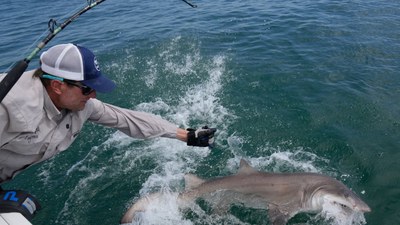
Jaws’ territory is now a great white nursery: 18 young sharks found off New York’s Hamptons as scientists investigate why they keep returning

Jaws’ territory is now a great white nursery: 18 young sharks found off New York’s Hamptons as scientists investigate why they keep returning

The waters off New York’s Hamptons, once immortalised as shark-infested territory in Jaws, are revealing a very different story. Researchers have confirmed a summer nursery for young great white sharks in the New York Bight, with studies showing juvenile whites repeatedly using the region’s coastal waters during their early years. NOAA lists Long Island among…

Read More
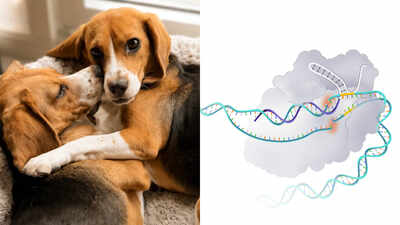
Researchers edited 25 beagle embryos to remove a major dog allergen; two pups born in 2024 produced no detectable Can f 1 and did not trigger one allergic founder’s skin-prick test

Researchers edited 25 beagle embryos to remove a major dog allergen; two pups born in 2024 produced no detectable Can f 1 and did not trigger one allergic founder’s skin-prick test

Researchers tested saliva and dander from the gene-edited dogs and found no detectable Can f 1 protein. The resulting 25 reconstructed embryos were implanted into a surrogate beagle, which eventually gave birth to Alfie and Bailey. Dogs are often called humans’ best friend, but for people with dog allergies, living with a canine companion can…

Read More
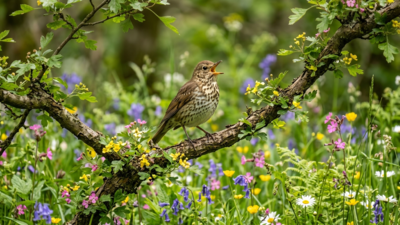
Birdsong Pleasantness: Why do some birdsongs sound better than others? A study of 123 songs in Germany links pleasantness to pitch, bandwidth, and complexity

Birdsong Pleasantness: Why do some birdsongs sound better than others? A study of 123 songs in Germany links pleasantness to pitch, bandwidth, and complexity

For centuries, poets have been fixated on birdsong. They called it nature’s closest approximation to music. John Keats was obsessed with the nightingale’s ‘full-throated ease’, while Percy Bysshe Shelley imagined the skylark pouring forth an ‘unpremeditated art’ of ‘shrill delight’ from the heavens. William Wordsworth heard more than a call in the cuckoo; it was…

Read More
Quote of the day by Stephen Hawking: "I believe the simplest explanation is, there is no God. No one created the universe and…" - a profound reflection on life, death and the universe |

Quote of the day by Stephen Hawking: “I believe the simplest explanation is, there is no God. No one created the universe and…” – a profound reflection on life, death and the universe |

Quote of the day by Stephen Hawking Few questions have occupied the human mind for quite as long as why the universe exists, and whether human life actually has any real purpose. For centuries, people have approached these questions through religion, philosophy and science, often arriving at genuinely very different conclusions. Stephen Hawking, one of…

Read More
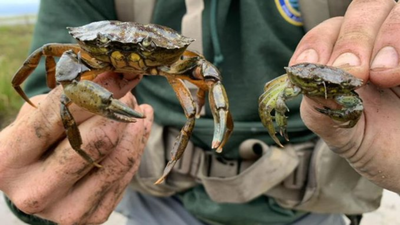
New England has battled invasive green crabs for more than 200 years; now people are eating the destructive species in a bid to protect shellfish, wetlands and coastal ecosystems

New England has battled invasive green crabs for more than 200 years; now people are eating the destructive species in a bid to protect shellfish, wetlands and coastal ecosystems

Since time immemorial, humans have been consuming food derived from the land, air and water. From vegetables and birds to even crabs, there is not much we have not used to survive on. But currently, people in New England are feasting on green crabs not to survive themselves but to help the native species subsist….

Read More
Scientists found a fungus that turns female flies into zombies, then uses their dead bodies to spread spores to healthy flies |

Scientists found a fungus that turns female flies into zombies, then uses their dead bodies to spread spores to healthy flies |

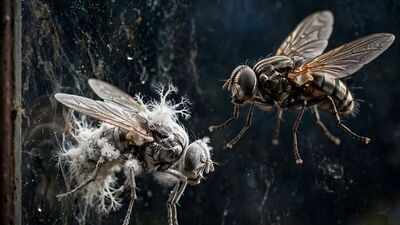
A fungus that infects house flies has evolved a remarkable way to send spores towards new hosts. Entomophthora muscae grows inside an infected fly and, after the insect dies, it produces microscopic stalks that emerge from its body. Each stalk forms a single spore at its tip. Instead of simply dropping away, the spore is…

Read More
In 2003, Nasa researchers found freshwater snails mated and reproduced in space, with gravity-sensing statoconia 50% larger by volume than ground controls |

In 2003, Nasa researchers found freshwater snails mated and reproduced in space, with gravity-sensing statoconia 50% larger by volume than ground controls |

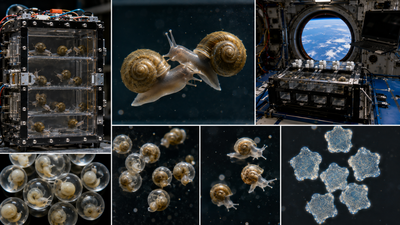
In 2003, Nasa researchers reported that freshwater snails carried into orbit aboard the Space Shuttle had mated and reproduced during their mission, allowing their gravity-sensing organs to develop entirely under microgravity. According to the study published in PubMed, tittled ‘Otoliths developed in microgravity‘ formed part of the results of the STS-90 Neurolab Spacelab mission, a…

Read More