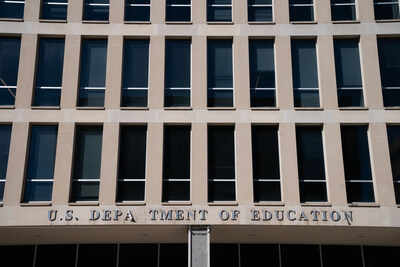
A decision taken in a boardroom in Pensacola has begun to ripple across Florida’s higher education system. In a move that signals yet another recalibration of academic priorities, education leaders in the state have voted to strip sociology of its long-standing place as a core graduation requirement at public universities, as reported by The Guardian.From August, the subject, once a staple of general education, will be pushed to the margins, available only as an elective. For generations of students, introductory sociology has served as a gateway to understanding inequality, institutions, and social change. Now, it will no longer count toward the essential credits needed to graduate.The ruling applies uniformly across all 12 state-governed universities, marking a structural shift rather than an isolated curriculum tweak.
“Political advocacy dressed in the regalia of academia”
At the heart of the decision lies a sharply worded critique of the discipline itself. Ray Rodrigues, chancellor of Florida’s university system and a close ally of Governor Ron DeSantis, framed the move in ideological terms.“Sociology as a discipline is now social and political advocacy dressed in the regalia of the academy,” Rodrigues told the board, according to reporting by the Miami Herald.The statement captures the administration’s broader stance: that certain academic fields have drifted from scholarship into activism. It is a view that has increasingly guided policy decisions under DeSantis’s leadership.
A steady remaking of higher education
The sidelining of sociology did not emerge in isolation. It is part of a sustained campaign to reshape Florida’s public universities, one that critics describe as an ideological overhaul, and supporters hail as a corrective to perceived bias.In 2024, the same board replaced a higher-level sociology course with a history requirement in the core curriculum. More broadly, the state has moved to eliminate diversity, equity, and inclusion (DEI) programmes, arguing they foster division rather than dialogue.The transformation has extended beyond syllabi into governance itself. At the New College of Florida, a small liberal arts institution once known for its progressive ethos, the state replaced the existing board with conservative appointees in what opponents labelled a “hostile takeover”. The changes triggered national attention and deep unease among faculty and students.A similar intervention followed at the University of West Florida in early 2025, where new board appointments stirred controversy. Among them was Scott Yenor, a political science professor whose past remarks about working women had drawn widespread criticism. He later resigned.
Turbulence, backlash and uneasy transitions
The reshaping of Florida’s academic landscape has not unfolded without friction. At New College, reports of thousands of discarded library books, including an entire section dedicated to gender and diversity, provoked outrage. Some Democratic lawmakers drew stark historical comparisons, intensifying an already polarised debate.At the University of Florida, scrutiny fell on former president Ben Sasse, a Republican and DeSantis ally whose brief tenure became mired in controversy as reported by The Guardian. Investigations by the student newspaper alleged significant spending and patronage hires, claims Sasse denied. Yet the episode added to a growing sense of instability within institutions undergoing rapid change.
The battle over the classroom
To supporters of the reforms, the removal of sociology as a requirement is a necessary step toward restoring intellectual balance. They argue that universities should prioritise disciplines perceived as less ideologically charged.Critics, however, see something more profound at stake. Sociology, they contend, equips students with tools to interrogate power, inequality and social systems, skills that are increasingly vital in a complex world. Its demotion, they argue, risks narrowing the scope of higher education itself.
An inflection point for American universities
Florida’s decisions are being closely watched far beyond state lines. In an era when universities have become battlegrounds for cultural and political contestation, the question is no longer confined to one discipline or one state.What is being renegotiated is the purpose of higher education: whether it should challenge prevailing norms or reinforce them, whether it should provoke discomfort or prioritise consensus.As the August deadline approaches, campuses across Florida are adjusting schedules, rewriting course catalogues and preparing for a new academic order. But the deeper debate, over knowledge, power and the role of the university, shows no sign of settling.