The pullback comes amid a stronger US dollar, surging crude oil prices, and elevated geopolitical tensions in the West Asia.
US President Donald Trump has warned that Iran could face severe military consequences within the next two to three weeks if diplomatic resolution fails. Such rhetoric has heightened concerns over prolonged conflict, reinforcing the dollar’s strength and exerting downward pressure on gold and silver.
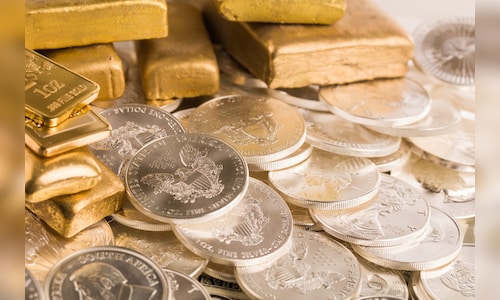
Globally, spot gold slipped 0.5% to $4,652.89 per ounce, while US gold futures for April delivery held steady at $4,678.70 an ounce amid thin trading, as many Asian and European markets were closed for a holiday.
Spot silver fell 0.9% to $72.34 per ounce.
Analysts point to a combination of a firm dollar and stronger-than-expected US employment data as key factors.
Data released on Friday (April 3) showed that US nonfarm payrolls increased by 178,000 jobs in March, the strongest monthly gain since December 2024, while the unemployment rate fell to 4.3%.
The results reinforced expectations that the Federal Reserve is unlikely to cut interest rates this year, increasing pressure on non-yielding assets like gold.
Crude oil prices remained elevated, with Brent hovering above $111 per barrel, as the US–Iran conflict continues to disrupt energy supply routes through the Strait of Hormuz.
Higher oil prices are stoking inflation concerns globally, which, in turn, are influencing interest rate expectations and weighing on bullion demand.
In India, Prithviraj Kothari, Managing Director at RiddiSiddhi Bullions and President of the India Bullion and Jewellers Association, described the recent price decline as a tactical correction within a broader structural uptrend.
“After an extended rally, gold and silver are facing profit-booking near key resistance levels, alongside a strengthening US dollar. The weakness should be viewed as a consolidation phase, offering strategic accumulation opportunities rather than a bearish signal,” he said.
Analysts noted that while geopolitical risks remain elevated, markets are pricing in prolonged conflict without immediate systemic disruption. Central bank buying, ETF inflows, and fiscal uncertainties continue to support the underlying fundamentals of precious metals.