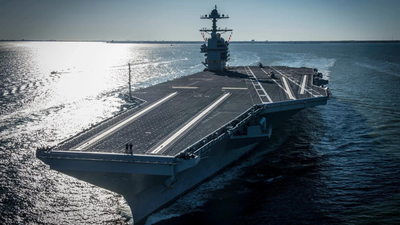
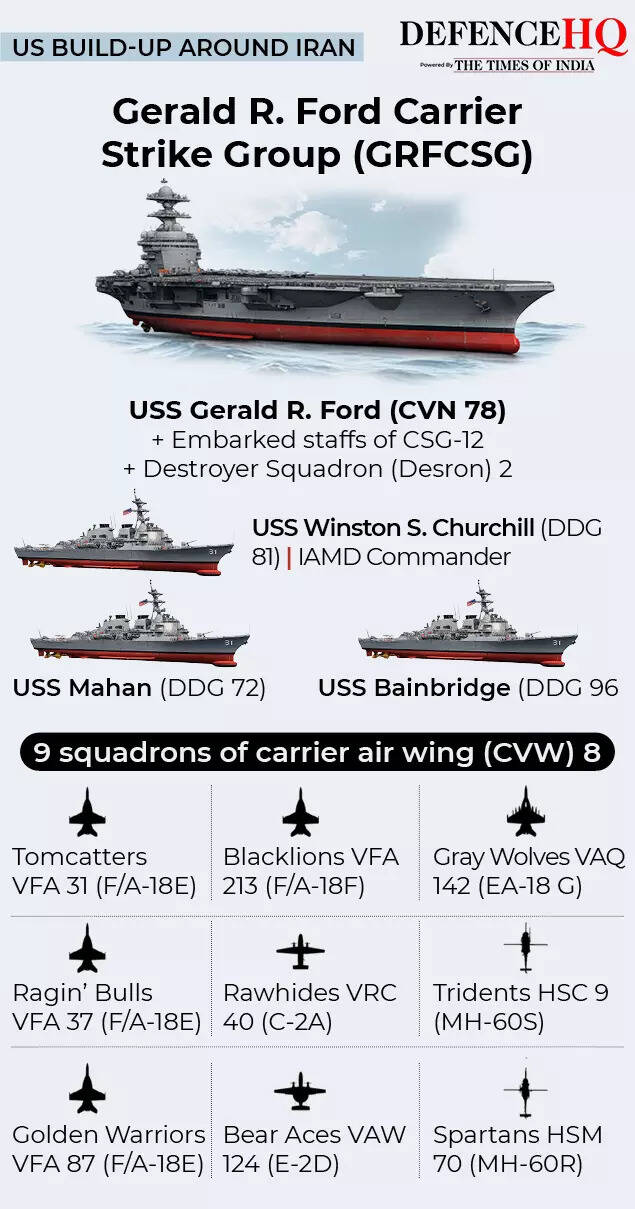
The USS Gerald R Ford, US Navy’s most expensive aircraft carrier, has come under renewed scrutiny after it was forced to leave its Middle East deployment following a fire onboard, even as longstanding concerns about its operational readiness remain unresolved.The carrier arrived at a port in Crete earlier this week after a fire broke out in its laundry area during deployment linked to operations involving Iran. The incident saw two sailors getting injured and led to more than 200 sailors being treated for smoke inhalation, according to US senator Tim Kaine, who raised the issue in a letter to Navy Secretary John Phelan, reported Bloomberg.
The development has drawn attention to broader questions surrounding the $13.2 billion warship, which was delivered in May 2017 after delays and has since faced persistent technical and testing challenges.
Lack of operational data
A recent assessment by the Pentagon’s testing office noted that “insufficient data are available at this time” to determine the operational effectiveness of the Ford-class carriers, citing incomplete realistic combat testing even years after induction.
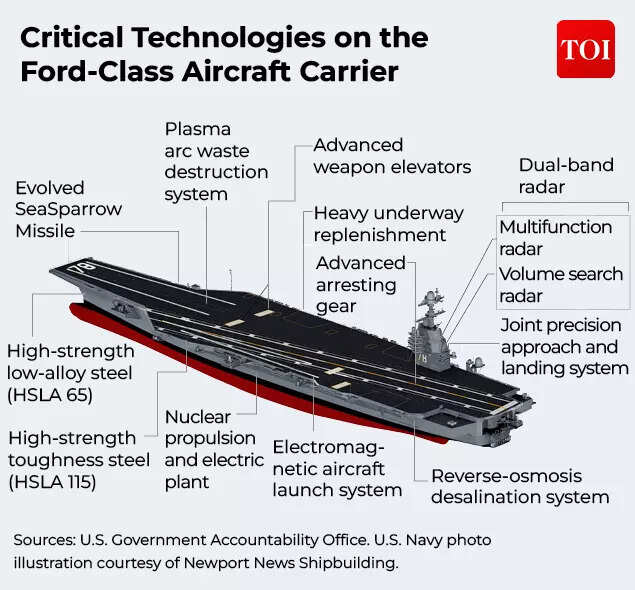
The report cited by Bloomberg also flagged gaps in assessing “operational suitability,” including the reliability of key systems such as aircraft launch and recovery, radar performance, weapons elevators and the ship’s ability to sustain operations under enemy attack. The lack of sufficient test data means it remains unclear how effectively the carrier can detect, track or intercept threats such as enemy aircraft, anti-ship missiles or small attack craft, particularly under the strain of sustained combat operations involving continuous flight activity.Some previously identified issues also remain unresolved. While the Navy has developed fixes for certain combat system deficiencies highlighted in earlier classified assessments, the Pentagon testing office said “the fixes still remain largely unfunded.”
The old sewage issue
The supercarrier has also faced persistent sewage system failures even during active deployment. The carrier introduced a vacuum-based waste system adapted from cruise ships to reduce water usage. However, reports, including those cited by Gulf News, indicate that the system’s narrow pipes have struggled to cope with waste generated by a crew of over 4,600 sailors, leading to frequent clogs and repeated vacuum failures. NPR reported that emails it reviewed documented 205 sewage-related breakdowns within a four-day period, with engineering crews working extended shifts of up to 19 hours to manage leaks and overflows. During its 2025 deployment, the carrier averaged roughly one sewage-related maintenance call per day, according to Navy Times. Earlier reports, including from Forbes in 2022, noted that severe blockages required specialised acid flushing procedures costing around $400,000 each time, reflecting the recurring and costly nature of the issue.
Extended missions and amenity shortage
The report also pointed to logistical and personnel challenges, including a shortage of berthing space. It noted that an additional 159 bunks are required to adequately accommodate the ship’s crew and associated personnel, warning that such shortfalls “will affect quality of life onboard.” The issue could intensify with the addition of newer aircraft and drone systems. Despite these concerns, the Navy has maintained that the carrier continues to demonstrate operational capability. It said its assessments take into account both testing performance and real-world deployments, adding that operations so far have shown the ship’s ability to meet mission requirements while “continuing to improve.”The Ford has been deployed at sea for about nine months, exceeding the typical seven-month deployment cycle, after being involved in operations related to Venezuela before being sent to the Middle East under orders from US president Donald Trump. Senator Kaine said that the extended deployment has required sailors to “improvise with broken equipment and ship support systems,” and warned it could become the longest carrier deployment since the end of the Vietnam War.The Navy has said it will continue testing and make improvements based on ongoing assessments and operational experience, noting that evaluation of complex systems such as the Ford-class carriers continues well beyond initial deployment.(With inputs from agencies)