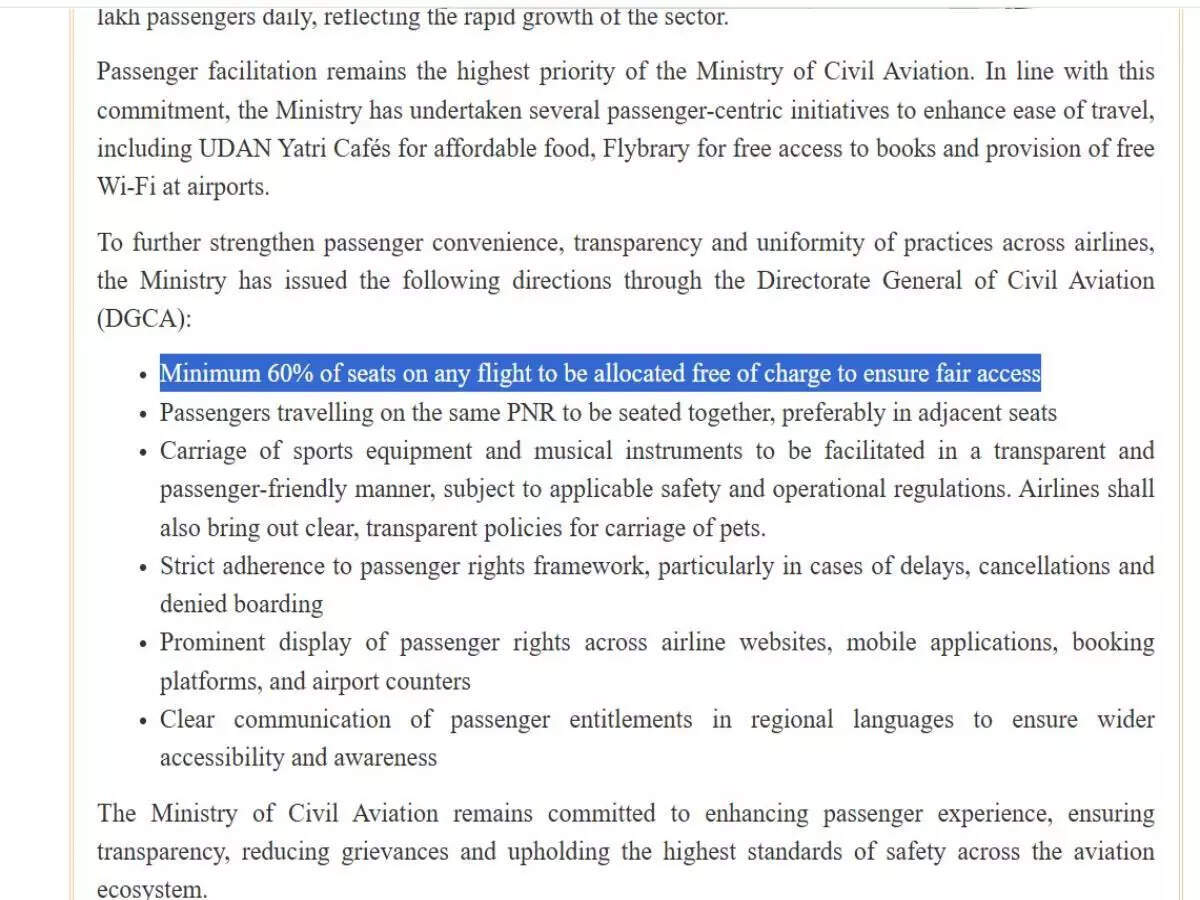
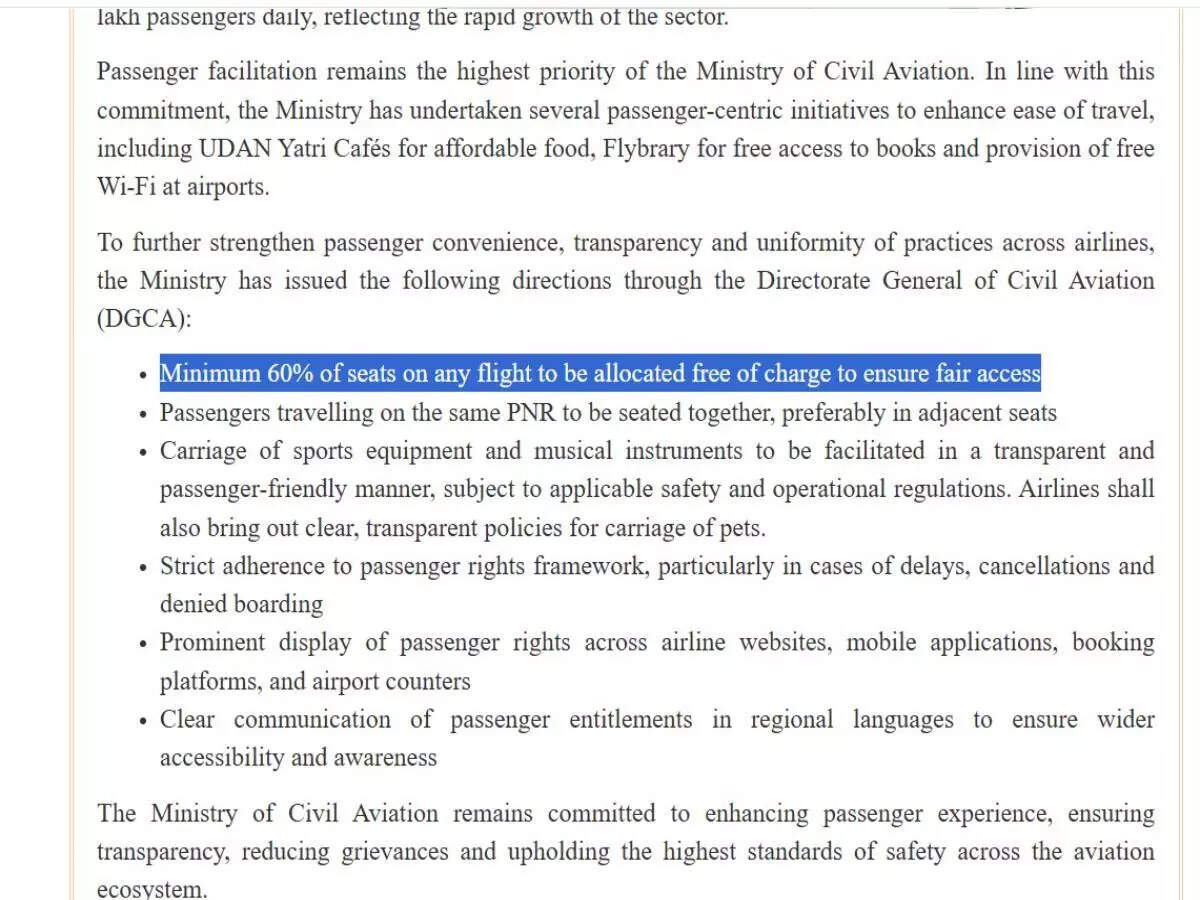
A big relief for air travellers! In a major step toward making air travel more affordable, accessible and passenger-friendly, the Ministry of Civil Aviation has issued new directives mandating that a minimum of 60% seats on every flight be allocated free of charge. It aims at fair and transparent access for travellers. The move, implemented through the Directorate General of Civil Aviation (DGCA), is part of a broader push to enhance passenger convenience. It’s a huge decision which comes as a major relief for passengers amid regularly changing and rising ticket prices during peak seasons.Understanding 60% Seats Rule
PIB
As per government directive, at least 60% of seats must be allocated free of charge. It aims at preventing fluctuating pricing practices. The main aim is to save travellers from excessive surge pricing. The directive is part of the broader regulatory programme by the Ministry of Civil Aviation and the aviation regulator. It will make air travel more easy, affordable and accessible along with preventing fare during the time of crisis and peak demand. However, airlines can price the remaining 40% of seats dynamically. Why it matters in the current scenario In the past also the government of India has intervened in aviation pricing in the time of crises. For example, during the time of COVID-19, airlines were given a directive to operate at limited capacity. The rule gradually increased from 30% to 60%, depending on the demand. Similarly, fare regulations have been placed by the government in the past to prevent airlines from charging excessively in case of emergencies.Other passenger-friendly reforms announced by DGCA1. Families and Groups to Sit Together: Passengers on the same PNR will now be seated together. It was a long-standing issue for families and group travellers.2. Baggage, Instruments, and Pets policies: Airlines need to:Facilitate carriage of sports and musical equipment in a transparent wayPublish clear and passenger-friendly policies for pet travel in accordance to safety regulations3. Stronger Passenger Rights EnforcementAirlines must strictly follow passenger rights guidelines, especially in cases of:CancellationsDelaysDenied boarding4. Better Information and AccessibilityPassenger rights must be displayed on airline websites, apps, and airport counters prominentlyInformation must be communicated in regional languagesWhat travellers should knowIt’s a beneficial rule for travellers in several ways:1. Affordable tickets: Earlier, the airlines would demand charges for seats which could be between INR 300 and over INR 900, depending on the type of seat (aisle, window). But with controlled pricing for 60% seats, travellers are more likely to find affordable tickets.2. Reduced Price: It’s a fact that airline prices in India fluctuate wildly. With this directive, it will stabilise pricing. For example, the change will be helpful on routes like Delhi–Mumbai or Delhi–Bengaluru, which always remain in demand.3. Accessible: The new change will make air travel more accessible for passengers. They can book tickets with greater confidence as seat prices won’t jump unexpectedly.Travellers who book early and have pre-planned their travel can access the lower fare bands. They can compare prices across airlines and book accordingly. The new rule will have the biggest impact on peak travel periods like festivals and long weekends, among other things.It’s a fact that India has now emerged as the third-largest domestic aviation market worldwide. This reflects the country’s growth and global connectivity. As per reports, Indian airports handle over five lakh passengers every day. It’s a remarkable growth in recent years. Much of this expansion has been driven by initiatives like the UDAN scheme, which has made flying more accessible to those living in tier-2 and tier-3 cities across the country.