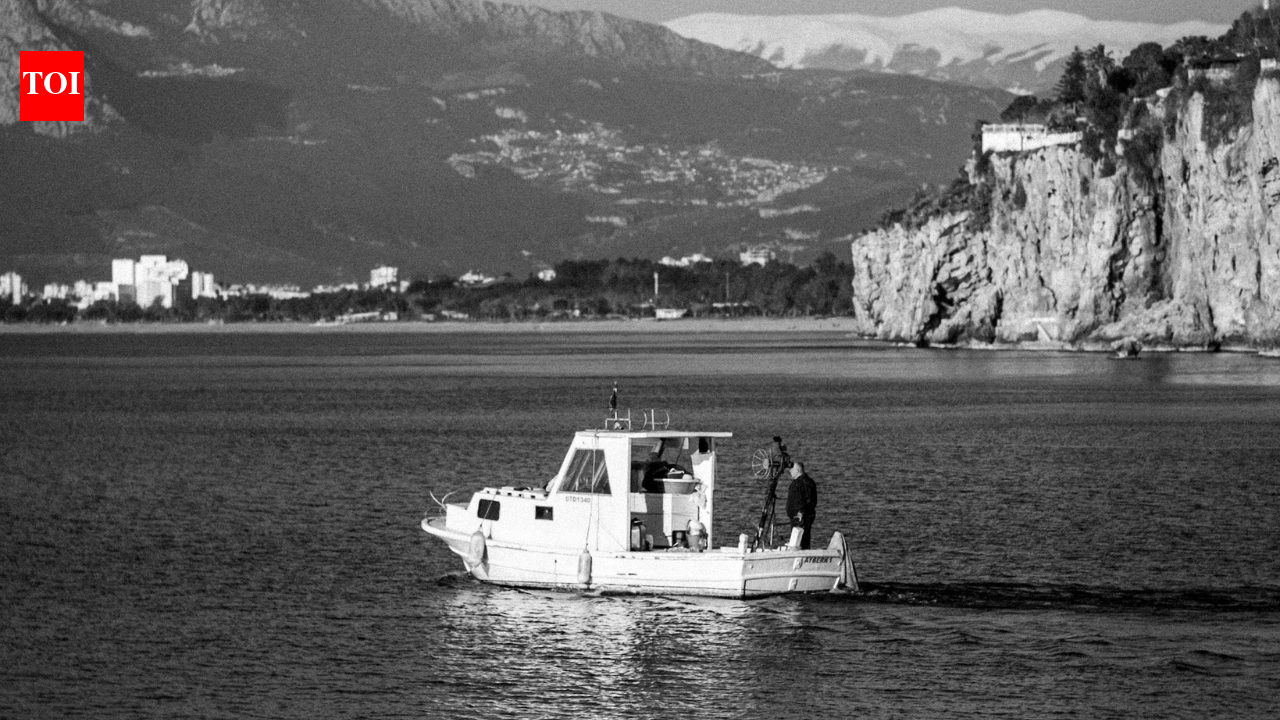
The sea has long been a place of awe, fear, and a healthy dose of superstition. Long before the advent of modern navigation and weather forecasting, sailors had to use their instincts and experience, along with a strange set of unofficial guidelines, to survive the unpredictable sea. Among these unofficial guidelines were some very strict taboos, such as not whistling on deck, not bringing bananas on board, and not even pronouncing certain words. Though they may seem amusing to us today, they were very much a part of maritime folklore and had been shaped by the dangers and isolation of the sea. Let’s take a look at some of the strangest sailor superstitions and their origins.
Why sailors believed ‘no whistling ’ at sea
One of the most common maritime superstitions is the prohibition of whistling on ships. Sailors thought that whistling would “whistle up a storm,” which would bring bad weather to the ship. This was a big deal to sailors back then because weather changes could be quite unpredictable.What is interesting to note is that there was a logical basis for the prohibition of whistling on ships. According to the Royal Museums Greenwich, whistling was sometimes used as a command by the boatswain (an officer on the ship). Thus, the prohibition of whistling was also a way to avoid confusion on the ship.What is interesting to note is the fact that the prohibition of whistling on ships was possibly a safety precaution disguised as superstition.
The curious case of ‘no bananas ’ on ships
The strangest rule of all: Bananas were bad luck on boats. This superstition still exists among some fishermen to this day. The history of this superstition goes back to the 18th century. Trading vessels carrying bananas from the Caribbean would encounter bizarre incidents: disappearing vessels, illnesses among the crew, or spoiled cargo.The reason behind this superstition may be that bananas ripen fast and emit ethylene gas, which can spoil other goods. In addition to this, venomous spiders were also found hiding in bunches of bananas, making them a threat to the sailors.The Hubbards Marina states: “Bananas were associated with shipwrecks and lost vessels during the height of the trade.” Over time, these practical risks evolved into a firm superstition: bananas simply did not belong at sea.
Other strange maritime superstitions
Sailors also had to adhere to many other strange regulations. For instance, it was believed to be unlucky to say the word ‘pig’ or ‘rabbit’ on board a ship, possibly because these were associated with chaos if they escaped their enclosures on board. Additionally, it was also believed to be unlucky to set off on a Friday, possibly because of the crucifixion of Jesus.Another interesting belief among sailors was the notion that women on board ships were unlucky. Paradoxically, it was also believed that female figurines on the prow of ships would calm the sea. Maritime historians have pointed out that sailors believed these female figurines could “appease the spirits of the ocean.”
Superstitions rooted in survival
Even though these rules may be viewed as irrational today, they are a product of the harsh realities of life at sea. As a result of having limited control over their environment, sailors developed belief systems to establish order in the midst of chaos. Most of these superstitions had a grain of truth in them, whether it was practical or based on observations of patterns.Ultimately, these are a product of humanity’s innate connection to storytelling and survival. Even in today’s world of modern technology, remnants of these old beliefs are still evident, proving that the mystery of the sea is never fully conquered.