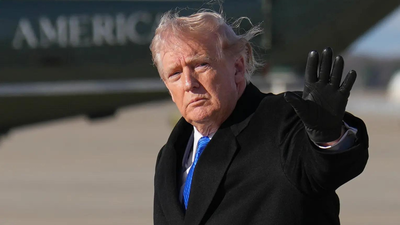
The Middle East crisis has stretched to its fourth week and oil prices have finally shown sign of relaxation, cooling off sharply on Wednesday. Fuel prices fell over 5%, giving back some of the gains from the previous session, as hopes of a possible diplomatic breakthrough in the Middle East raised expectations that supply disruptions might ease.The slide followed reports that the United States had put forward a 15-point proposal to Iran aimed at ending the ongoing conflict. US President Donald Trump said Washington and Tehran are “currently in negotiations” and suggested that Iran is eager to strike a peace deal, even as the Islamic Republic has denied holding any direct talks with the United States. He further added that in case the two nations agree to a deal to end the war, oil prices would “drop like a rock.”By 0058 GMT, Brent crude futures were down $6.21, or 5.9%, at $98.28 a barrel, after hitting a low of $97.57. US West Texas Intermediate crude futures fell $4.67, or 5.1%, to $87.68 a barrel, having earlier dropped to $86.72. The fall came a day after both benchmarks had climbed nearly 5% on Tuesday before retreating in volatile post-settlement trade. Meanwhile fuel prices also moved higher, with petrol climbing to a national average of $3.98 per gallon, according to the AAA motor club, marking a 34% rise since the war began. Diesel prices have surged even faster, reaching $5.35 per gallon, up 42% over the same period.Market participants appear to be adjusting positions amid slightly improved expectations of a ceasefire, leading to some profit booking. At the same time, uncertainty over the outcome of the proposed negotiations has kept the downside from deepening further.At the same time, supply concerns linked to the Strait of Hormuz remain unresolved. The conflict has disrupted flows through the key passage, which carries nearly one-fifth of global oil and liquefied natural gas shipments.International brokerage Macquarie told ET that even if tensions ease in the near term, oil prices are expected to hold firm in the $85–$90 range, with a gradual climb back towards $110 once normal flows through the Strait of Hormuz resume. It further cautioned that if disruptions continue through April, Brent prices could still rise to $150 per barrel.Looking ahead, the broader outlook points to further upside in crude. Kayanat Chainwala of Kotak Securities said prices could reach $120 per barrel in the near term and may even touch $150 if the conflict drags on.