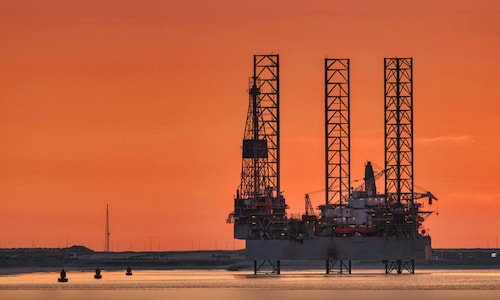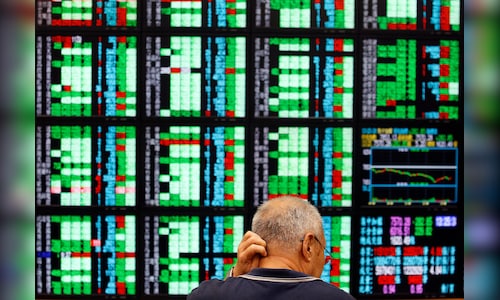
While parts of a bullish scenario sees an “everything rally”, the bearish scenario sees oil prices jumping to as high as $150 a barrel.
Here’s a look at the scenarios in greater detail:
Bullish Scenario
A bullish scenario will be when there is proper de-escalation in West Asia or there is a policy pivot by the US Federal Reserve. In such a scenario, they see a broad “everything rally” where equities advance, bond yields drop, oil prices fall, credit spreads tighten and the US Dollar weakens.
JPMorgan also expects small-cap stocks to lead the gains in case of a bullish outcome, followed by technology shares and the broader market.
The brokerage expects the cyclical sectors, particularly the consumer discretionary space such as homebuilders and retailers to outperform, along with financials and precious metal plays due to a weaker US Dollar. Energy stocks will underperform in such a scenario.
Emerging Markets would outperform the developed peers, led by Asia-Pacific and Latin America in this scenario, JPMorgan projected.
Bearish Scenario
In case of a bearish scenario, diplomacy will fail, military escalations would increase, resulting in further disruption to energy routes.
As a result, JPMorgan expects oil prices to soar and the West Texas Intermediate to rise to $125 and even to $150 a barrel.
“Such a shock would likely push yields higher due to stagflation risk, strengthen the dollar, widen credit spreads and weigh on equities broadly,” the brokerage wrote.
In such a scenario, JPMorgan recommends buying “all things energy”, adding that a prolonged conflict would also support renewables, defence companies and parts of the industrial supply chain.
Most of the other sectors, particularly airlines, would come under pressure.
Status Quo Scenario
In a status quo outcome, there would be limited de-escalation resulting in some market stability.
However, JPMorgan sees such stability as temporary and also one that leaves behind structural constraints in place, including reduced shipping traffic and lingering economic damage.
“It would be a short-lived win if Trump were to back away from his threats on Iranian infra, seemingly keeping Iran from targeting Saudi oil production while keeping the Houthis from closing access to the Red Sea,” the brokerage said.