
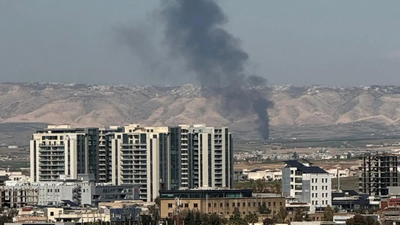
The nearly 50-day Iran war has wiped out more than $50 billion worth of crude oil production from global markets, with over 500 million barrels of crude and condensate knocked offline since the conflict began in late February, according to analysts and Reuters calculations.The disruption is being described as the largest energy supply shock in modern history, with experts warning that the aftereffects could last for months and, in some cases, years even if tensions ease.Iranian foreign minister Abbas Araqchi said on Friday that the Strait of Hormuz had reopened following a ceasefire agreement in Lebanon. US President Donald Trump also said he believed a deal to end the Iran war would come “soon,” though no timeline has been confirmed.500 million barrels missing from global supplySince the crisis began, more than 500 million barrels of crude and condensate have been removed from the global market, according to Kpler data.Analysts say the scale of the loss is difficult to overstate.The missing oil is equivalent to eliminating global aviation demand for 10 weeks, halting all road transport worldwide for 11 days, or leaving the global economy without oil for five days, according to Iain Mowat, principal analyst at Wood Mackenzie.Reuters estimates said the lost volume also equals nearly a month of US oil demand or more than a month of total European demand.It is also equivalent to roughly six years of fuel consumption by the US military, based on annual usage of about 80 million barrels in fiscal year 2021.The supply shortfall would also be enough to run the world’s international shipping industry for around four months.Gulf producers hit hardThe sharpest immediate impact has been felt across Gulf Arab energy producers.Countries in the region lost around 8 million barrels per day of crude production in March, nearly equal to the combined output of Exxon Mobil and Chevron, two of the world’s largest oil companies.Jet fuel exports from Saudi Arabia, Qatar, United Arab Emirates, Kuwait, Bahrain and Oman dropped from about 19.6 million barrels in February to just 4.1 million barrels across March and April so far, according to Kpler data.Reuters estimates said that lost jet fuel volume would have been enough for around 20,000 round-trip flights between John F. Kennedy International Airport and Heathrow Airport.$50 billion revenue blowWith crude prices averaging around $100 a barrel since the conflict began, the lost production translates to roughly $50 billion in missed revenues, according to Johannes Rauball, senior crude analyst at Kpler.That figure is equal to about 1 percent of Germany’s annual gross domestic product, or approximately the full yearly economic output of countries such as Latvia or Estonia.Recovery expected to be slowEven with signs of de-escalation, analysts say the energy market will not rebound quickly.Global onshore crude inventories have already fallen by about 45 million barrels so far in April, according to Kpler. Since late March, production outages have averaged roughly 12 million barrels per day.Heavier crude fields in Kuwait and Iraq may take four to five months to return to normal output, Rauball said, meaning inventory drawdowns could continue through the summer.Damage to refining facilities and Qatar’s Ras Laffan Industrial City liquefied natural gas complex could delay a full regional energy recovery for years.Markets watching diplomacyEnergy markets are now closely focused on whether the reopening of the Strait of Hormuz and diplomatic momentum can produce a durable settlement.The strait is one of the world’s most critical energy chokepoints, carrying a large share of global crude and gas shipments.Any renewed disruption could trigger another price spike, while a lasting ceasefire could gradually stabilize supply chains.For now, the war’s cost is already visible: half a billion barrels gone, $50 billion in lost oil output, and a global market still facing a long road to recovery.