
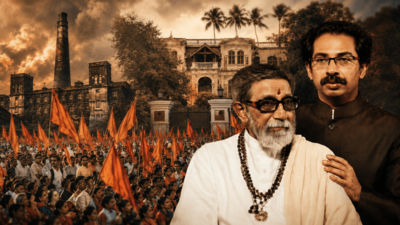
Earlier this month, the Shiv Sena completed 60 years of its existence. The milestone came in the backdrop of a bitter power struggle, marked by defections and betrayals.Once run as a tightly-controlled family enterprise, the Uddhav Thackeray (UBT) faction now stares at an existential crisis. Even as it embarks on a period of soul-searching to establish itself as the rightful political heir in the minds of the collective consciousness, its future remains in choppy waters.For sixty years, the Sena wooed the art of reinvention with finesse. Governments came and went, ideologies shifted at the centre of power – and, yet, through all these transitions, the Sena made itself useful to remain relevant.
Identity Matters
In 1966 Bal Thackeray (then a cartoonist with the Free Press Journal) launched the party from Shivaji Park, primarily, as an agency for the Marathi worker who found himself increasingly sidelined in jobs by the migrant Tamil labour, and the neighbouring Gujarati, and North Indian. From textile mills to engineering companies, ports, banks and government offices, the Marathi-speaking youth found himself a spectator, and not a stakeholder in the city’s commercial success and prosperity.The Shiv Sena saw this as a window, and tapped into the growing economic anxiety faced by the Marathi manoos. It accorded a local-vs-outsiders tenor to the (economic) struggle, and snatched the idea of a macro industrial conflict that was controlled by the powerful, Communist trade unions.
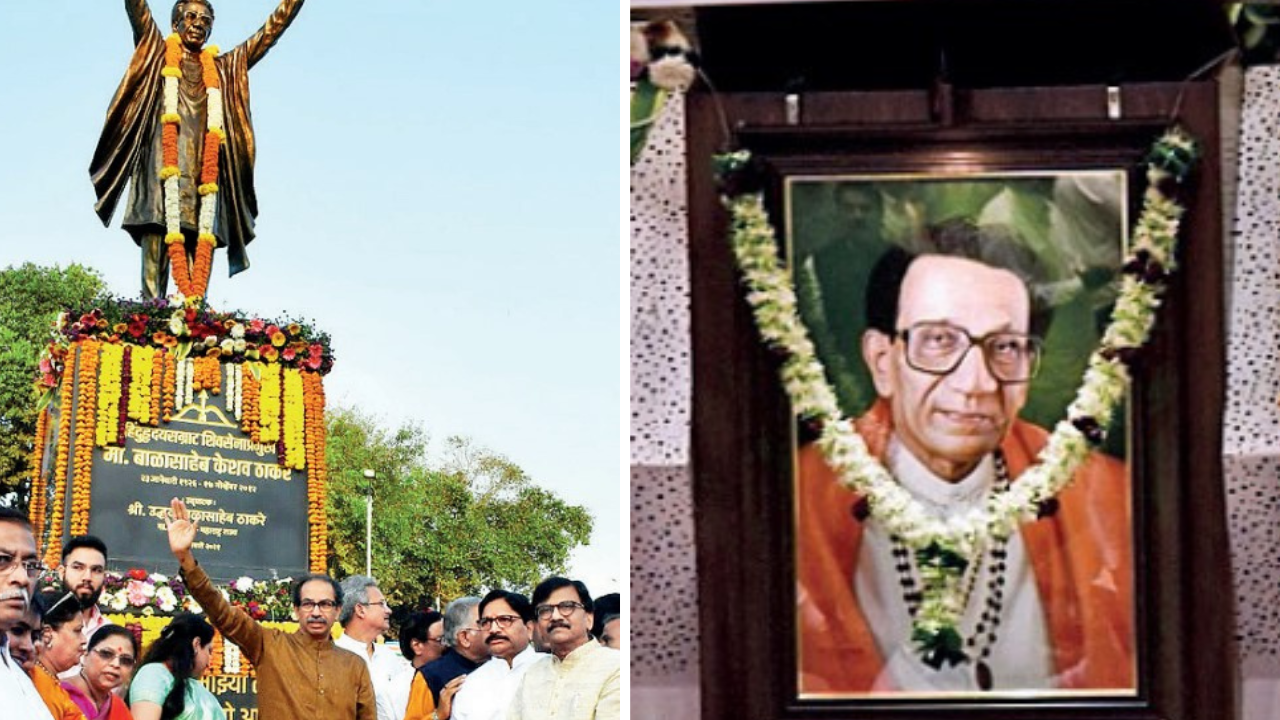
Uddhav Thackeray (left) pay tributes at the Bal Thackeray statue in Colaba on Monday. (Right) The portrait that was unveiled at the central hall of the assembly
The narrative was no longer about “How should workers be treated?”. Instead, the Sena managed to steer it towards “Who deserves the jobs?”. And thus it secured a loyal constituency – the working class – that led to altering the city’s political vocabulary, eventually as its shakhas disseminated the ‘local-first’ message via shakhas in working-class neighbourhoods. Electoral politics apart, the Sena managed to carve a spot through ‘friendly’ mediation, employment networks and local patronage.The ordinary worker became the Sena’s political hero.
No Full Stops in Bombay
And stayed so, till about the early ‘80s when the contours of Bombay changed.On January 18, 1982, approximately 250,000 workers from over 60 textile mills halted operations in solidarity, demanding better wages and higher bonus payments. The Great Bombay Textile Strike of 1982 stretched over 18 months as trade unionist Dr Datta Samant led the workers to demand the scrapping of restrictive labor laws.As Bombay stopped being a city defined by industrial labour, the Sena gradually moved away from labour politics. Over the next three decades, as winds of liberalisation blew across the country’s economy, the metropolis transformed into India’s financial capital.The Sena, too, had a new script to follow.Even though Marathi pride remained at its core, by the late 1980s, the Sena was warming up to the idea of Hindutva that was being pushed by the Bharatiya Janata Party with whom a later alliance would follow suit after the Ram Janmabhoomi movement. This partnership gave the Sena room to blend regional identity with religious nationalism, and propped up its political fortunes.The Sena’s status was elevated as it moved from managing factory unions to the lucrative Brihanmumbai Municipal Corporation (BMC), which ranks among the richest municipal corporations in India and Asia. Control of the BMC yielded contracts, welfare, influence, and was good for optics as the shakhas micro-managed neighbourhoods and continued with their political mobilisation.
One-Man Show
At the centre of the Sena stood, or sat, rather, Bal Thackeray in his princely home, Matoshree. The cartoonist founder of the party became its emotional centre and anchorage, traversing multiple political arcs over the years. (The Sena supported Mrs Gandhi’s Emergency, supporting the Communists etc). Never anointed as CM, yet he managed to keep the Vajpayee govt on its toes at the Centre when the alliance was in power.
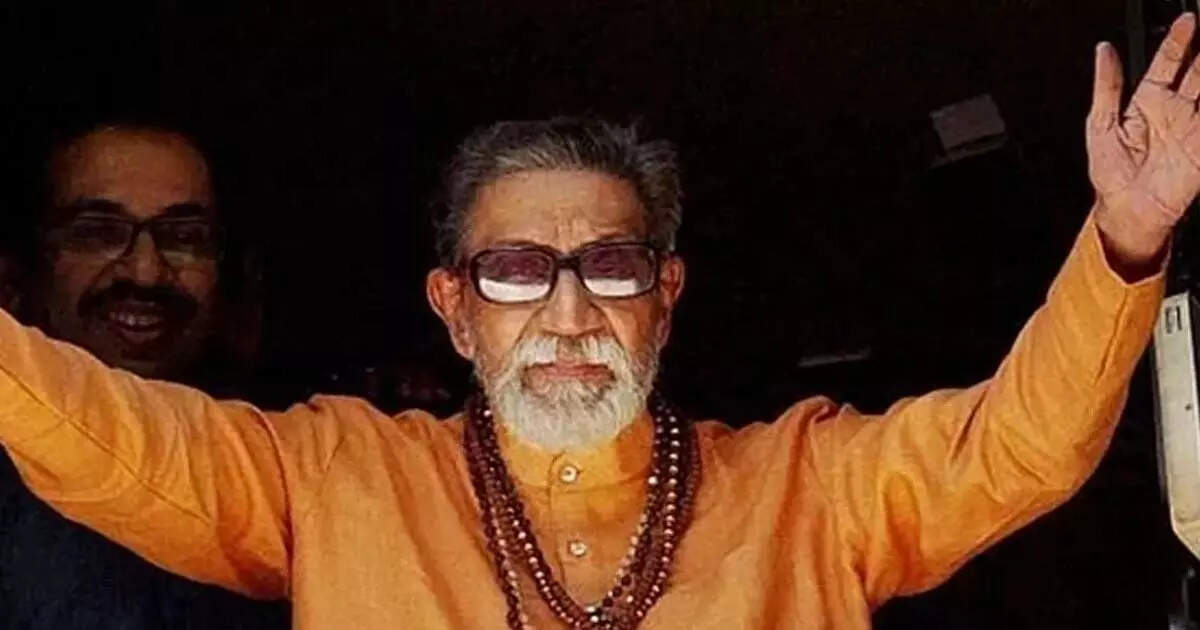
The cartoonist founder of the party became its emotional centre and anchorage, traversing multiple political arcs over the years.
From invoking Marathi pride to jobs for locals to becoming a de facto patron figure of the Hindi film industry, Thackeray senior had the rich and the powerful seek him out as the Sena became an influential urban political organisation. In the aftermath of the 1992-93 riots, the party projected itself as the uncompromising defender of Hindu interests even as critics slammed it for playing the communal card.1995 saw the BJP-Shiv Sena alliance first forming the government in Maharashtra. The symbolic renaming of Bombay as Mumbai validated the Sena’s long-standing emphasis on regional Marathi identity, a plank that would be used by it in later years.
Existential Crisis
For almost three decades thereafter, the BJP and Shiv Sena stuck it out together, trying to make the union work. As the BJP started to gain prominence in the national consciousness under Narendra Modi, it became the primary custodian of Hindutva. A spectacular show at the electoral booths in 2014 gradually dented the Sena’s monopoly over the ideological space that it had once helped build.
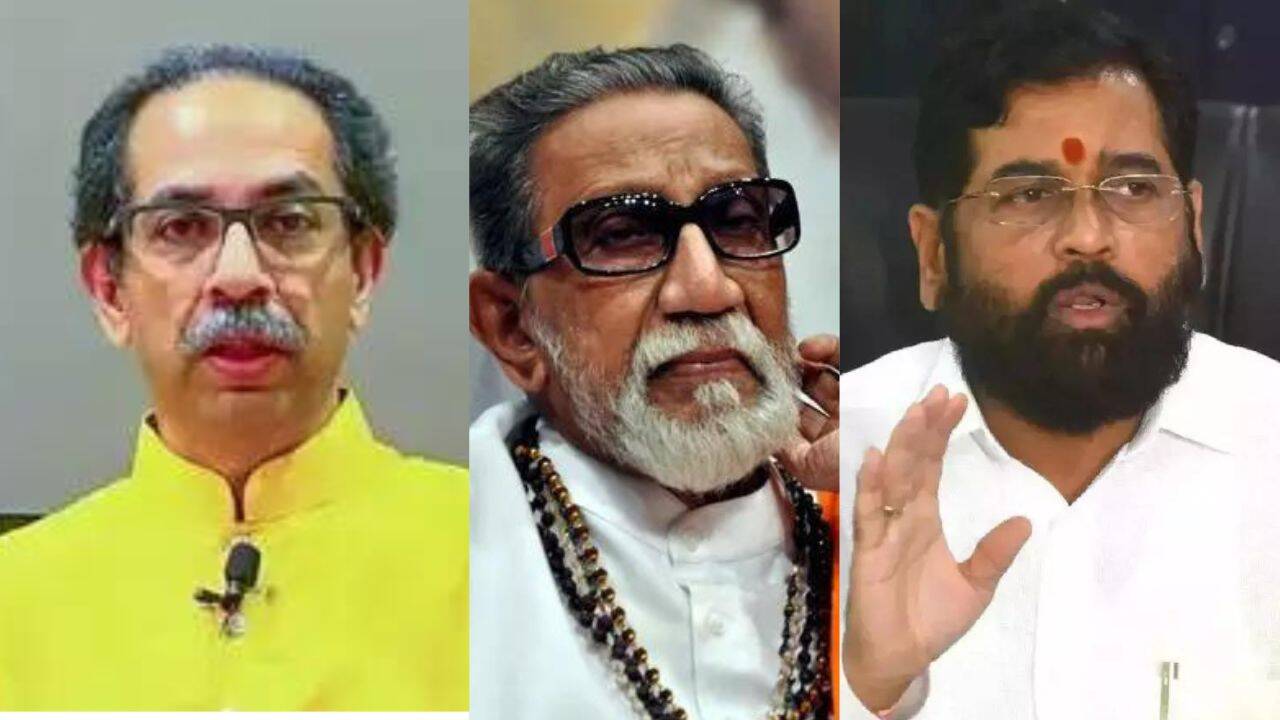
Uddhav Thackeray; Bal Thackeray; Eknath Shinde
Tensions surfaced, and eventually exploded after the 2019 Maharashtra Assembly elections. Despite contesting jointly, disagreements over the chief minister’s post led Uddhav Thackeray to sever ties with the BJP and form the Maha Vikas Aghadi government with the Nationalist Congress Party and the Congress (parties the Sena had spent decades opposing). It was perhaps the most extraordinary ideological pivot in the party’s history.After three years, the MVA experiment proved short-lived. In 2022, Eknath Shinde led a rebellion that split the party down the middle. Backed by the BJP, his faction eventually secured official recognition as the “real” Shiv Sena, including its iconic bow-and-arrow symbol. The split was more than organisational; it represented competing visions of the Sena itself.
Heir & Now: Sense of Purpose
For Uddhav Thackeray, the youngest of Bal Thackeray’s sons (he is estranged from his older brother Jaidev, and his oldest brother Bindumadhab passed away in 1996), the challenge no longer lies in proving that he is the political heir of the Sena. It lies in establishing the Sena’s sense of purpose in politics.The MVA experiment, in its own way, drove a silent wedge between the party and its core vote bank. Many Sena loyalists saw it as an ideological departure from the predominant Hindutva stance that had been painstakingly established by Bal Thackeray over the years. And it is perhaps this perception that helped Eknath Shinde to present his rebellion not simply as a revolt against leadership but as a return to the party’s original convictions and roots.
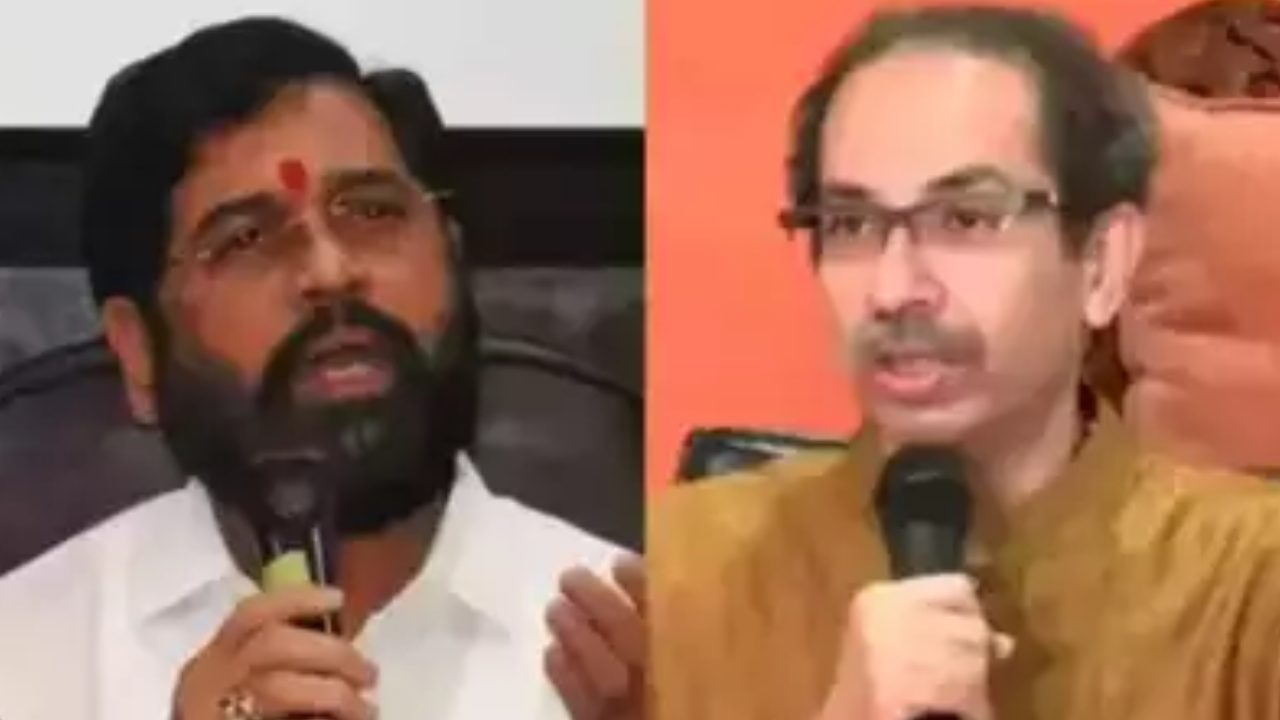
The MVA experiment, in its own way, drove a silent wedge between the party and its core vote bank, and gave Eknath an advantage.
For the Uddhav camp, that perception has cast a long shadow.While the INDIA alliance has accorded political relevance to the UBT after the split by widening its social coalition, it has also raised an uncomfortable truth about its own history. Can the UBT permanently coexist within an alliance led by the Congress, the party against whom it had been in opposition? Can the Sena hold on to its faithful while seeking a new user base that is (perhaps) more moderate?
The Road Ahead
The textile mills that once dotted the Sena’s horizons have largely disappeared. Mumbai’s economy is now driven less by industrial labour and more by BFSI, tech, media and real estate. For the GenZ Marathi voters, aspirations are different.This changing social landscape presents the Sena with its greatest challenge: its original ‘sons of the soil’ politics no longer carries the same urgency in a globalised Mumbai. Hindutva is now a crowded political space in which the BJP is the overwhelmingly dominant force, and the Shiv Sena a smaller force.The Shiv Sena has spent sixty years adapting to a changing Maharashtra, and reinventing itself. For the first time, however, it is looking to craft a new narrative.Can it?