There’s real science behind why a house surrounded by greenery feels noticeably cooler than one that isn’t, and it has very little to do with imagination. According to the US EPA’s benefits of trees and vegetation, urban forests run about 3.0°F (1.6°C) cooler on average than non-green urban areas, through a combination of direct shading and evapotranspiration, plants releasing water vapour through their leaves as they cool themselves. The catch is that most shade-giving trees take years to deliver on any of this. Fast-growing climbers and screening plants get there in a single season instead. Here are seven that pull real weight against the heat, without asking for years of patience first
Money plant (Pothos)
Money plant might be the most underrated cooling option on this list, mostly because people grow it for luck rather than temperature control. Trained along a trellis or up a wall facing the harsh afternoon sun, its dense, overlapping leaves do exactly what research on wall-shading has found effective: they intercept direct radiation before it ever reaches the masonry, keeping the wall itself measurably cooler to the touch. It grows fast in almost any light condition, roots easily from cuttings, and needs nothing more than a stake or wire to start climbing toward whatever wall gets hit hardest by the sun.
Curtain creeper
Anyone who’s spent a summer in South India has probably seen this one without knowing its name, the dense green curtain often trained across balcony grilles and verandas, sometimes called a “natural AC” by the people who grow it. Curtain creeper grows fast enough to cover a full balcony grille within a couple of months, and its thick, overlapping leaf cover does real work blocking direct sun before it ever reaches the floor or walls behind it. It needs regular watering and a wire mesh to climb, but very little else once established.
Morning glory
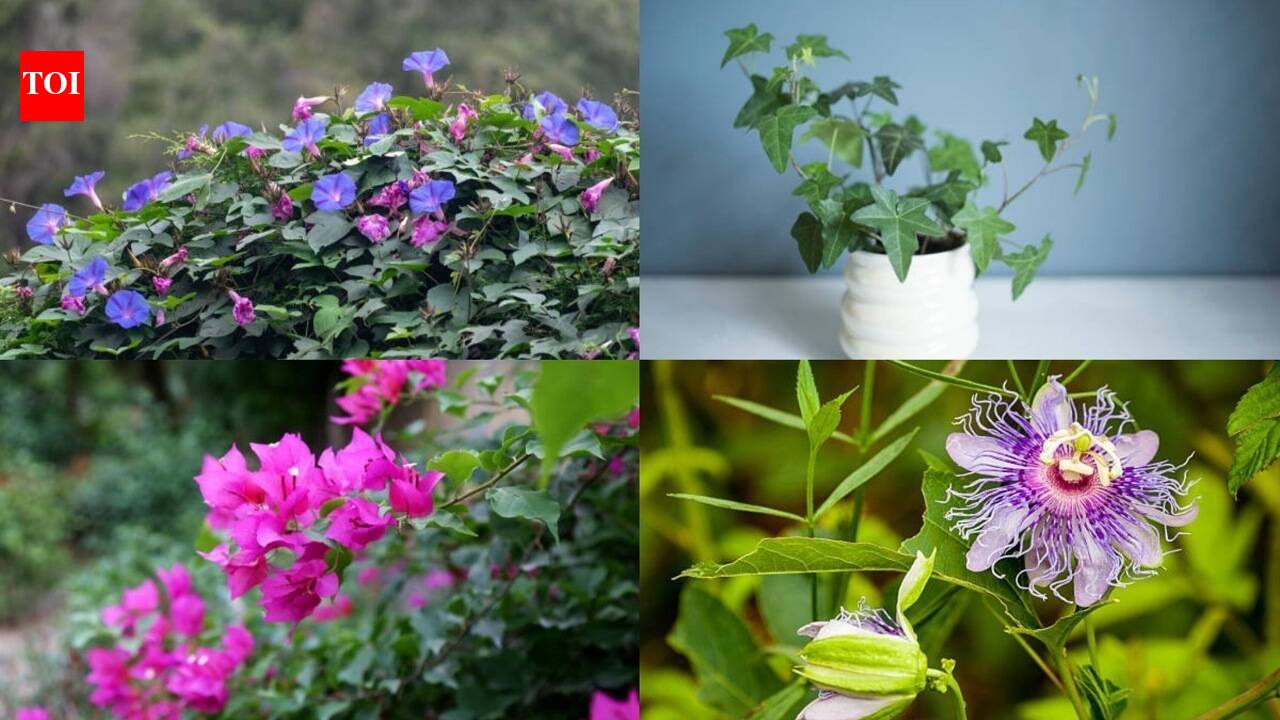
For sheer speed, almost nothing beats morning glory. It’s an annual, which means it needs replanting each year, but in exchange it delivers a wall of heart-shaped leaves and blue or purple trumpet flowers within weeks of the seeds going into the ground. Trained up a trellis or netting against a west-facing window, exactly the direction research on home cooling flags as most valuable to shade, it blocks a meaningful share of afternoon sun before that heat ever has a chance to radiate into the room behind it.
Bougainvillea
Bougainvillea earns its spot here for coverage as much as colour. Left to climb a pergola, wall, or fence, it grows fast enough to form a genuinely dense canopy within a season, and studies specifically measuring vine cover on walls have found the shading effect meaningfully lowers wall surface temperature compared to bare masonry sitting in direct sun. It thrives on a bit of neglect, needs full sun to flower well, and rewards minimal watering with papery blooms that keep appearing through the hottest months.
Passion fruit vine
Passion fruit vine grows fast enough to cover a pergola or fence within a single growing season, producing a genuinely dense leaf canopy that blocks a large share of direct sunlight from whatever it’s trained over. Unlike most plants on this list, it comes with a practical bonus most people don’t expect: actual fruit, once the vine matures enough to flower and set. It wants something sturdy to climb, regular watering through the hottest months, and full sun to really take off, but the payoff in shade coverage comes remarkably quickly.
Bamboo
Bamboo solves a different problem than the vines on this list: it doesn’t need a wall or trellis to climb, since it grows upward on its own and fast enough to form a genuine screen within a year or two of planting. Positioned along a west-facing boundary or fence line, exactly where the afternoon sun hits hardest, a bamboo screen blocks direct sunlight before it ever reaches the house, functioning less like decoration and more like a living wall. It does need root barriers or container planting to keep its spread in check.
Areca palm
Areca palm grows noticeably fast for a palm, often adding several feet of height within a single year once established, which makes it a practical choice for screening a window or wall that gets hit hard by direct afternoon light. Planted in a row along the hottest-facing side of a house, its fronds create dappled rather than complete shade, still meaningfully reducing how much direct sun reaches the wall or window behind it. It wants regular watering and reasonably rich soil, but otherwise asks for very little upkeep once it’s settled in.