
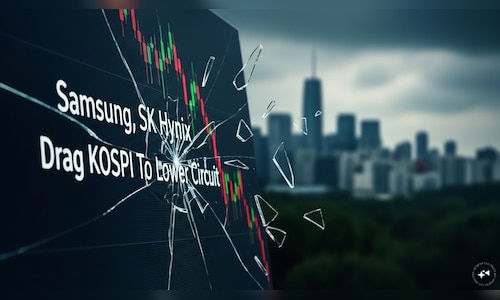
The benchmark KOSPI fell as much as 8.8% taking the index’s decline from its recent peak to nearly 15%, entering a “technical correction” territory. The plunge also triggered a circuit breaker, resulting in a trading halt. An emergency meeting was also held by the exchanges to assess the rising volatility and discuss measures to ensure operational stability in the markets.
Shares of Samsung Electronics and SK Hynix fell as much as 11% and 10% respectively, before attempting a recovery from the opening lows. Memory chip stocks on Wall Street had sold off sharply last Friday, with Nvidia declining over 6%, while AMD, Micron, Sandisk and Western Digital shares tanking anywhere between 11% and 13%.
Concerns over overheating in the AI rally, along with uncertainties over the macro picture are leading to some profit booking in global tech stocks. Adding to that is the $75 billion SpaceX IPO, which is adding to the concerns of the market as participants worry about profit booking in these stocks for investing in the Elon Musk-led company’s largest IPO in history.
Despite this recent correction, the KOSPI is still up over 70% for the year so far, the most among any world index.
Foreign investors are already cashing out of this AI-led rally in the KOSPI, selling more than $10 billion worth of KOSPI shares last week itself on a net basis, thereby pressuring the won, which plunged to the weakest level against the US Dollar since March 2009.
The South Korean market faces risk of a “Black Monday” event with “currency instability, interest-rate repricing and profit taking in semiconductors all happening at the same time,” said Kim Doo-un, an analyst at Hana Securities.
South Korea’s government has laid out a series of measures aimed at stabilizing the currency, pledging firm and decisive action against speculative trading and other activities.
(With Inputs From Agencies)