
While the AI revolution still has significant room to grow, investors may need to adjust expectations as intense competition and falling prices make generative AI less profitable than initially anticipated.
Herrero believes the next leg of growth will come from areas beyond traditional generative artificial intelligence (GenAI) applications, including satellites, space-related technologies, memory solutions and new data centre infrastructure.
As AI adoption broadens across industries, she says the key for investors will be identifying companies that can benefit from expanding use cases rather than relying solely on hyperscaler-driven profits.
This is an edited transcript of the interview.Q: The war is one part of the equation. The other big factor is artificial intelligence, US tech stocks and, at the same time, the SpaceX initial public offering (IPO) that is underway. Looking at the rally in US AI stocks globally, what stage of the move are we in? Are we nearing the end of a bubble, still in the early stages, or somewhere in the middle? What’s your prognosis?
A: A couple of things are happening. First, we are broadening the scope of the AI revolution. We are moving to space, we are moving to satellites, and we are moving to many other realities.
I think there will be room for more upside, but we need to recognise that prices, especially for GenAI, will be lower. We’ve already seen this with Qualcomm’s announcement and with OpenAI lowering prices.
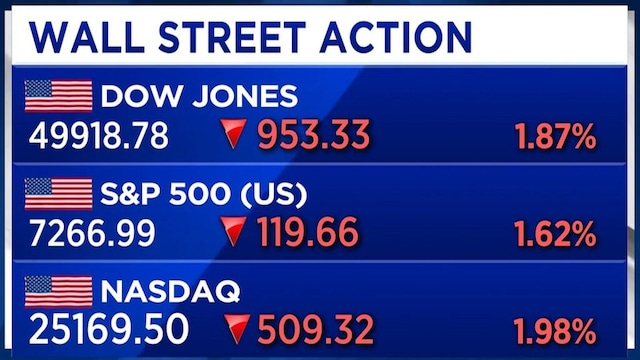
Q: Just a quick word on the sell-off that we are seeing. While the AI story is broadening, do you feel the correction has gone too far?
A: No, I think the market is swallowing the reality of GenAI not being so profitable.
This is where we are. Even companies providing hardware or software support, such as Qualcomm and MediaTek in Taiwan, need to adapt to the fact that hyperscalers will not be so profitable.
But I think the upside lies beyond that. It’s satellites, it’s space and even memory. Korea reacted very negatively, but I am positive on that segment because there is no substitute so far.
My point is that there may be less money and less revenue, but there is a broadening space for the AI revolution. I think that’s the key. Investors need to find the stocks that reflect that reality.
Q: There are two developments I want your quick response to. The Wall Street Journal reported that OpenAI is considering aggressive price cuts across its offerings because it expects a fight with Anthropic. That seems to tie in with your point that profitability may come under pressure. Second, SoftBank reportedly tried to raise money against its holding in OpenAI, but banks have been hesitant. What do these developments tell you?
A: That’s exactly what I was pointing to. I think there is an AI impact before companies even make money, and that is, of course, going to hurt many players.
It’s not only about Anthropic and OpenAI. It’s also about DeepSeek and the massive competition it has introduced.
What’s happening is that people may train on Anthropic to get the right model, but then run it on a server using open-weight DeepSeek, which is much cheaper.
Watch the full conversation here

Profitability is now the key issue. However, the broadening of AI usage is not. If you’re focused on compute, growth opportunities remain. Data centres, space-related data centres and all of that will continue to grow.
I think we are only at the beginning of that trend. But if you’re talking specifically about GenAI, where competition is becoming intense and where most investors have concentrated their bets, I would be careful. That’s where I think we stand.
Catch all the latest updates from the stock market here