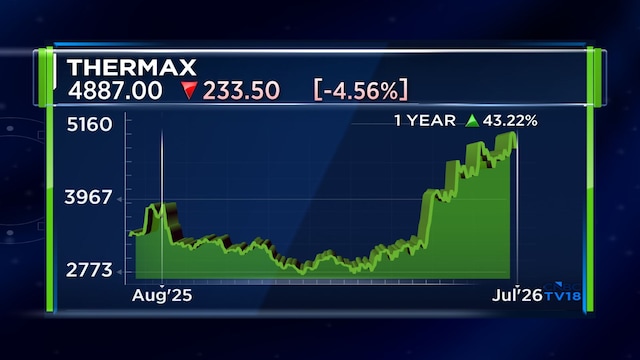
Pugalia said IIFL likes Thermax’s franchise and its research and development strength, particularly in coal gasification and bio-CNG — cleaner-burning natural gas produced from agricultural or municipal waste.
She noted the company has spent the last three years stabilising these newer technologies and is now positioned to capture rising demand as the market for green industrial solutions opens up.
She said Thermax‘s main recurring issue has been a gap between its numbers, delivery, and performance, especially on the profitability side. “Hopefully they have had their own learning curve, and incrementally going forward, we don’t have any mishaps on the cost front. Then we definitely expect the company to be back to double digit margins in the next two years.”
Turning to CG Power, Pugalia pushed back on the market’s fixation on HVDC as the primary growth driver for the grid equipment sector. She said the real bottleneck in the supply chain has been in transformers, which has also spilled over into the switchgear market — areas where CG Power has aggressively expanded capacity, including a new greenfield facility set to be commissioned in September.
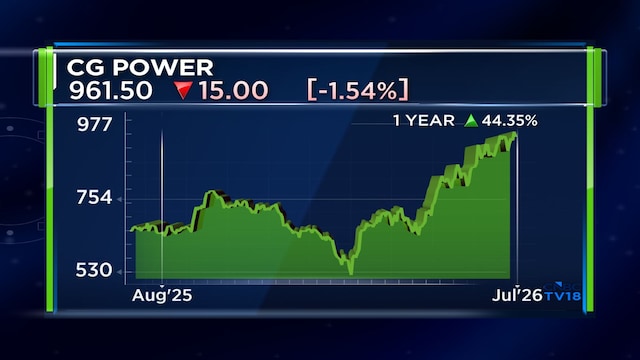
Pugalia said ABB is well positioned in the power grid value chain due to its cost leadership in transformers across voltage levels. She added that CG Power’s growth story increasingly depends on its ability to penetrate export markets, citing a notable $9 billion order from the US data center market last quarter, with the US and Middle East as key focus regions going forward.
Pugalia is also optimistic about Dixon Technologies, saying the company is well positioned to benefit from the growing focus on energy efficiency. Its portfolio spans drive systems used in manufacturing, renewables and power generation, as well as automation technologies for data centers.
While she expects cost pressures to keep margins under strain in the near term, she sees profitability improving from the current 12.5-13% range to 15-16% by the second half of the year as those headwinds ease.
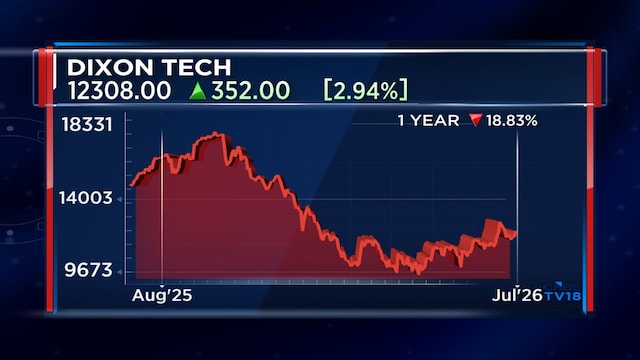
On Dixon Technologies, she said the proposed Vivo joint venture is already largely reflected in market expectations. She estimated that if the approval comes through in the next 7 to 10 days, it could result in an earnings upgrade of less than 5% for the current fiscal year, with a somewhat larger — though still limited — upgrade of more than 5-10% possible for the following year, depending on how much analysts have already priced in.
For the entire discussion, watch the accompanying video