On markets, Sanger says the AI investment cycle remains intact but will not move in a straight line. While the biggest AI beneficiaries in the US, Taiwan and Korea face valuation challenges, India is becoming relatively more attractive. However, it still remains a bottom-up stock-picking market rather than a macro-driven growth story.
This is an edited transcript of the interview.Q: How do you react to the flare-up we’re seeing in the Middle East? What does it mean?
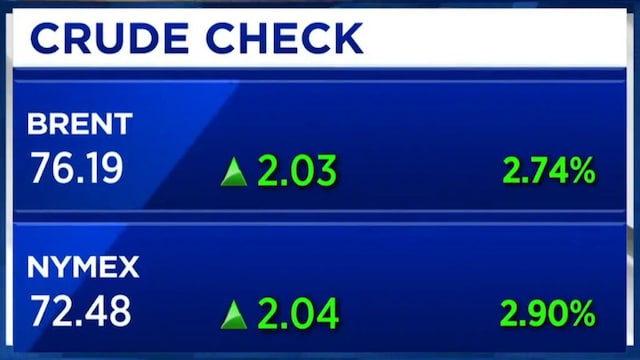
A: The interesting thing is how quickly the narrative changed—from oil going to $150 a barrel to oil going to $50. I was also surprised that oil remained as well behaved as it did, given President Trump’s tweets and his clear intention not to let oil prices run up.
At the same time, I think the rumours of a glut were highly exaggerated. What we saw was about 100 million barrels of floating storage coming into the market. That created a short-term glut, but the reality is that oil flowing out of the Persian Gulf—even including supplies coming from Saudi Arabia’s west coast and Fujairah—is still not back to normal levels.
We have been helped by some short-term factors, but I believe this so-called peace is going to remain fragile. We don’t believe Iran is willing to give up its nuclear programme. In fact, after the US attacks, it has hardened its stance.
There is talk that President Trump may try to make peace now and, after the midterms, come back to finish the job. The Iranians are not naive, so this is not going to create a stable environment.
If you’re India, Japan, Korea, Taiwan or Southeast Asia, do you simply feel lucky, or do you build additional strategic petroleum reserves? I think people are underestimating the demand that will come from that. Supply is still not back to normal.
We believed that once the peace deal was signed, oil would settle in an $80–100 per barrel range. Don’t focus on where oil is today, focus on where it’s going. I think $80–100 is manageable for the world, but it isn’t the ideal $50–60 environment.
Q: What’s your view on the AI investment cycle? It has been the biggest driver for markets, especially in Korea and Taiwan. Is the spending sustainable?
A: Like any major technological shift, it won’t be a straight line. For a while, markets assumed AI spending would continue uninterrupted. Now investors are looking at the cost-benefit equation, and naturally you’re seeing a digestion phase.
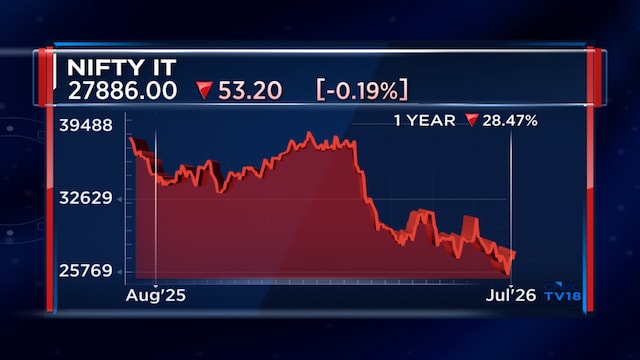
From India’s standpoint, India was the anti-AI trade, which has helped over the last few weeks as AI-related stocks have cooled.
But AI is a transformational technology. It won’t move in a straight line, yet its long-term impact will be meaningful. It will take a couple of years to fully play out. There will be cost pressures and other challenges along the way.
We invest in companies involved in energy, power and enabling AI data centre build-outs. We’re looking at opportunities in India as well as in the US.
Demand will continue, whether for training or inference. Increasingly, the demand will shift towards inference.
The adoption curve remains strong, whether you look at Anthropic’s data, Cursor’s data or anyone else’s.
That said, Chinese AI models are giving US companies real competition with lower-cost alternatives. US companies will have to figure out how to compete on both capability and cost.
From India’s perspective, the challenge remains that it is not on the inside of the AI race. The question is how India finds its place.
This isn’t just an issue for IT services companies. Global capability centres (GCCs) are also not immune to what’s coming. Many people see GCCs as a major growth story, but they too will face challenges as AI displaces white-collar jobs.
Q: Given the volatility in Korea and Taiwan, does incremental allocation still make sense? Are you seeing greater investor interest in India?
A: Let’s start with the US and then look at Taiwan and Korea. The US today accounts for roughly two-thirds of global market capitalisation. That’s an unsustainably high level.
Korea and Taiwan together have accounted for close to half of emerging market benchmarks. That’s also unsustainable.
Valuations of AI beneficiaries have moved so far ahead of their long-term fundamentals that you’re bound to see volatility.
For value investors like us, India is beginning to look attractive again from a valuation standpoint.
The challenge with India has always been that it is rarely cheap. But today, on a relative basis, it is no longer as expensive as it was. That makes it interesting, and that’s one reason you’re seeing foreign investor flows return.
Watch the full conversation here

Q: So, you’re seeing increased enquiries towards India?
A: Yes, I think there is growing recognition. India, in my view, is a bottom-up story. It isn’t a macro story that’s going to blow your socks off.
If you look at nominal GDP growth, it’s at multi-decade lows. Corporate revenue growth is driven by nominal GDP, not real GDP. That’s the key challenge.
Catch all the latest updates from the stock market here