
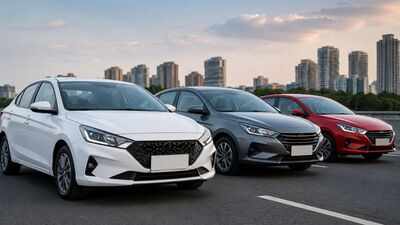
India has notified the procedure for importers to claim quota-based tariff concessions on vehicle imports from the United Kingdom under the India-UK Comprehensive Economic and Trade Agreement (CETA), which comes into effect on July 15.Under the agreement, customs duties on eligible UK vehicle imports will be significantly reduced from about 110 per cent to 10 per cent, subject to annual tariff-rate quotas (TRQs).
Who can apply and what are the conditions?
The Directorate General of Foreign Trade (DGFT) said only Original Equipment Manufacturers (OEMs) and their authorised dealers or channel partners will be eligible to apply for tariff-rate quotas.To avail the concessional duty, importers must:
- Produce a Certificate of Origin issued by UK authorities at the time of customs clearance.
- Submit a pre-purchase agreement from a UK-based OEM specifying the number of vehicles to be supplied during the TRQ year.
- Obtain a TRQ Certificate, which will remain valid for up to 12 months or until the end of the calendar year, whichever is earlier.
The DGFT will monitor cumulative imports, and no further TRQ certificates will be issued once the annual quota is exhausted.
Import quotas and duty cuts
Under the agreement, India will allow the import of up to 3.78 lakh conventional-engine passenger vehicles from the UK at concessional customs duties over the first 15 years of the pact.In the first year, India will permit imports of 20,000 passenger cars across different engine categories:
- 10,000 premium cars (above 3,000cc petrol/2,500cc diesel) at 30% customs duty, down from 110%.
- 5,000 mid-segment vehicles (1,500cc–3,000cc petrol and up to 2,500cc diesel) at 50% duty, reduced from 66%.
- 5,000 mass-market vehicles (up to 1,500cc engine) also at 50% duty, down from 66%.
The annual quota for conventional-engine passenger cars will gradually increase, reaching 37,000 units by the fifth year, while the concessional duty will eventually fall to 10%, with no further reduction thereafter.
Protection for India’s EV industry
India has excluded vehicles priced below GBP 40,000 (CIF) from the agreement, shielding the domestic mass-market electric vehicle segment led by companies such as Tata Motors, Mahindra & Mahindra, and Maruti Suzuki.No tariff concessions have been offered for electric, hybrid or hydrogen-powered passenger cars during the first five years of the pact.From the sixth year, imports of EVs and hybrid vehicles priced between GBP 40,000 and GBP 80,000 will attract 50% customs duty under a quota of 400 units, while vehicles priced above GBP 80,000 will face 40% duty with an annual quota of 4,000 units.