
He believes inflation is easing broadly in line with the Fed’s earlier expectations, while policymakers are preparing to introduce a new policy framework that will place greater emphasis on evolving economic data rather than forward guidance.
Lee also remains constructive on India’s long-term outlook despite global uncertainty. He sees India’s energy transition, particularly the potential of small modular nuclear reactors, as a key driver of future infrastructure and artificial intelligence (AI) related investments.
While he expects crude oil prices to remain elevated because of West Asia tensions, he continues to favour Indian equities over gold as a long-term investment.
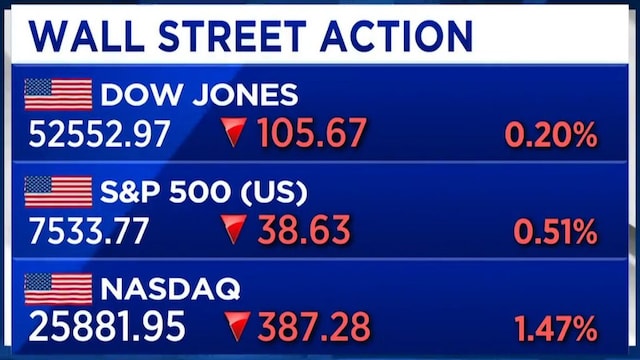
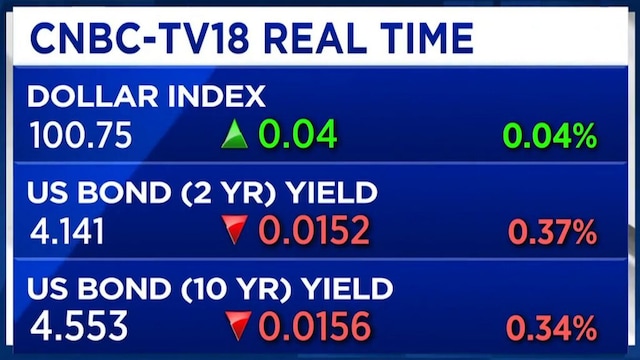
This is an edited transcript of the interview.Q: The inflation data was slightly softer than expected. Most of the Street expected Fed Chair Kevin Warsh to be a little more dovish, but so far, his comments appear slightly more hawkish. Looking at the data, what’s your sense on the US macro outlook, especially for Fed action? Also, there are signs of volatility in the AI trade. Stocks fall for a few days and then resume the rally. It’s no longer a one-way street. What’s your view?
A: On inflation, if you remember what Chair Powell said back in February-March, he expected tariff-related price increases to work their way through the system and begin moderating by mid-summer. Here we are in mid-summer, and it’s nice when a forecast actually works out. Very few people seem to remember that forecast, but markets are taking it quite calmly.
Warsh, despite being seen as a dove by many, is focused on doing the right thing at the right time. As I’ve said many times before, no economist in their right mind would raise interest rates in response to supply shocks, especially when those shocks don’t increase long-term inflation expectations.
Long-term inflation expectations, as reflected in fixed-income markets, have fallen over the past month. Five-year breakeven inflation has dropped by about a quarter to half a percentage point. Inflation expectations are moving closer to the Fed’s 2% target, and the actual inflation data is also easing.
The only uncertainty at the moment is energy prices because of the war. Beyond that, the Fed is preparing for a different policy framework. Warsh appears to be arguing for different inflation measures, a different way of evaluating inflation, unemployment and the labour market, and a reaction function that focuses on doing the right thing when the data justify it rather than providing forward guidance.
Anyone expecting dramatic Fed action before these committees announce the new framework and inflation measures later this year is mistaken. Unless something drastic happens, I expect the Fed to remain on hold. That’s been my view since Chair Powell outlined this outlook back in March.
As for the AI trade, you’re absolutely right that we’re seeing a sell-off. But this is also the time of year when markets enter the summer lull. Investors are sitting on substantial profits, particularly in semiconductors and memory stocks, so it makes sense to book profits ahead of the volatility we often see from late August through September. Raising cash at this point is perfectly reasonable, and that’s exactly what the market is doing.
Q: Are you worried about the latest escalation in West Asia? When we last spoke, we were hoping for a path towards de-escalation after the ceasefire. That held until about a week ago. How worried are you now?
A: I am becoming more worried. From the beginning, when the ceasefire and memorandum of understanding were announced, I said it would be difficult for the Trump administration to secure from Iran what it couldn’t achieve on the battlefield.
That’s proving to be the case because the Iranian government itself is in disarray. It’s not clear who is really in charge. The Revolutionary Guard is making a lot of noise to ensure its position is heard, while some military actions appear to have been carried out by more extreme factions. Other parts of the government have tried to moderate the situation.
So, there’s significant internal disarray in Iran. On top of that, the Strait of Hormuz is not functioning as openly or as smoothly as we had hoped.
Q: How does this end?
A: I think it will require more serious military action. When people talk about how restrained the US has been, it has actually shown far more restraint than in previous conflicts under Bush, Obama or Clinton because the Trump administration has largely avoided civilian infrastructure and dual-use facilities.
Going forward, I think the approach will become more like previous administrations by trying to convince the Iranian military that it no longer has a bargaining position and that these skirmishes and missile attacks on neighbouring countries need to stop.
Q: So, you’re in the camp that believes crude oil prices will remain elevated?
A: I think $85 per barrel is more of a preview of further increases than declines, unless the Revolutionary Guard steps back and more moderate elements of the Iranian government assume clear control. I don’t think that’s likely.
Q: So, we’re preparing for higher crude prices. You’re also in the camp that believes the Fed either stays on hold or could possibly cut rates later this year?
A: We’ll have to see how productivity evolves and how price deflation develops over the coming months.
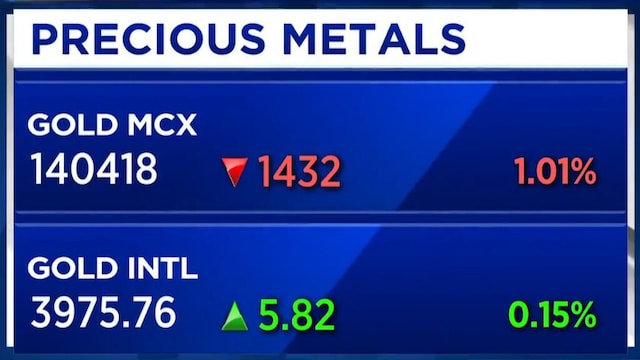
Q: Let’s talk about gold. I remember you once saying on this show that you’d rather buy Indian stocks than gold. Gold has corrected from its highs after many expected it to climb much further. Given geopolitical tensions, movements in the dollar index and uncertainty around the Fed, what’s your view on gold?
A: As I’ve often said, the technicals of the gold market are one thing, but fundamentally you have to ask why you invest in gold. In my view, you buy gold because you have no faith in anything else.
I have much more faith in the Indian economy becoming the world’s alternative to China over the next several years. I’d much rather invest in that opportunity than throw up my hands and say there’s no other choice but gold, or even worse, Bitcoin or some other cryptocurrency.
For me, gold is an investment of last resort when you don’t know what else to do. India, on the other hand, offers compelling investment opportunities. Once the excitement around the US AI trade settles, India provides a solid, long-term investment story through alternative supply chains and a broad range of industries that can support both the West in general and the US in particular.
Q: Could you be more specific about the opportunities you see in India?
A: I have a lot of hope for the role of small modular reactors in strengthening India’s power grid.
India has already demonstrated that its dependence on West Asia oil is too high, and it needs to diversify its energy sources. While India is already a major player in nuclear energy, its existing projects are largely large-scale plants that take years to build.
Watch the full conversation here

The technology transfer agreement between the US and India on small modular reactors presents a significant opportunity. It can help build India’s infrastructure, strengthen the electricity grid, support data centres and make the country more attractive for the AI investments the world is looking for.
Catch all the latest updates from the stock market here