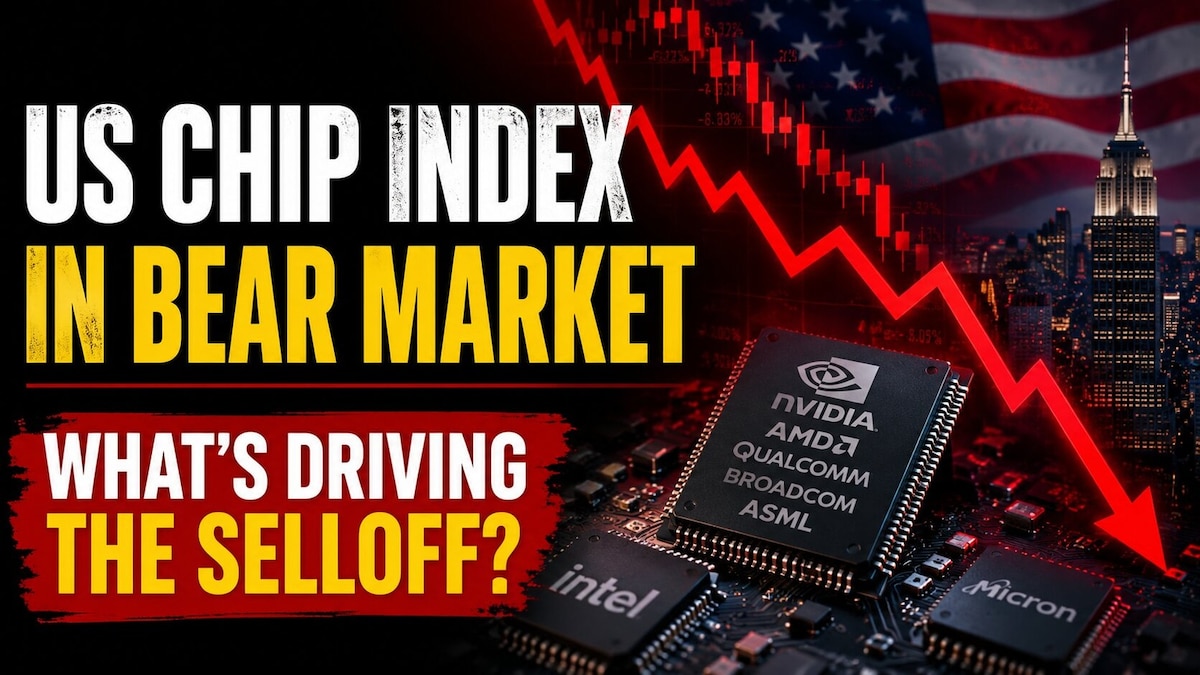
The Philadelphia Semiconductor Index fell as much as 6% on Friday before paring some of those losses to end 1.5% lower but the fall was enough to take the drop from the mid-June record high beyond 20%, which is the technical threshold for defining a “bear market”
Between the lows in March and the record high in June, the index had surged as much as 105%. Shares of Marvell, ARM Holdings and Intel, all of whom at least doubled in value between April to June, have collapsed more than 30% from their peaks.
Besides the chip index, the Dow Jones fell nearly 450 points on Friday, the S&P 500 fell over 1%, while the Nasdaq Composite shed another 1.5%. The Nasdaq 100 index was also down by a similar quantum.
Friday’s sell-off meant all three indices ended the week with losses. The Dow Jones fell 0.9%, while the S&P 500 shed 1.6%. Nasdaq Composite was down nearly 3% on a weekly basis. The VanEck Semiconductor ETF also posted its third weekly drop in the last four, dropping 9% during this stretch.
Why Did The US Chip Stocks Fall On Friday?
A Chinese AI Startup, Moonshot, declared that its new Kimi K3 model is nearly at par with the best offerings by AI giants OpenAI and Anthropic. Analysts linked the slide to the “DeepSeek” sell-off last year, from which the markets did recover swiftly.
The other concern plaguing the market has been whether the hyperscalers, who are spending billions in capex, would be able to generate returns on these huge investments along with their elevated valuations and whether these stocks have run-up too fast, too soon.
The next major test for these AI-linked players will start next week, when Alphabet Inc. reports results on July 22, while Microsoft, Amazon and Meta will report the week after.
Memory chip stocks too have faced the brunt of the selling pressure. Micron, Western Digital, Sandisk, have all shed between 30% to 35% from their peak. Samsung Electronics plunged earlier this month even after reporting a 19-fold jump in its operating profit.
Taiwan Semiconductor Manufacturing Company, the main chipmaker for Nvidia, raised both spending and revenue guidance for the year, but the stock is down for seven straight sessions, the longest stretch since July 2022.
“The market does need to become more comfortable with the ROI for hyperscalers, but as that spending gets justified, they will continue to spend, and then chip companies will make money,” Muzaffar said. “But the picture right now is a little complicated, when you lay in valuations and sentiment and flows on top of the positive fundamental picture.”
(With Inputs From Agencies)