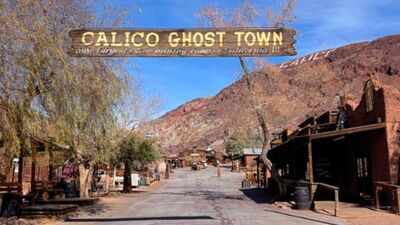
In California’s Mojave Desert, Calico now appears as a quiet collection of weathered buildings surrounded by dry hills and open scrubland. Its setting gives little indication that the settlement once supported a busy mining community. That changed in 1881, when prospectors discovered silver in the mountains nearby and the area quickly attracted miners, traders, labourers and business owners. Within a few years, Calico had developed into a substantial frontier town, with hundreds of mines and a population that eventually reached about 3,000.Its growth was tied closely to the minerals beneath the surrounding landscape, first silver and later borates. But the boom did not last. Falling silver prices made many mines uneconomical, while borate mining eventually declined too. By 1907, Calico had been abandoned. The settlement later returned as a restored heritage site, preserving the story of a mining town that rose rapidly and disappeared almost as quickly.
How silver turned Calico into a thriving desert town in 1881
Calico’s story began in 1881, when prospectors searching the Mojave Desert found silver in the mountains near the future town. The surrounding hills had distinctive red, white and brown colouring, which helped give the settlement its name. Mining soon became the reason for Calico’s existence.The Silver King Mine became the centre of the early rush. It would eventually rank among California’s major silver producers, with reported production worth between $13 million and $20 million. That figure helps explain why such a remote patch of desert could support a substantial community.Famous Historic Buildings & Archaeological Site UK reveals that by the middle of the 1880s, more than 500 mines were operating around the settlement. The population was about 1,200, and the town had a post office, newspaper, hotels, general stores, restaurants and boarding houses. There were also saloons and brothels, along with a blacksmith, school, meat market and local law enforcement.
How silver and borate mining drove Calico’s population boom
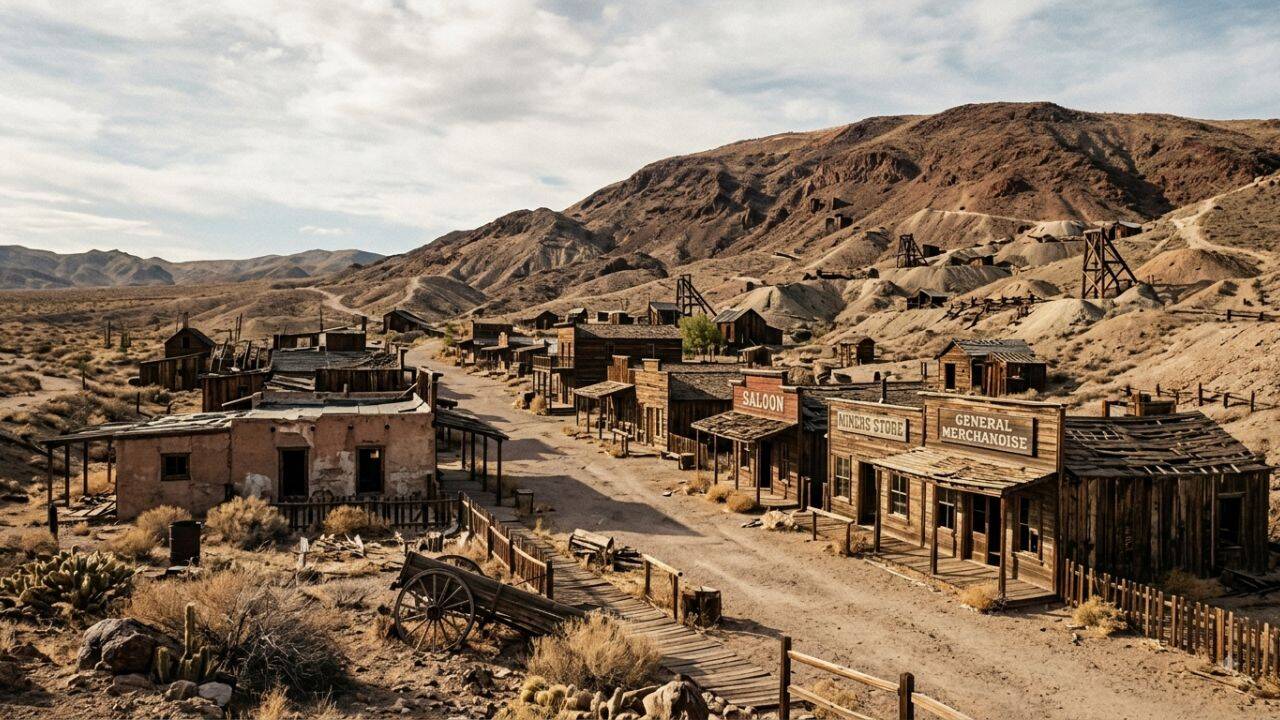
The strongest years came between 1883 and 1885. Mining activity generated enough trade to sustain businesses and workers who had little direct connection with extracting ore. Wagons, supplies and equipment had to reach the desert, while miners needed food, accommodation, clothing and other everyday goods.The settlement’s growth also reflected how quickly mining communities could appear around a profitable deposit. Calico had no obvious reason to exist before the mineral discoveries. Once the mines became productive, the town expanded around them.During the late 1880s, the town also benefited from another mineral resource. Borates were discovered in the mountains around Calico, bringing new activity and helping push the population higher. By 1890, around 3,000 people were living in the wider settlement.For a short period, Calico was no longer simply a silver camp. It had become a larger desert community supported by several forms of mining.
How falling silver prices turned Calico into a ghost town
The town’s fortunes were tied closely to the value of the minerals coming out of the surrounding hills. Changes in silver policy and falling prices put increasing pressure on the mines during the 1890s.By 1896, silver extraction at Calico was no longer economically viable. Mines that had once attracted workers from elsewhere had little reason to keep operating at the same scale. Businesses dependent on miners and mining companies were affected too.The collapse did not happen because the town suddenly ran out of people overnight. It was a gradual unravelling of the economic system that had made Calico viable in the first place.Borate mining kept some activity going for longer, but that industry eventually declined as well. By 1907, the settlement had been abandoned.
An attempt to bring the mines back
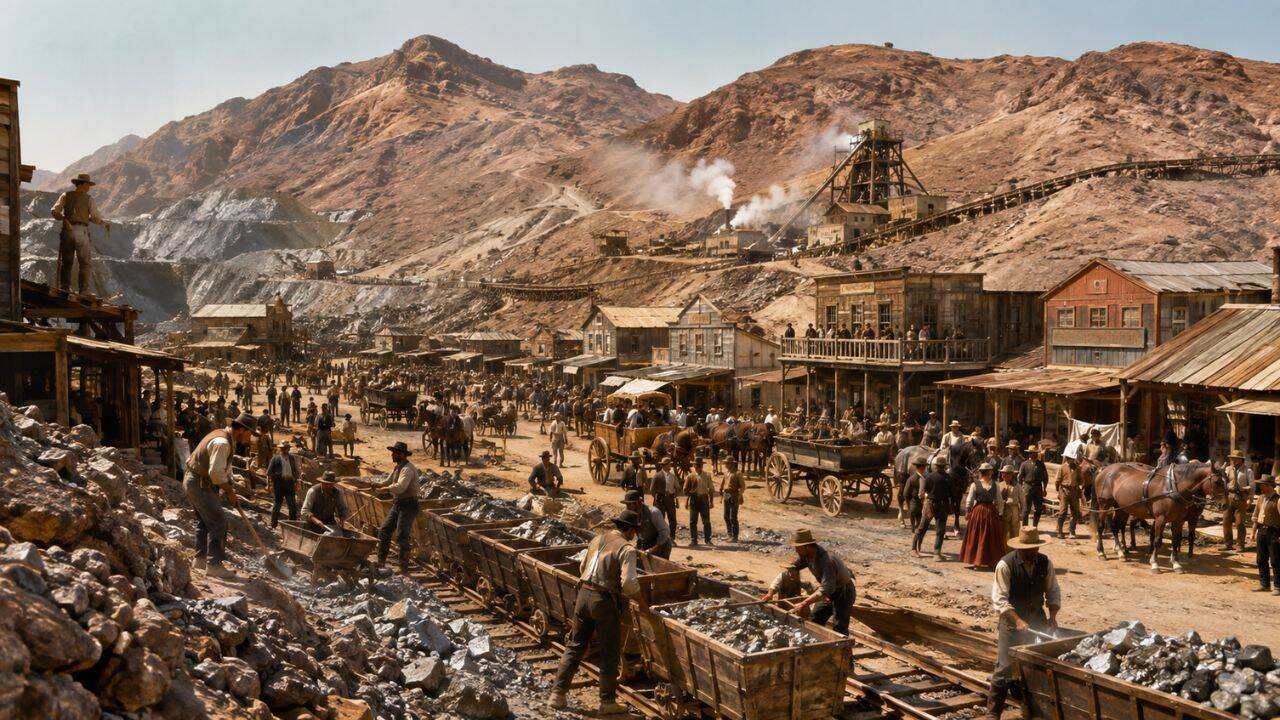
The empty settlement was not immediately left entirely to the desert. Around 1915, an effort was made to recover silver that had remained in the unprocessed deposits of the Silver King Mine.A cyanide plant was built as part of the attempt. The technology offered a way of processing material that earlier operations had left behind, giving the old mine another chance at producing a return.The town remained largely quiet for years, and many of its original structures deteriorated. By the middle of the 20th century, what survived was less a functioning community than a collection of buildings and ruins associated with an earlier mining era.
How 1950s restoration brought Calico’s mining past back to life
Calico’s revival took a different direction in the 1950s, when Walter Knott acquired the abandoned settlement. Knott, already known for developing Knott’s Berry Farm, set about restoring Calico rather than trying to restart its mining economy.Old photographs became an important reference. Buildings were repaired, reconstructed or given new façades intended to reproduce the appearance of the settlement during its silver-mining years.Some structures from Calico’s working years did survive, including Lil’s Saloon, the town office, post office, courthouse, Smitty’s Gallery, the general store and Joe’s Saloon. Other buildings are reconstructions. The schoolhouse, for instance, is a replica built on the site of the original.
From abandoned settlement to county park
Knott eventually gave Calico to San Bernardino County in 1966. The site became a county regional park, shifting its role again — this time from a privately restored attraction to a publicly managed historic destination. The settlement was later recognised by California as the state’s “Silver Rush Ghost Town” in 2005.That designation reflects the particular place Calico occupies in the history of the Mojave mining frontier. It represents the rapid expansion of communities built around mineral discoveries, but also the vulnerability of towns whose fortunes depended heavily on commodity prices and extractive industries.
What visitors see at Calico today
Calico now operates mainly as an open-air heritage attraction, with restored buildings, mine tours, gold panning, shops and restaurants. The Calico and Odessa Railroad and staged gunfights add to its Wild West appeal. In 2012, Calico also became the first US ghost town to reopen for residential use, though tourism remains its main role.Today, the settlement is a mix of original structures, recreated façades, replicas and ruins. It is both a historic mining site and a carefully restored interpretation of its past.