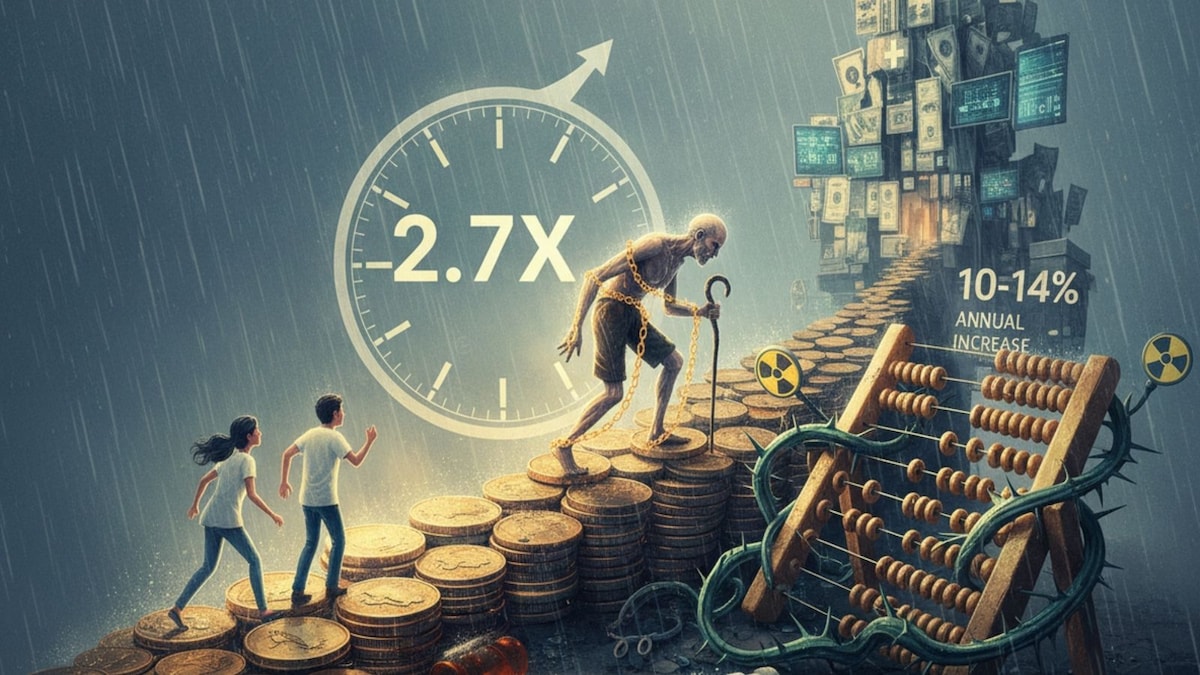
Hospitalisation costs in India rise sharply with age, with the average health insurance claim increasing nearly 2.7 times from ₹65,124 among people below 25 years to ₹1.77 lakh for those aged 60 and above, according to an analysis by Policybazaar covering 2021–2026.
The data shows that the increase in treatment costs is closely linked to the nature of illnesses across age groups.
Younger consumers are more likely to require hospitalisation for infections, injuries and maternity-related care, while older people increasingly require treatment for cardiac diseases, cancer, kidney disorders and other chronic conditions involving specialised procedures and longer hospital stays.
Critical illnesses push up treatment costs
The average claim for chronic illnesses stood at ₹2.66 lakh, more than four times the ₹64,927 average for non-chronic illnesses. While chronic conditions accounted for 27% of claim volumes, they contributed 42% of total claim amounts.
Cancer and heart disease emerged as major contributors to healthcare expenditure. Cancer and tumours accounted for 12% of claim amounts, while heart disease, hypertension and stroke accounted for another 10%.
The average claim for cancer and tumours stood at ₹5.55 lakh, compared with ₹2.08 lakh for heart disease, hypertension and stroke.
Treatment costs for critical illnesses have also risen steadily over the five-year period. Cancer recorded the sharpest increase, with the average claim rising from ₹3.1 lakh in 2021 to ₹5.6 lakh in 2026, implying annual claim inflation of 10–14%.
Average claims for heart disease, hypertension and stroke rose from ₹1.4 lakh to over ₹2 lakh, while claims for bone, joint and muscle disorders increased from ₹1.6 lakh to ₹2.3 lakh over the same period. These categories recorded annual claim inflation of 6–10%.
Surgery accounts for a large share of hospital bills
The cost of hospitalisation extends beyond room rent and nursing charges, with surgery accounting for 32–43% of hospital bills across major high-cost ailments.
For bone, joint and muscle disorders, surgery accounted for 43% of the total hospital bill. The share stood at 32% for both cancer and blood-related treatments and heart and blood-pressure-related hospitalisations.
Cancer treatment also had a relatively high share of spending on medicines and investigations, at 16% and 9%, respectively. For heart and blood-pressure-related treatments, miscellaneous expenses accounted for 25% of the bill.
Metro hospitalisation costs higher
Hospitalisation costs also vary significantly across cities. The average claim in Tier-1 cities was ₹1.73 lakh, 44% higher than the ₹1.20 lakh average in Tier-3 cities.
Mumbai recorded the highest average hospitalisation claim among the cities covered, at ₹1.92 lakh, followed by Bengaluru at ₹1.72 lakh, Delhi at ₹1.65 lakh, Gurgaon at ₹1.60 lakh and Faridabad at ₹1.49 lakh.
The difference reflects variations in treatment costs, availability of super-speciality hospitals and the use of advanced medical procedures, according to the analysis.
Working population accounts for majority of claims
Despite the higher cost of treatment among older people, the largest share of health insurance claims comes from the working-age population. Individuals aged 26–45 accounted for more than 56% of all claims analysed by Policybazaar.
Claims in this age group were driven by maternity-related hospitalisations, accidental injuries, planned surgeries and treatment for lifestyle-related illnesses.
The data also highlights the growing financial burden of women’s healthcare beyond maternity. Breast cancer accounted for nearly ₹99 crore in health insurance claims during the five-year period, with an average claim of ₹7.5 lakh.
Overall, the data points to a widening gap between the volume of hospitalisations and the cost of treatment, with chronic and critical illnesses accounting for a disproportionately larger share of healthcare expenditure.
Also Read: Health insurance ‘missing middle’: Over 40 crore Indians remain outside coverage