A stainless steel bottle may look clean on the outside but still develop an unpleasant odour inside. The smell comes from what gets left behind in the lid, threads, seal, or bottom of the bottle. A little tea or coffee residue can remain in the bottle. Even plain water can become a problem if the bottle is washed and then closed while it is still damp. The narrow shape makes some areas difficult to reach with a sponge. A quick rinse may leave those spots untouched.Keeping a bottle odourless is not just about deep cleaning it now and then. It is more about cleaning the small areas that are often overlooked. Regular washing with warm water, washing-up liquid and a bottle brush are some simple ways to keep a stainless steel bottle odourless.
5 simple ways to keep your stainless steel bottle odourless
1. Use a bottle brush and a little washing-up liquid
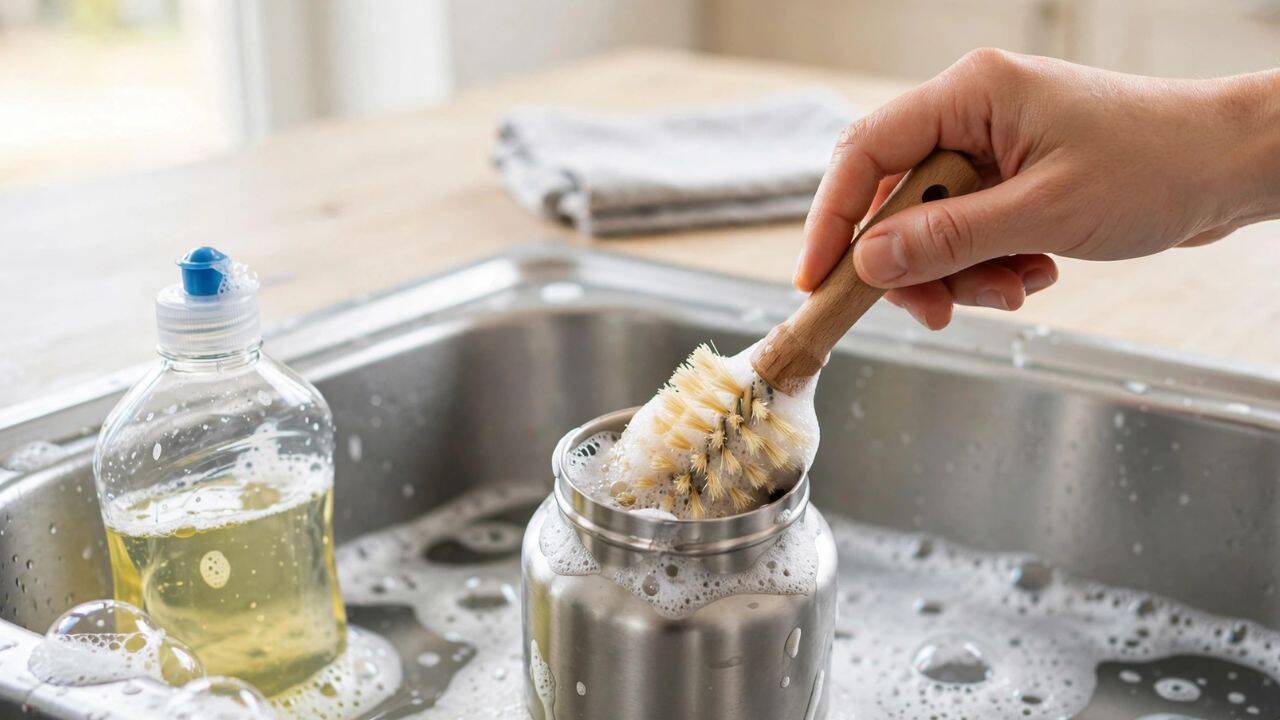
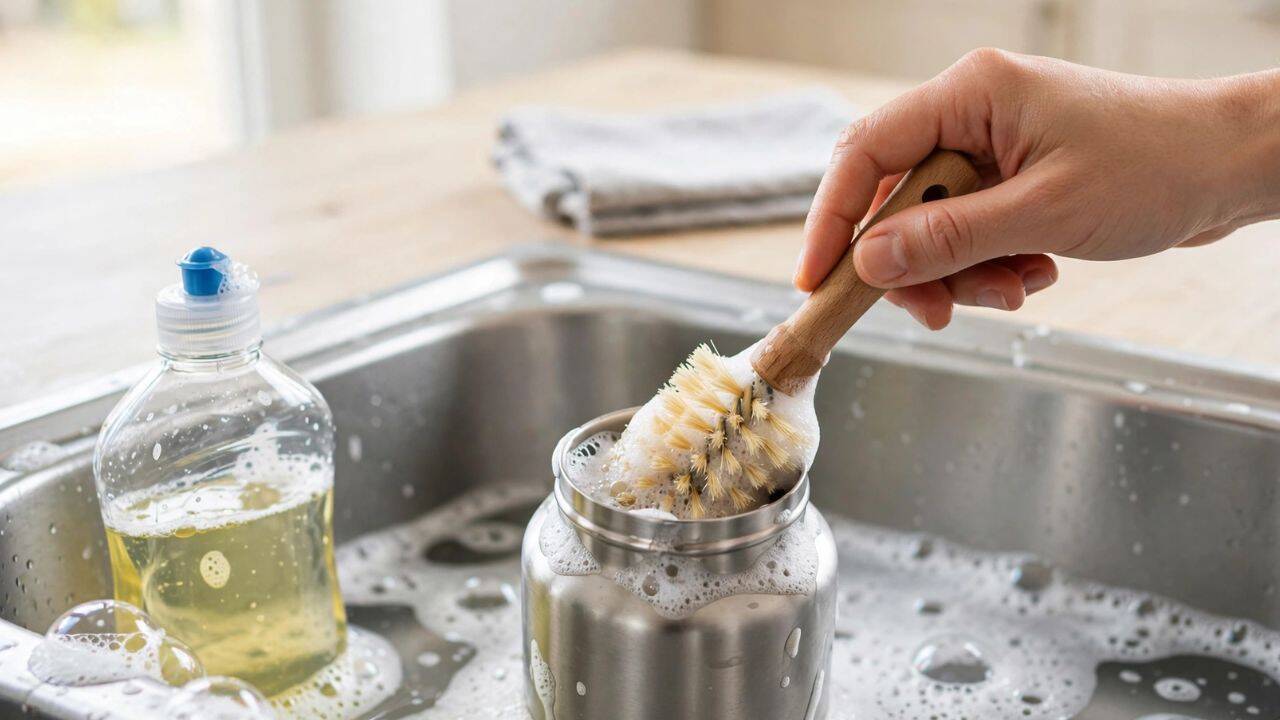
The most effective way to prevent odours is to wash the bottle after each use instead of leaving the last drink inside it.Add warm water and a little washing-up liquid. Use a bottle brush so that it can reach the bottom and scrub the inner walls. Rinse well to remove any soap.This matters even more when the bottle has held coffee, tea, juice, milk or another flavoured drink. These drinks can leave residues that plain water will not remove.
PC: AI Generated
2. Clean the lid and seal separately
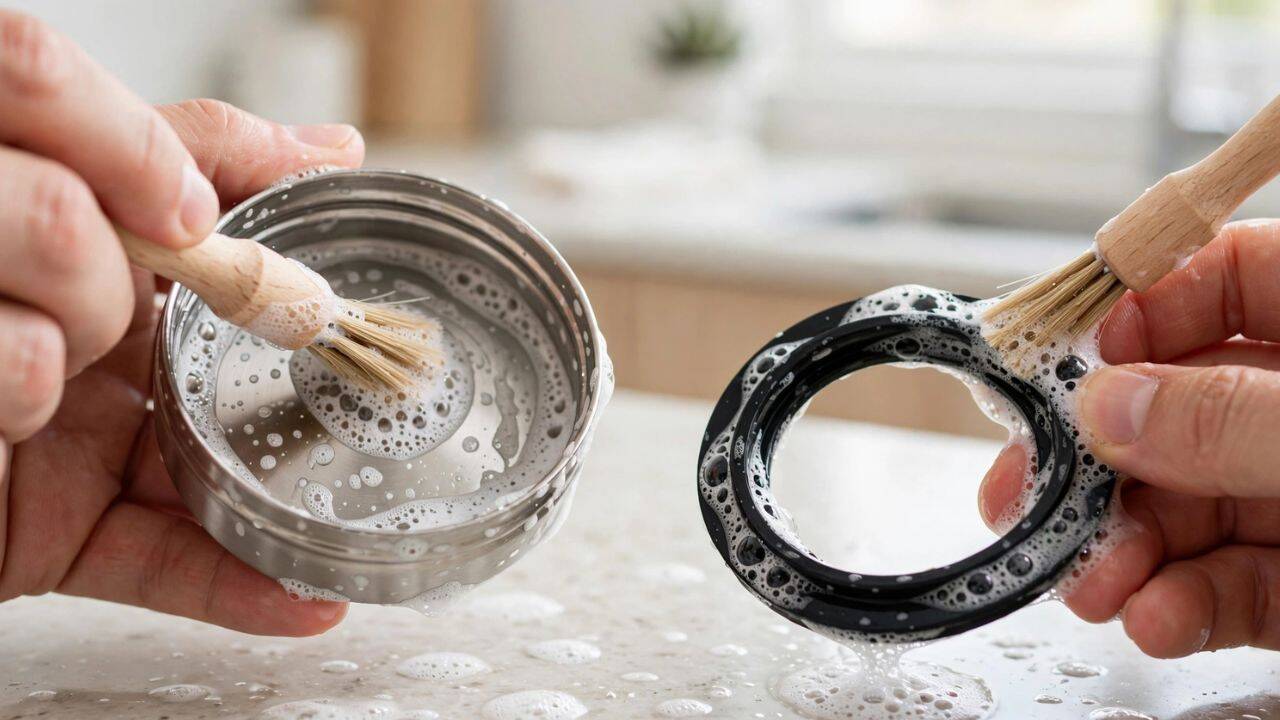
If a bottle still smells after washing, check the lid first. The threads and the area around the opening can trap small amounts of liquid. Silicone seals and gaskets can do the same.Remove any parts that are removable to wash them separately with warm soapy water. Use a small brush or an old soft toothbrush to work around grooves and threads.
PC: AI Generated
3. Soak it with baking soda for stubborn smells
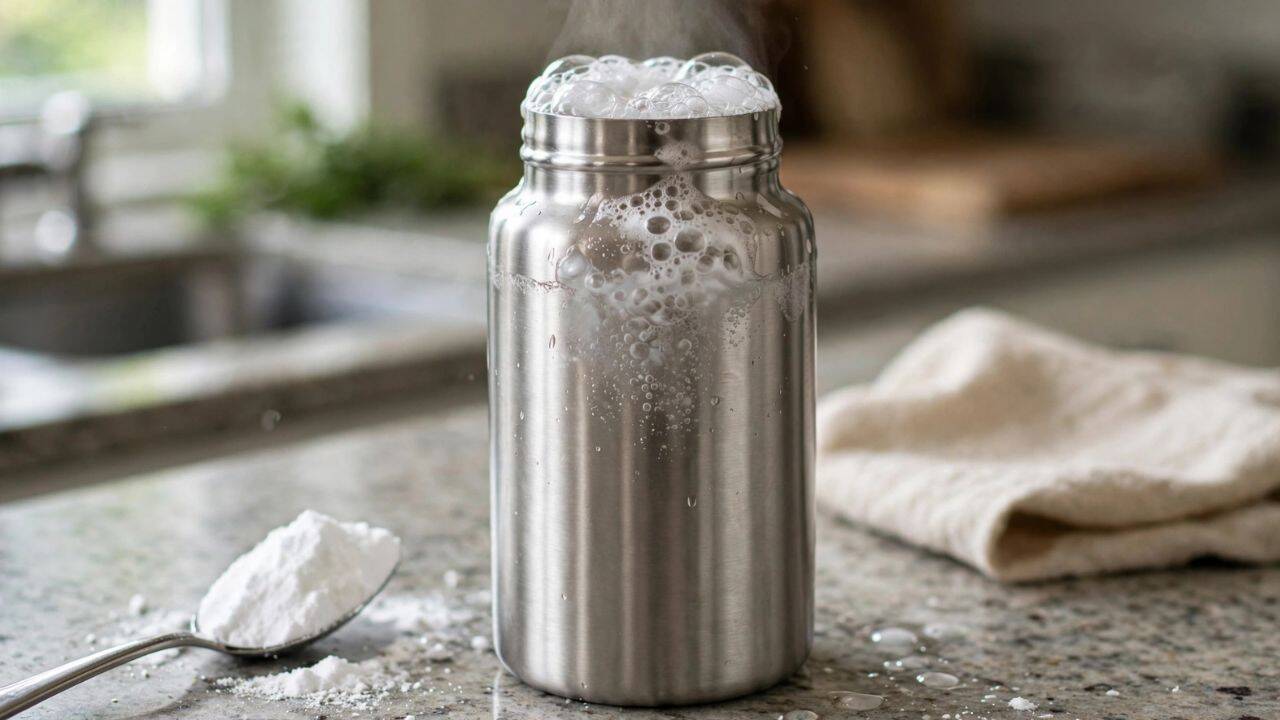
Add about one tablespoon of baking soda to the bottle. Fill it with warm water and leave it for hours or overnight. In the morning, scrub the inner surface with a bottle brush. Rinse thoroughly and leave the bottle open to dry.This works better than simply sprinkling baking soda into a damp bottle. The solution needs time to reach the areas where residue has collected.
PC: AI Generated
4. Use white vinegar
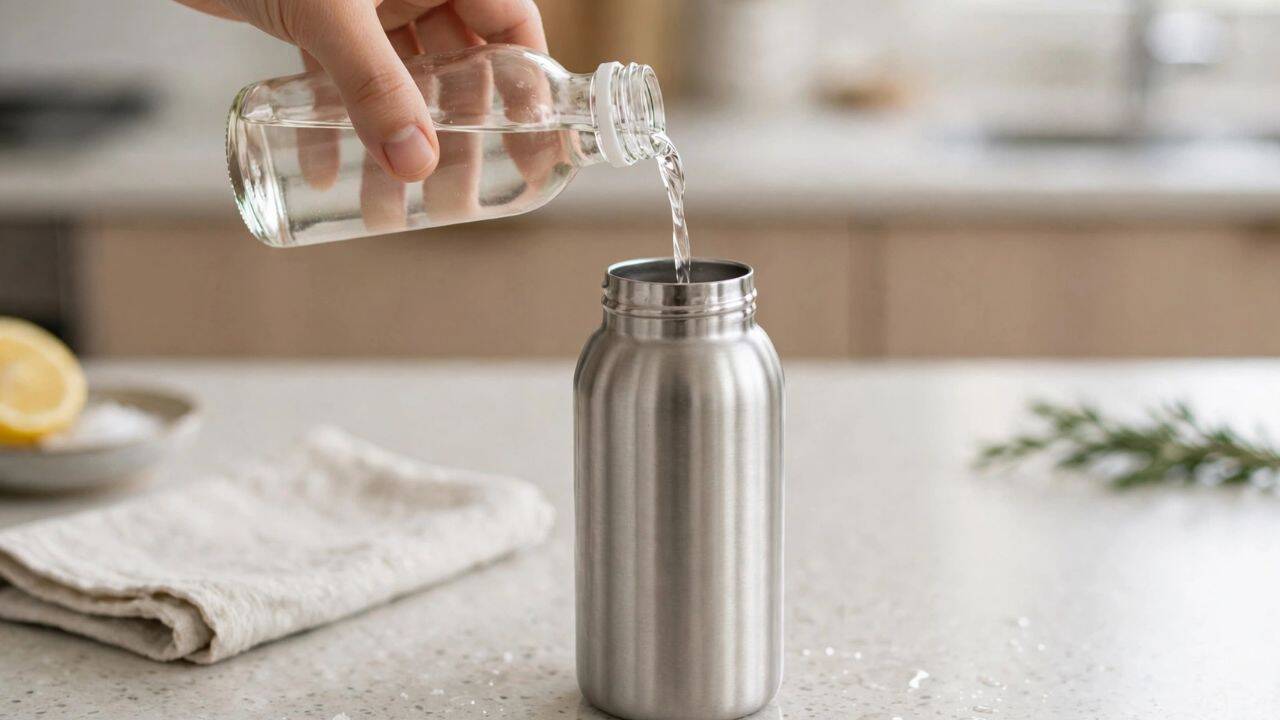
White vinegar is another useful option when ordinary washing does not remove a stubborn smell. Fill the bottle with equal parts of white vinegar and warm water. Leave it for around 15 to 30 minutes. Then scrub the inside with a bottle brush and rinse it thoroughly.Do not leave the bottle with the smell of vinegar after cleaning. Rinse it several times with fresh water. The aim is to remove the residue that is causing the odour rather than replace one smell with another.
PC: AI Generated
5. Keep the lid off until every part is completely dry
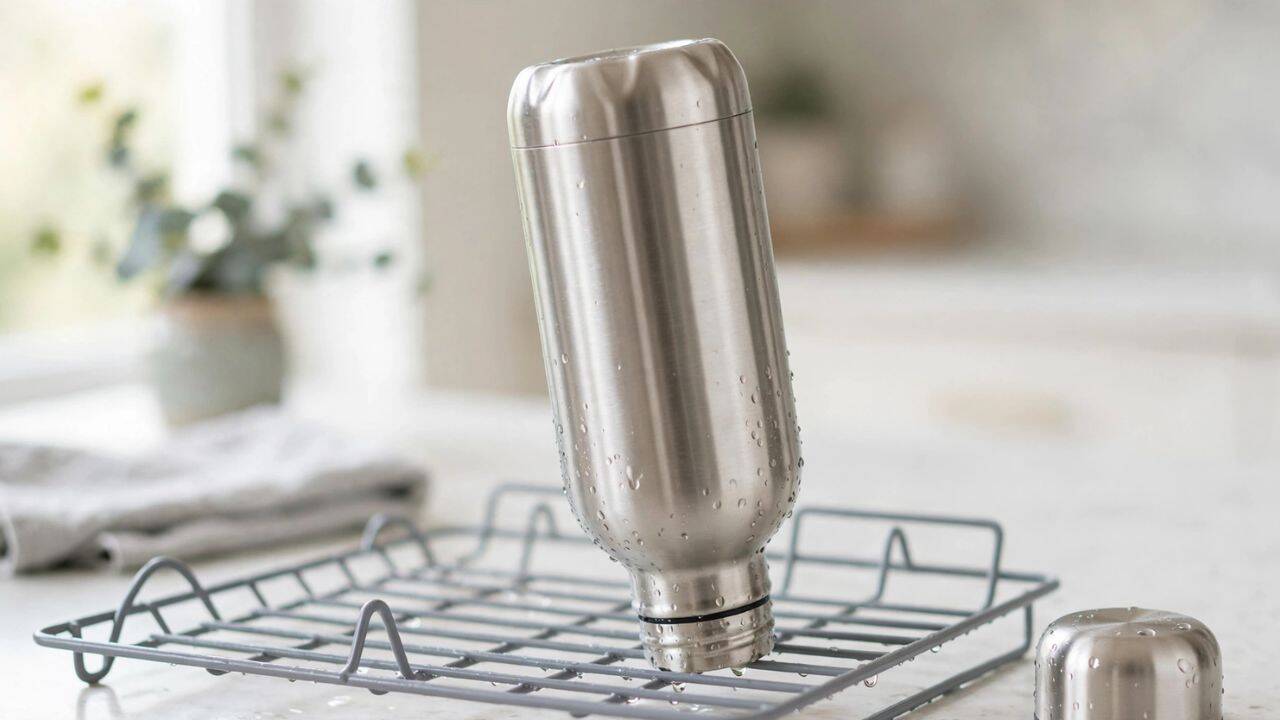
A clean bottle can start smelling stale if it is closed while being wet. After washing, leave the bottle upside down with the lid removed. Give the lid, seal, and any straw time to dry separately.Do not put everything back together simply because the outside seems dry. Moisture can remain inside the threads and under the seal.Placing the bottle open allows air to circulate. It also prevents the small amount of trapped moisture that can make a clean bottle smell unpleasant.
PC: AI Generated
What to avoid when trying to keep stainless steel bottles odourless
Do not rely on a quick rinse
A rinse is useful when rinsing is done on a regular basis. Water may remove liquid, but it will not remove the residue left by coffee, tea or other drinks. If the bottle is used every day, then wash it properly after use.
Do not leave the bottle closed while it is wet
A damp bottle with the lid tightly closed has a lot of moisture. Keep the bottle open while it dries. Store the lid separately if necessary until both parts are completely dry.
Avoid steel wool and abrasive scrubbers
A stainless steel bottle does not need aggressive scrubbing. Steel wool and abrasive cleaning pads can scratch or dull the surface.Use a bottle brush with soft or non-abrasive bristles instead. It can reach the bottom and sides without being unnecessarily harsh on the steel.
Do not use bleach or chlorine-based cleaners
Bleach is not a sensible solution for a smelly stainless steel bottle. Bottle-care guidance warns against chlorine-based cleaners because they can damage stainless steel and other components.Use mild washing-up liquid for routine cleaning. Use baking soda or white vinegar when a deeper clean is needed.
How often should you clean a stainless steel bottle
For a bottle used every day, a proper wash after each use is the best routine. This is especially important when it has held anything other than plain water. A deeper clean does not need to be done every day. Use baking soda or white vinegar when an odour develops or when regular washing is no longer enough.The lid and its removable parts also require regular attention because they are harder to clean than the smooth steel surface.