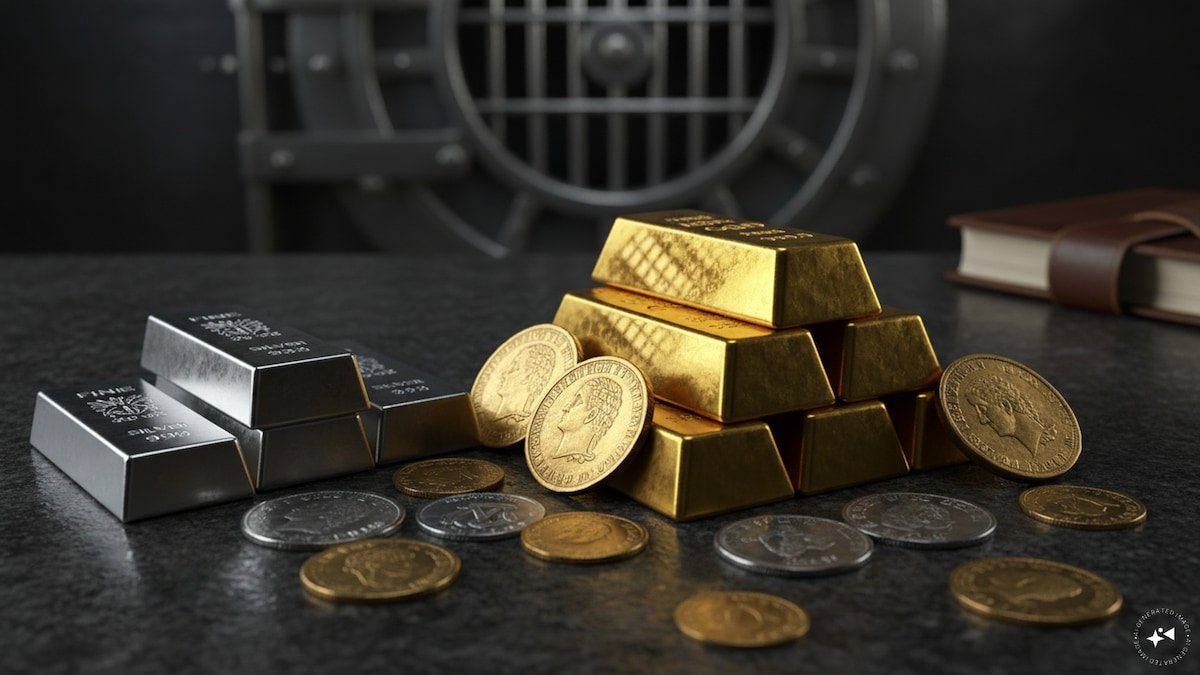
On the COMEX, gold futures were down 0.91% at $4,488.60 an ounce, while silver was trading 0.83% lower at $66.44 an ounce, according to the latest available prices.
Gold had already come under pressure on Friday (August 28), when it fell 3.2% as US Treasury yields jumped following comments from Federal Reserve Chair Kevin Warsh that kept investors focused on inflation risks.
Why are gold and silver falling?
The immediate pressure on precious metals is coming from higher oil prices and elevated bond yields.
Renewed fighting between the United States and Iran has pushed crude prices higher. Brent futures climbed 1.4% to $89.38 a barrel, while US crude rose 1.3% to $84.50 a barrel.
Higher oil prices can add to inflationary pressures. That, in turn, could make the Federal Reserve less willing to cut interest rates or more willing to keep rates higher for longer.
Markets have consequently increased the probability of a September US rate hike to around 57%, according to the Reuters report.
Higher Treasury yields raise the opportunity cost of holding gold and silver because investors can earn interest from US government securities. This typically puts pressure on non-yielding assets such as precious metals.
The dollar’s strength can also weigh on gold and silver because both are priced globally in US dollars, making them relatively more expensive for buyers holding other currencies.
What is the outlook for gold and silver?
Despite the near-term pressure, the medium-term outlook remains divided.
In its latest report, Monarch PMS expects gold to trade between $4,300 and $4,700 an ounce and silver between $70 and $85 an ounce by the end of 2026 in its base case. It assigns a 55% probability to this scenario, assuming the Fed keeps rates unchanged through September, energy prices normalise and real yields remain broadly stable.
Its bull case, carrying a 25% probability, sees gold reaching $5,000-$5,600 an ounce and silver $95-$120 an ounce by year-end. This scenario assumes weaker labour-market data leads to Fed easing, real yields decline and investment demand for precious metals strengthens.
The bear case, with a 20% probability, puts gold at $3,400-$3,900 an ounce and silver at $45-$55 an ounce. This could materialise if the Fed raises rates in September, oil prices fall further and weaker demand adds to disinflationary pressures.
Silver has another support factor
Silver’s outlook also gets support from its physical supply-demand balance. Monarch expects the silver market to remain in deficit for a sixth consecutive year, while mine supply has remained broadly flat for about a decade.
The firm estimates that 762 million ounces have been drawn from above-ground stocks since 2021. It also points to the relatively low level of registered physical inventory on COMEX compared with paper claims as a factor that could amplify price moves if physical demand rises.
For investors, the key variables to watch in the near term are US jobs data, inflation figures, Treasury yields, oil prices and the Federal Reserve’s September rate decision. These factors are likely to determine whether the recent correction in gold and silver deepens or gives way to another leg of the rally.
-With Reuters inputs