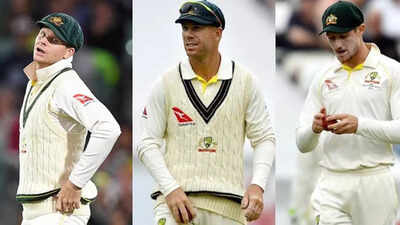
Eight years after the Sandpaper Gate scandal shook Australian cricket, former South Africa captain Faf du Plessis has offered a different perspective on one of the most controversial episodes in the sport.Cameron Bancroft was caught on camera using sandpaper to alter the ball during the 2018 Cape Town Test against South Africa, setting off a scandal that engulfed the Australian team. Steve Smith and David Warner were also punished, with all three players losing their leadership positions or facing lengthy suspensions.But du Plessis believes Bancroft, in particular, was subjected to an unnecessarily harsh media trial. Speaking to former South Africa pacer Vernon Philander on the ‘Beyond the Boundary’ podcast, he said his immediate reaction was sympathy for the young Australian batter.“Bancroft, and honestly, my first instincts with him were, I felt sorry for the guy. When I saw him, first of all, he did that, and I was like, ‘Shame.’ He doesn’t know what to do. He doesn’t know how to get the ball to reverse swing, because taking a piece of sandpaper out of your pocket with cameras, it’s not the most clever thing to do,” Faf said.The incident quickly escalated beyond the field. Du Plessis recalled how the South African team waited for Australia’s press conference following the day’s play, only to see the situation become even more explosive after the Australian team’s statement.“Then it was that whole incident. I mean, we were sitting after the day’s play. And we were like, the team is taking like an hour before the press conference has to start. So we’re like, why are they taking so long? What are they doing? And then they issued that statement. And that statement was just like putting blitz under a fire and just going there. And they were saying, no one knows about it. The captain had no idea. The coach had no idea. And everyone was just like, well, hang on, what’s going on here? Everyone knows what goes on in a dressing room,” he added.
Du Plessis questions Australia’s response
The scandal eventually saw Smith and Warner handed 12-month bans, while Bancroft was suspended for nine months. Smith and Warner were also removed from their leadership positions.Du Plessis believes Cricket Australia made the situation considerably bigger by allowing outside pressure, including political intervention, to influence its response.“So I think it was more the way that they handled that that caused a lot of noise. And then it went back to Australia, where the Australian Prime Minister got involved. The ex-cricketers were smashing the team about how you can do that? And we were sitting there going, come on, guys. It’s not like you guys got a first to do it. You never did it. Like, don’t be glasshouse,” said Faf.He also recalled reaching out to Smith during the fallout because he expected the punishment to last weeks or perhaps a month, rather than an entire year.“Everyone has done it at some stage in their career. Warner, Smith and Bancroft were the three guys who were actually caught. I felt the right thing to do was to send Steve Smith a message and say, Listen, I know you guys are trying to do the right thing. You’re going to go through some crap over the next week. I thought it would be like a week or a month. But it ended up being a year. I was just like, I’m sorry you’re going through this. You shouldn’t take the brunt of this. It’s a thing that, unfortunately, should fall on the whole team. But yeah, I felt for Bancroft. I felt sorry for him because he just didn’t know how to do it. And Steve Smith for trying to do the right thing to be the captain and say, it’s my show,” he added.
Faf says bans were unnecessary
Du Plessis went further, arguing that the players should not have been removed from international cricket for such long periods.In his view, the International Cricket Council should have handled the disciplinary side of the incident, while Cricket Australia could have imposed financial penalties instead of lengthy bans.“I think they could have handled that a little bit better. Cricket Australia had other ideas. And they made that thing become a very big thing. Just let the ICC deal with it. I think when you let politics and stuff come into sport, it never ends well. And that’s the case with the Prime Minister’s politics and everyone putting pressure on them. And they’re feeling like they have to act. They have to act to show that they’re doing something. I think that becomes a dangerous precedent,” said Faf.Du Plessis suggested that the punishment could instead have been limited to match-fee deductions, allowing the players to continue their careers without missing an entire year.“I think if they took it on the chin on that night and said, Cameron would have said, I’m sorry, I made it a bad thing. I’m young in international cricket, and I’m sorry. Which he obviously did. But I think he would have gotten a 50 per cent match fee from the ICC. Steve Smith would have played the next Test match. David Warner, they would have played the whole rest of the year. But what ended up happening is they missed a year of cricket,” he added.For du Plessis, the Sandpaper Gate scandal was therefore not only about what happened on the field, but also about how the aftermath was handled. He believes the punishment, political pressure and public reaction turned an already serious incident into a much bigger crisis for Smith, Warner and Bancroft.