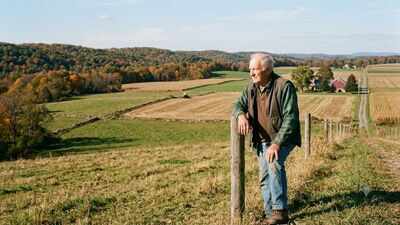
At 86, Mervin Raudabaugh had a decision to make over 261 acres of Pennsylvania farmland he had spent decades working. The land had caught the attention of data-centre developers, who reportedly put forward offers exceeding $15 million, including one estimate of about $60,000 an acre. On paper, it was the kind of figure that could have changed the future of the property overnight. Raudabaugh chose a different path. Reportedly, rather than selling the farms for development, he accepted roughly $1.9 million through a conservation agreement that paid him to give up the right to develop the land. He kept ownership, and the fields could continue to be farmed.The deal, completed in 2025, placed permanent restrictions on the property, meaning the decision will remain with the land even after it passes to future owners.
A Pennsylvania farmer received a $15.7 million offer for his farmland
The larger number attached to Raudabaugh’s land comes from reported approaches by data-centre interests. Lancaster Farming, in an account republished by WeConservePA, reported that he had received offers exceeding $15 million, including a figure of about $60,000 an acre.At 261 acres, that works out at roughly $15.66 million. Rounded, it is the $15.7 million figure that has circulated alongside the story. It is worth keeping the distinction clear, though. The developer figure was an offer reported by the landowner, not the recorded price of a completed property sale. The preservation payment, by contrast, was an actual transaction.A developer was interested in the possibility of changing the land’s use. The preservation programme paid Raudabaugh to give up that possibility while allowing him to retain the farms themselves.
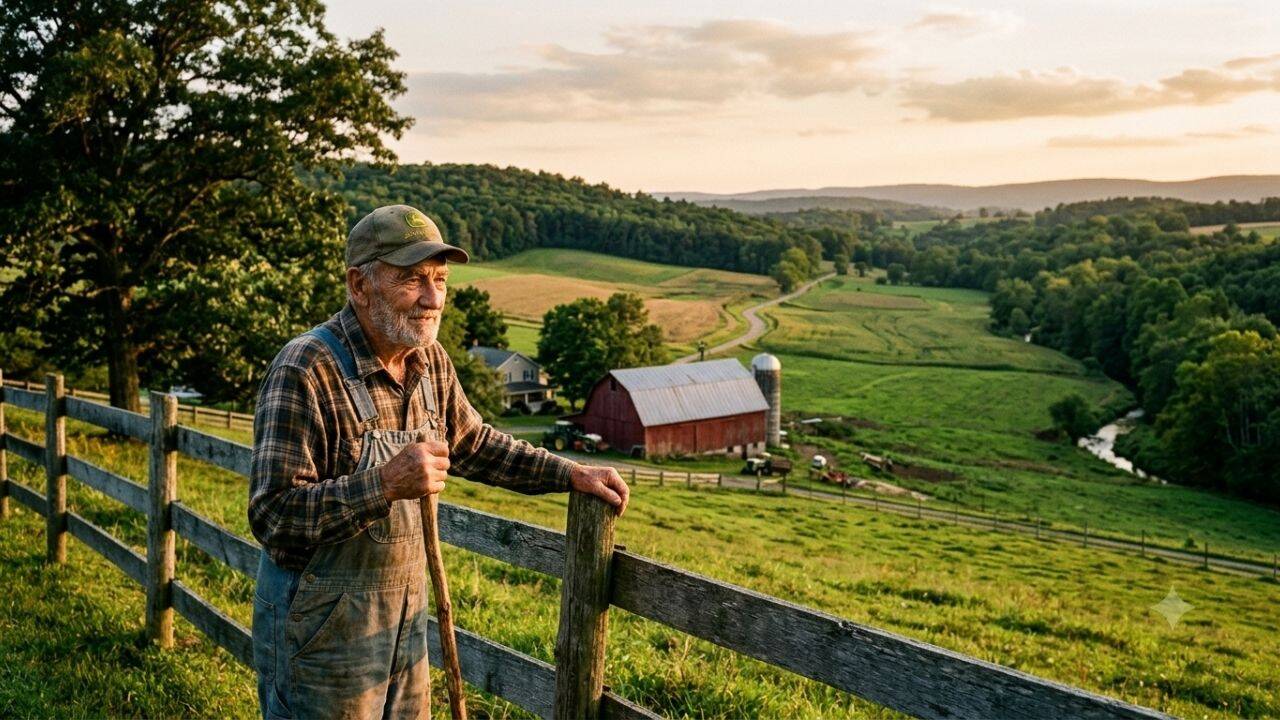
Raudabaugh kept his 261 acres after selling the right to develop them
The preservation deal did not mean that Raudabaugh handed over 261 acres and received $1.9 million in return. Ownership remained with him.The payment was for a conservation easement, sometimes described in this case as the sale of development rights. That arrangement removes specified development options from a property while leaving the underlying land with its owner. Farming can continue within the conditions of the easement, and the property can still be inherited or sold.That makes the arithmetic less straightforward than simply subtracting $1.9 million from $15.7 million.A property is made up of a collection of rights. A conventional sale would transfer those rights to the purchaser. An easement separates one part of that package from the rest. In this case, the development potential was the part Raudabaugh agreed to surrender, while agricultural ownership remained with him.The preservation payment amounted to roughly $7,200 an acre. The reported developer figure was around $60,000 an acre. On paper, the gap is striking. In practice, the transactions were valuing different futures for the same ground.
What made the 261 acres valuable to both farmers and developers
According to Suburban Serenity Urban Proximity, Raudabaugh’s connection to the properties stretches back decades. He spent 51 years milking cows and later raised beef cattle, continuing to grow corn and soybeans. Farming was not simply an existing use of the land; it had been the basis of his working life.The two properties are described by the Lancaster Farmland Trust as roughly 102 and 160 acres. The rounded figures total 262 acres, although the preservation transaction itself is reported as covering 261 acres.Both farms produce cash crops. One contains about 1,189 feet of stream, while the trust also points to the role of the unpaved agricultural ground in allowing rainwater to enter the soil instead of moving quickly into drains and waterways.Their location also added another layer to the equation. The farms have road frontage, lie close to Interstate 81 and sit beside other substantial parcels. Those characteristics are useful for agriculture, but they can be even more valuable to developers trying to put together a large site.
What the preservation programme actually bought
Silver Spring Township’s farmland preservation scheme was created after voters approved a referendum in 2013. Part of the township’s earned-income tax was set aside for protecting farmland, forests and open space.The programme is not simply a public purchase of fields. It pays landowners for conservation easements, with Lancaster Farmland Trust administering the scheme and holding and enforcing the easements. The reported average cost to households has been around $120 a year.Silver Spring newsletter reveals, for Raudabaugh’s farms, the township offered the appraised value of the easement together with a further incentive of $2,500 per acre. That was nowhere close to the reported amount a data-centre developer was prepared to offer for the land itself. It did, however, provide a financial return for choosing preservation rather than development.The two farms were officially preserved on 30 December 2025. A Silver Spring Township newsletter said the addition expanded an existing protected block that included three farms already under protection, Stony Ridge Park and land associated with the Appalachian Trail.By that point, the township programme had protected more than 1,384 acres across 23 properties since 2014.
What Raudabaugh’s decision means for future owners
A conservation easement is recorded with the deed and remains attached to the property when it changes hands. If Raudabaugh eventually sells or passes the farms to someone else, the restrictions do not disappear with the change of ownership. The trust can monitor the land and enforce the agreement.The farms are not public parks. They remain privately owned and can continue to be worked. Agricultural buildings and activities can remain possible where the easement allows them, and the precise exceptions depend on the recorded agreement.What has been removed is the ordinary ability to turn the property into a commercial, industrial or residential development site of the kind that attracted the reported data-centre interest in the first place.
Why the location appealed to data-centre developers
A large data centre needs considerably more than a building plot. Operators look for electricity connections, fibre infrastructure, roads, cooling capacity and enough room for construction and expansion. Bringing several neighbouring parcels together can make a rural location particularly attractive.A farm close to major transport routes and utility infrastructure can therefore have two very different values. Its agricultural worth may be measured through crops, livestock and the income that the soil can generate. A developer can instead be looking at what the same acres could support after a change in land use.The Raudabaugh properties sit within that wider shift. Demand for computing infrastructure has created interest in large areas of land that, until relatively recently, might have been considered primarily through their agricultural use.
What was actually being bought for $1.9 million
The preservation transaction was not a simple statewide purchase. Cumberland County records indicate that the two farms had initially been considered for a county-township partnership.Raudabaugh ultimately proceeded through Silver Spring Township alone because of concerns over the language of the county and state easements. The wording of the legal agreement was therefore part of the decision, rather than an administrative detail added after the fact.That is easy to overlook when the story is reduced to two headline figures. The $15.7 million figure describes what the land might have been worth to a particular type of buyer. The $1.9 million figure describes what was paid to remove a particular set of development rights while keeping the property in private ownership. Neither figure represents the full economic value of the land by itself.
A different way to protect farmland
Conservation easements occupy a middle ground between buying land outright and leaving development entirely unrestricted.For public programmes, they can cost less than purchasing every acre they want to protect. The landowner receives compensation and retains ownership, while the public interest in keeping the property undeveloped is secured through a legal restriction.