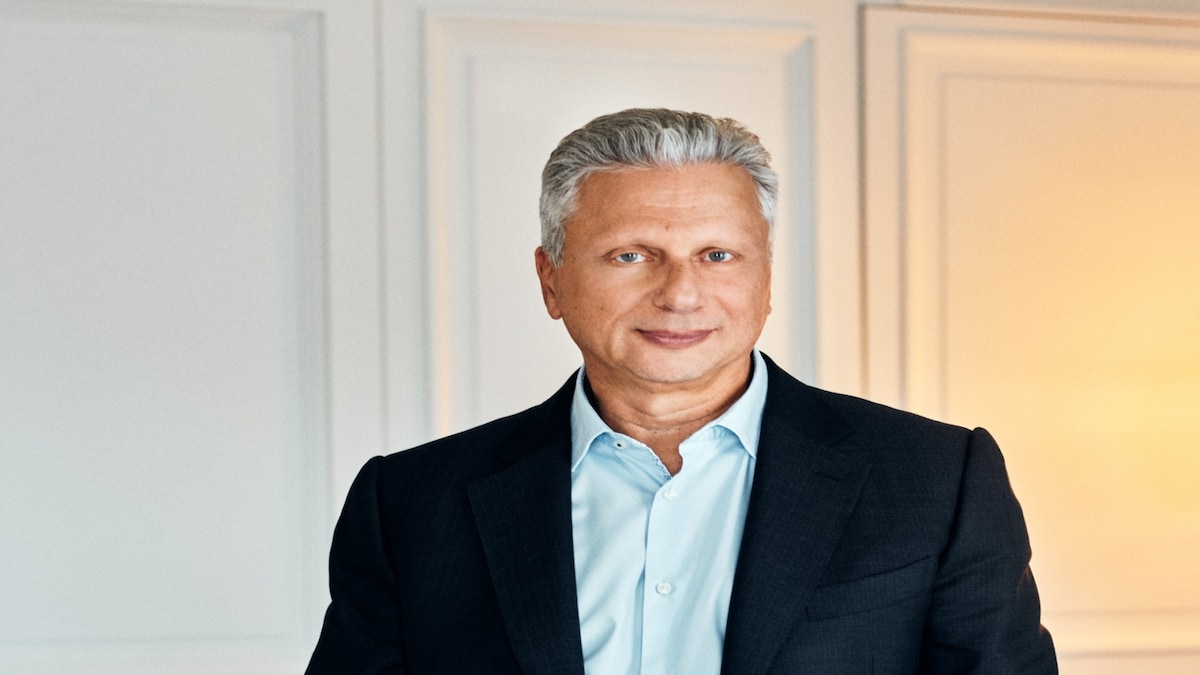
“I don’t think we are yet out of that story. I still think there are still very mixed views in the investor community in terms of what’s going to happen,” Ezzat told CNBC-TV18 in an exclusive interview.
The uncertainty comes even as IT services stocks have recovered, raising the question of whether the rebound represents a lasting re-rating of the sector or merely a tactical bounce.
At the heart of the debate is a simple concern: if AI allows companies to get the same technology work done with fewer people, will they still need to spend as much on IT services companies?
Some investors worry AI agents could replace knowledge workers, sharply improve productivity and eventually allow clients to perform more technology work themselves.
Ezzat thinks that view underestimates the scale of the transformation required.
AI isn’t just about replacing workers with agents
“This is a fundamental transformation of companies,” Ezzat said.
Deploying AI at scale will require companies to change not just their technology, but also their processes, organisational structures, skills, performance measures, culture and, in some cases, their business models, he said.
That transformation, Ezzat argues, creates a large new pool of work for technology-services companies even as AI makes some existing work cheaper to deliver.
He estimates the new AI-related market could be worth roughly $400 billion to $500 billion over the coming years and potentially grow further as the productivity-driven deflation affecting traditional IT services begins to ease.
Without that new opportunity, Ezzat believes the industry’s growth would be broadly flat.
With it, he expects IT services to grow around 4% to 5% over the next three to four years, followed by faster growth thereafter.
Capgemini raises 2026 outlook
Capgemini’s own business has strengthened.
The company raised its full-year 2026 revenue growth forecast to 8.5%-9%, from an earlier range of 6.5%-8.5%.
Revenue reached €12.1 billion in the first half of the year, with constant-currency growth of 11.3%.
Ezzat cautioned, however, against interpreting Capgemini’s stronger outlook as evidence that the uncertainty hanging over the broader IT services industry has disappeared.
The fundamental investor debate — whether AI ultimately destroys more traditional IT work than the new work it creates — remains unresolved.
How much of Capgemini’s business is actually AI?
Capgemini is also trying to give investors a clearer answer to another question: how much money is it actually making from AI?
The company previously disclosed AI-related bookings but stopped reporting the figure because it lacked a sufficiently clear definition of what should count as AI work, Ezzat said.
That distinction is becoming harder as AI gets embedded into ordinary technology projects. A project may involve AI without being an entirely separate “AI project.”
Capgemini is now working on a more consistent definition and could begin disclosing AI-related numbers next year based on the value pools it has identified as driving its transition.
For investors, that disclosure could eventually provide a clearer way to judge the central question hanging over the sector: whether AI is merely making the old IT services business smaller, or creating enough new work to more than replace what it takes away.