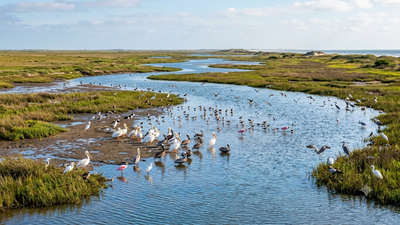
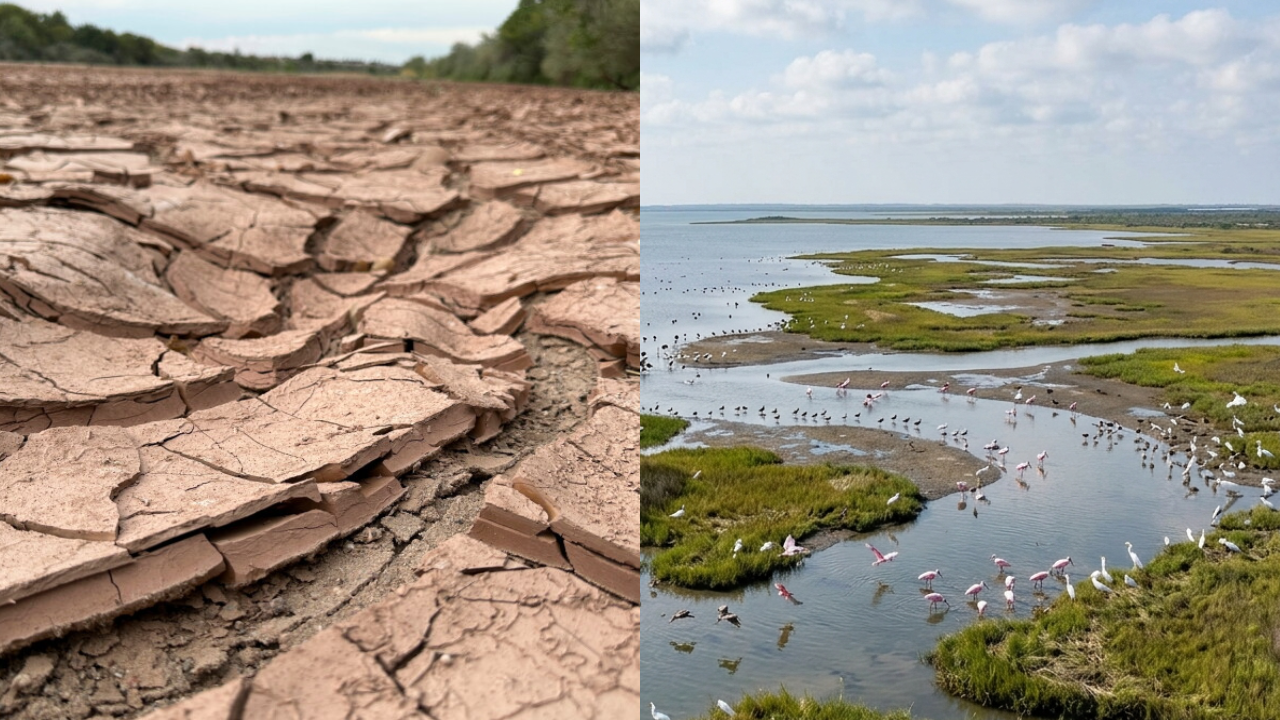
For decades, a large stretch of coastal Texas sat dry where water had once moved with the tides. Bahia Grande, a wetland within the Laguna Atascosa National Wildlife Refuge, had once supported fish, shellfish, waterfowl and other birds across its coastal basins. But changes to the pathways that carried tidal water into the area gradually cut the wetlands off from that natural flow. The basins dried out, leaving behind exposed ground and dust that affected nearby communities for more than 70 years. The landscape remained recognisable as a former wetland, but much of the ecological function associated with regular tidal flooding had been lost.According to the Executive Office of the President of the United States, in 2006, conservation work restored the connection to the tides. Water began moving through the basins again, and wildlife quickly returned. Thousands of shorebirds, egrets, herons and brown pelicans were seen using the newly flooded habitat, marking a significant change in the long-dry landscape.
How human activity turned Bahia Grande into dry basins
Bahia Grande, also known as Grand Bay, lies within the Laguna Atascosa National Wildlife Refuge in south Texas. Before the tidal system was disrupted, the wetlands were highly productive areas supporting a mixture of aquatic and bird life.Fish and shellfish used the wetland environment, while waterbirds and waterfowl relied on it for feeding and habitat. Its position along the coast meant that the movement of seawater was part of how the landscape functioned.That changed when human activity altered the pathways through which tides reached the wetlands. With the tidal connection disrupted, the basins gradually lost the regular influx of water that had helped sustain them.The result was a landscape of dry, exposed ground. The federal wetlands report described the former wetland basins as dry and sun-baked, with dust affecting communities around the site for more than seven decades.
The lost tides left behind dry basins and fading habitat
The deterioration was not a short-term event. The altered tidal pathways left Bahia Grande disconnected from the coastal processes that had previously brought water into the wetlands.For local wildlife, the loss of wetland conditions meant the disappearance or reduction of habitat that had once supported a wide range of species. For people living nearby, there was another visible consequence: dust from the exposed basins became a persistent problem.By the time restoration efforts were under way, the landscape had spent decades in this altered state. The old wetland was still there in the physical shape of the basins, but the water regime that gave it much of its ecological value had been interrupted.That distinction mattered. Restoring the area did not simply mean planting vegetation or introducing wildlife. The work centred on bringing back the water connection that had been lost.
A 10,000-acre restoration effort took shape at Bahia Grande
Reportedly, the restoration involved the US Fish and Wildlife Service, the Natural Resources Conservation Service, Ocean Trust and more than 60 public and private partners.The project focused on the Bahia Grande wetlands, with a target of restoring about 10,000 acres of tidal habitat. Rather than treating the wetland as an isolated piece of land, the effort addressed its relationship with the surrounding coastal water system.This was part of a wider push to restore wetlands across the United States. In 2004, the administration of President George W. Bush set a national goal of restoring or creating, improving, or protecting at least three million wetland acres between Earth Day 2004 and 2009.Bahia Grande became one of the examples highlighted in the federal government’s 2007 report on progress towards that target.
Thousands of birds returned after the basins flooded again in 2006
A major change came in 2006, when tidal connections were restored and water was able to flood the Bahia Grande basins again.The response from wildlife was quick. Thousands of birds moved into the newly flooded area, including shorebirds, egrets, herons and brown pelicans. The return of fish also provided food in the re-established aquatic habitat.It was an early indication that the landscape had retained some of the capacity to function as a wetland once the basic hydrological problem was addressed.Fish and birds found new opportunities in the restored watersThe renewed flooding brought back conditions that had been missing for decades. Fish returned to the inundated areas, followed by birds taking advantage of the feeding opportunities. Shorebirds were among the species seen using the site, while larger wading and coastal birds such as egrets, herons and brown pelicans also appeared in substantial numbers.The return of these animals is significant because wetlands perform several functions at once. Shallow water can provide feeding grounds for birds, while aquatic areas can support fish and other organisms. Wetlands also form a transition between coastal waters and land, creating habitat that cannot be replaced by either environment alone.At Bahia Grande, the first visible signs of recovery came from this renewed use by wildlife.
Wider wetland restoration effort
The Texas project was one part of a much larger network of wetland conservation work being carried out across the country.Between Earth Day 2004 and 2007, federal agencies reported about 888,000 acres of wetlands restored or created, with another 1.029 million acres improved and 852,000 acres protected. The figures covered programmes involving federal agencies, states, private landowners and conservation organisations.Much of the restoration work involved former wetlands that had been drained or otherwise converted. In those cases, restoring the water regime could allow existing soils and biological material to support the return of wetland conditions.Bahia Grande fitted into that broader approach. Its history showed what could happen when a wetland’s physical connection to water was interrupted for decades and then restored.
A landscape that had not completely lost its ecological role
The Bahia Grande project also illustrates why wetland restoration can involve more than preserving whatever remains. The federal report described wetlands as providing habitat for fish and wildlife while also helping connect aquatic and terrestrial environments.Once water returned to the Texas basins, animals were able to make use of the habitat again. The large numbers of birds observed after flooding provided a visible measure of that change.There was also a practical benefit for communities around the site. The dry basins had been associated with decades of dust. Reintroducing water changed the physical condition of the exposed landscape rather than simply treating the dust as a separate problem.The restoration did not erase the area’s long history of disturbance. But by 2006, a tidal wetland that had spent more than 70 years largely cut off from its former water supply was functioning as a wet habitat again.