SBI’s Stree Shakti Yojana, or Women’s Wallet, offers financial support to women entrepreneurs for business growth. It includes interest concessions an…
 1/9
1/9The State Bank of India (SBI)’s Stree Shakti Yojana, also referred to as Women’s Wallet, is designed to help women start or grow their own businesses. The scheme provides financial support to women entrepreneurs across manufacturing, trading and service-related businesses. SBI also has specialised schemes such as Annapurna for food-related businesses and Shringar for beauty parlours. Women borrowers can also get an interest rate concession on loans of up to ₹2 crore. Here’s everything you need to know about the scheme. (Image: AI)
 2/9
2/91. Women looking to launch a new venture or expand an existing business can consider SBI’s Stree Shakti Yojana for financial support. The scheme is aimed at making business loans more accessible to women entrepreneurs. It covers businesses across sectors, including manufacturing, trading and services.(Image: AI)
 3/9
3/92. Depending on the business requirement, women can seek loans of up to ₹25 crore (approximately $25 million) under the scheme. The financing can cover both working capital requirements and term loans. However, the final loan amount is decided by SBI after assessing the business, its financial position and the applicant’s eligibility. For loans above ₹2 crore (approximately $2 million), the applicable interest rate for larger businesses may be linked to the borrower’s credit rating.(Image: AI)
 4/9
4/93. One of the key benefits available under the scheme is an interest rate concession. Women entrepreneurs can get an interest relief of up to 0.50% on loans of up to ₹2 crore. This can help lower the borrowing cost for eligible businesses. The actual interest rate and other loan conditions, however, will be governed by SBI’s applicable rules. Applicants should check the interest rate, charges and other terms with the bank before taking the loan. (Image AI)
 5/9
5/94. SBI’s Stree Shakti initiative includes different financing options based on the nature of a woman’s business. For instance, the Annapurna scheme caters to businesses such as catering, restaurants and food-related ventures. The Shringar scheme is meant for businesses such as beauty parlours. These options provide financial assistance according to the requirements of different businesses.(Image: shutterstock)
 6/9
6/95. The repayment period depends on the nature and size of the business as well as the type of loan taken. Term loans may have a repayment period of 7 to 10 years, while working capital limits are decided according to the business’s cash flow and financial requirements. The bank may also require margin money of 15% to 25%, depending on the loan amount. Applicants should therefore assess their repayment capacity before applying.(Image: AI)
 7/9
7/96. Women entrepreneurs may also be eligible for credit guarantee support through CGTMSE under the scheme. This can reduce the need for collateral in certain cases. As per the available information, collateral may be waived for some loans of up to ₹1 crore. However, this is subject to eligibility and the applicable scheme conditions, and is not guaranteed for every borrower. SBI will determine the requirement based on the applicant and the loan.(Image: shutterstock)
 8/9
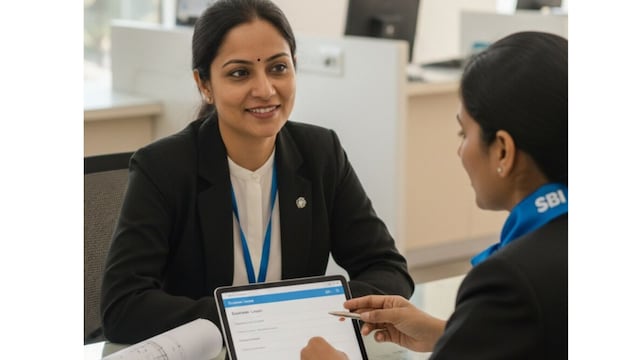
8/97. Women can submit their loan applications either through the SBI website or by visiting an SBI branch. The bank also has dedicated assistance desks for women at branches. Other facilities associated with the initiative include home application services, business guidance, low processing charges and repayment options.(Image: AI)
 9/9
9/98. Applicants may have to submit several documents while applying. These can include KYC documents such as Aadhaar, PAN or Voter ID, along with proof of residence and a business plan or project report. Women running existing businesses may also be required to provide financial records for the previous three years, income tax returns and bank statements covering the last six months.(Image: shutterstock)