He continues to favour names such as Eternal, ICICI Bank and Mahindra and Mahindra, while keeping InterGlobe Aviation (IndiGo) on his radar, and is looking at FSN E-Commerce Ventures (Nykaa), Bharti Airtel, Titan Company and Maruti Suzuki India for potential opportunities.
Orton expects the US earnings growth story to remain intact despite higher crude prices and yields, and sees near-term risks around inflation and the Federal Reserve. He does not expect the Fed to hike rates at its upcoming meeting, saying the data is not strong enough to warrant a move.
This is an edited transcript of the interview.
Q: Let’s begin with the surge that we’ve seen in crude prices. It’s been building up for the last couple of months now. It was in July or June end that we were at $70 per barrel, and now almost at $100 per barrel. What exactly is the market pricing in? Because while the markets have been choppy, they haven’t really panicked or sold off when you look at global equities. So, what’s the setup?
A: It’s a great question because I’m surprised that the markets have been able to just look through a lot of the volatility we’re seeing in energy prices. I think what the markets are looking at is just a strong fundamental backdrop because we were at $120 earlier this year, and that didn’t derail the overall earnings growth story that we’ve seen, not just in the US but globally speaking.
I think we’re able to look through that a little bit because companies have already faced this sort of environment before. They’ve made the adjustments they need to make. You look even at economies like India, the 7.8% gross domestic product (GDP) growth number, despite all of the challenges with respect to energy, I think is a testament to the fact that economies, globally speaking, have largely been able to look through some of the damage that one would have expected to occur as a result of higher oil prices.
Q: The US equity market stays strong, the earnings growth in the US is intact despite the rise in crude prices and higher yields. You don’t see the earnings picture derailing in the US?
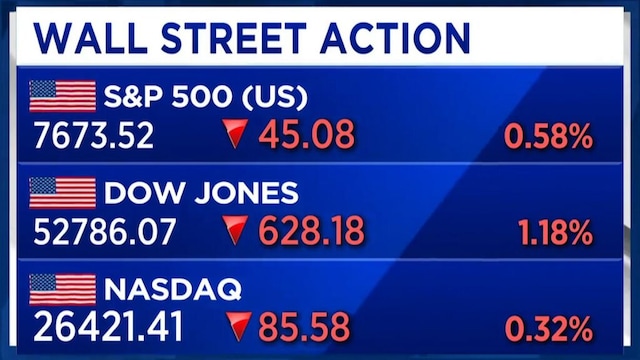
A: I don’t. I think there’s some potholes in the near term. When you look at what’s happening, especially in the US, we have an important inflation reading that we’re going to get on Friday. We have the next Federal Open Market Committee, (FOMC) meeting that’s coming up on September 16th, and there’s questions with respect to whether or not we are going to hike interest rates. The rise in interest rates, I think, is perhaps the biggest risk to overall markets in the short term.
But whether or not the US raises interest rates by 25 basis points, 50 basis points, that doesn’t change the fundamental perspective that the earnings growth narrative remains firmly in place. So, I’ve been encouraging clients, and in my portfolios, I’m buying dips. I think dips remain buyable as long as the earnings growth picture remains in place, and that’s not going to change based on one or two Fed moves.
Q: What are you factoring in, though, in terms of the Fed rate action? As of now, probability has moved up to around 60%. What if they don’t go the distance and don’t hike this time around? Commentary will be important, but what kind of a signal will it be sending out?
A: I don’t think that the Fed is going to move. I don’t think the data is strong enough to say that the Fed needs to hike, and I would also push back against the argument that when you have supply-driven inflation, moving interest rates by the Federal Reserve is actually going to do anything to address those challenges.
A lot of it’s coming from artificial intelligence (AI) capex. You look at the non-farm payrolls (NFP) last week we had in the US. You’re seeing wage growth continue to moderate. So, if the Fed doesn’t do anything, I think the market probably also won’t like that because I think there’s a lot of people who would rather just have this over with and done, because then you have to wait until December most likely is the next area where the Fed can move.
So, I think either way, there’s going to be uncertainty. But the good news is we’re going to be heading into another earnings season at the end of September, which I do expect to be strong.
Q: You said you’ll be using weakness to actually buy into the dips. From the India market perspective, you’ve been a bull. You’ve been cherry-picking your stocks. I think you’d like Bharti Airtel, some of the defence names, some of the new-age companies as well. What else is on your radar? Because we have gone in for a bit of a correction on the headline index, but individual stocks are doing a thing of their own.
A: That’s exactly right, and I think that’s the main message I give to clients in India is that if you’ve been able to pick your places properly in this market, you’ve done very well, despite the headline indices not doing so well.
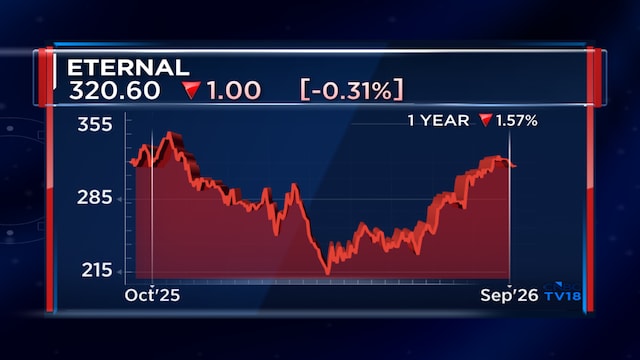
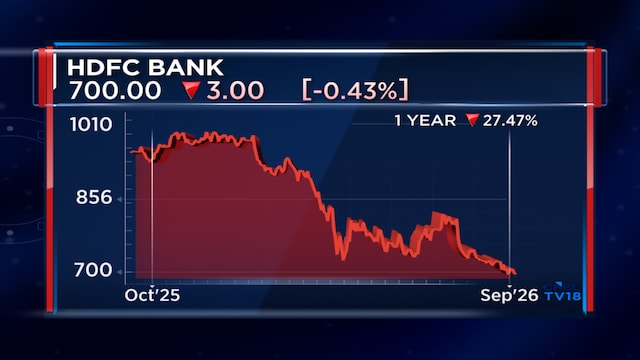
And I think that’s the challenge when you have markets where you look at the challenges that HDFC Bank has had. But when you look beneath the surface, names that I continue to like, Eternal, I think has really turned around strongly. They’re not facing as many margin pressures as some of the other quick commerce names, especially given that they’re catering to more affluent customers. I think that name on any weakness can be accumulated.
You look at ICICI Bank, that’s still another long-term favourite of mine. Similar with Mahindra & Mahindra (M&M), that’s pulled back over the past week or so. That looks very, very attractive as well.
And then you also look at names like IndiGo. The longer-term travel trajectory, I think, remains in place. I’ve been out of that name for a little while, but it’s certainly on my radar going forward.
Q: What about HDFC Bank in particular? If we can zoom in, I remember this was one of your top private sector holdings in the private banks. Are you losing confidence, patience, or…?
A: Yes, I lost confidence, but for me it’s not so much that the longer-term story there — it’s risk management. So, when I was holding ICICI Bank and HDFC Bank and you saw the dispersion with respect to performance, and I think just much stronger visibility with the margins, net interest income (NII) increases that you’re getting at ICICI, I’ve migrated most of my positioning there.
So, I don’t think long-term HDFC is out. It’s just, as an investor, you should lean into where the momentum is working and where management’s giving you very clear visibility.
Q: You’ve clearly brought down your holding in HDFC Bank right now?
A: Yes.
Q: Now that you’re here in Mumbai, are you planning to meet any other new companies to assess new opportunities beyond what we’ve discussed or you hold?
A: Yes, I am. I’m looking forward to a number of meetings over the next couple of days with management teams. And there’s a few new ones that are in there that I’m looking at.
Nykaa (FSN E-Commerce Ventures) is one name that I’m going to be looking at and exploring a little bit more deeply. I’m meeting with the management team of Bharti Airtel just to get more clarity going forward whether or not that’s a name that can be pushed or increased a little bit.
Titan Company as well is a name that’s been on my radar that I haven’t pulled the trigger on, but I think it’ll be interesting to get some more commentary.
And then also diversifying the auto trade, so meeting with Maruti Suzuki India to also see if maybe we can complement the M&M exposure in portfolios.
Q: The large cap versus mid-cap, small-cap — we’ve also seen some of the largest global funds now systematically cutting down exposure to the largest large caps and going down the market-cap curve. Capital International has done it, and many others have done it. They’re now buying into things which 10, 15 years back used to be the HDFCs and those kinds of names, but now it’s kind of broadening out. Is that what you’re seeing when you talk to your peers, who are foreign investors in India?
A: There’s certainly more interest. I think the challenge is also balancing liquidity, the ability to get access to some of these teams, but it makes sense because it’s not just unique to India.
Even in the US, small-cap equities have actually outperformed large-cap equities by a decent margin this year. And I think one of the key reasons, Prashant, is that they’re more leveraged to healthy domestic economies.
We just mentioned the GDP growth in India. Clearly, the consumer has remained in a decent place despite challenges, the economy continues to grow. So, if you have companies that are more leveraged to the underlying strength of the domestic economy, as opposed to having to manage challenges from a global perspective, it makes sense that you might start to see some inflection.
And they also have much better operating leverage as well with respect to being able to grow earnings and seeing that manifest in their overall income.
So, I think there’s a reason for it. It’s challenging from a foreign investor perspective to really ride that train too much, because again, you have to balance risk. You have to balance your ability to know exactly what’s happening with respect to the companies when you don’t have boots on the ground every day.
Watch the full conversation here

Q: NSE, any thoughts? We’re getting the initial public offering (IPO) perhaps is going to come and open for subscription end of next week. I don’t know if you already own shares or you’re looking to buy, any thoughts at all?
A: I don’t. I don’t participate in IPOs for the most part, especially in foreign markets, but I will be following it.
It’s an exciting opportunity. I think it’s emblematic of just the fact that the Indian markets continue to grow. So, I think that could be a name to look at going forward because, again, it’s a larger company. You’re going to know exactly where they stand.
And I think capital markets in India are only going to continue growing from here.
Catch all the latest updates from the stock market here