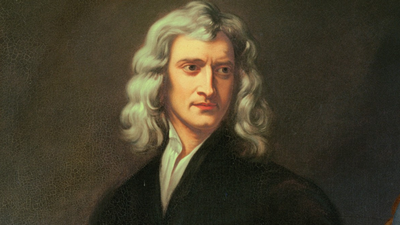
Isaac Newton’s quote captures a genuinely striking contrast between the predictability of nature and the real complexity of human behaviour. “I can calculate the motion of heavenly bodies, but not the madness of people,” he is said to have remarked. Newton devoted much of his life to genuinely understanding the physical laws governing the universe, and this particular line, according to legend, came from a genuinely real and rather painful moment in his own life. In 1720, Newton had invested in the South Sea Company, a British trading company whose share price rose dramatically that year before collapsing entirely in what became known as the South Sea Bubble. He had actually sold his own shares early, locking in a genuine profit, only to watch the price keep climbing afterwards. Regretting that early sale, he reinvested at a considerably higher price, and when the bubble genuinely burst months later, he reportedly lost around £20,000, worth roughly £20 million in today’s money.
Quote of the day by Isaac Newton
“I can calculate the motion of heavenly bodies, but not the madness of people”
Why this quote deserves an honest note
It is worth being genuinely upfront here. While Newton’s real financial disaster during the South Sea Bubble is thoroughly documented history, serious sources describing the episode, including the popular science book The Rules of Contagion, explicitly describe this exact quote as something Newton is said to have remarked “according to legend,” rather than a line with a confirmed letter or contemporary account behind it. The underlying story is genuinely real. The precise wording attributed to him has simply become part of how that story gets told over time, without a single document actually pinning down the exact sentence.
What does Newton’s quote genuinely mean
The quote compares two genuinely different kinds of uncertainty. “Heavenly bodies” refers to planets and other celestial objects whose motion can actually be described using mathematical law, and Newton’s own laws of motion and universal gravitation provided a genuine framework for explaining and predicting exactly that kind of physical movement. Human beings behave completely differently. People do not follow one simple mathematical formula, and their decisions are genuinely shaped by memory, emotion, belief and circumstance that an outside observer often cannot actually see. The word “madness” in the quote can be read as a genuinely humorous description of the seemingly irrational side of human behaviour, and Newton’s real point, whoever first wrote the sentence down, is that understanding physical law never automatically means understanding people.
Why this quote still genuinely matters today
Human behaviour remains genuinely difficult to predict despite enormous advances in psychology, economics and artificial intelligence. Businesses try to understand consumer behaviour, and economists build models to predict a market, yet people continue to genuinely surprise researchers and organisations all the same. One real reason is that human decisions are shaped by circumstance. A choice that looks genuinely irrational from the outside may make considerably more sense once someone’s actual fears or priorities are properly understood. Social media offers plenty of real examples of this too, with people sharing information without actually checking it, or making a purchase based purely on a trend that appeared only hours earlier.
Why people do not always act genuinely rationally
People often assume that having enough information should genuinely lead to a sensible decision. In reality, information is only one part of the actual process. Emotion can change how people genuinely evaluate risk, and fear can make a fairly small danger feel considerably larger than it actually is. Social influence matters too, since people often behave genuinely differently once they are surrounded by friends or an online community. Psychologists have identified plenty of genuine cognitive biases that affect judgement this way, including confirmation bias, where people tend to favour information that already supports what they believe, and loss aversion, where the pain of losing something can genuinely feel stronger than the pleasure of gaining something of similar value.
Do not assume people will always behave predictably
Even people we genuinely know well can make an unexpected choice. Past behaviour can offer a real clue, but it can never actually guarantee what someone will do next.
Understand emotion before judging a decision
A decision that looks genuinely irrational from the outside may actually have a real emotional explanation underneath it. Understanding the actual circumstances tends to provide a considerably clearer picture than judging the action alone.
Recognise your own irrational tendencies too
The quote is never only about other people. Everyone is genuinely capable of making an impulsive or contradictory decision, and recognising your own personal bias can make it considerably easier to pause before actually reacting.
Leave genuine room for uncertainty
A plan is genuinely useful, but not everything can actually be controlled. Other people’s decisions and a genuinely unexpected event can alter even the most carefully prepared plan.
Other memorable quotes by Isaac Newton
- “If I have seen further it is by standing on the shoulders of giants.”
- “I do not know what I may appear to the world, but to myself I seem to have been only like a boy playing on the sea-shore, and diverting myself in now and then finding a smoother pebble or a prettier shell than ordinary, whilst the great ocean of truth lay all undiscovered before me.”
- “Truth is ever to be found in simplicity, and not in the multiplicity and confusion of things.”
- “To every action there is always opposed an equal reaction.”
How to apply Newton’s quote in daily life
The most genuinely practical lesson from this quote may simply be accepting that people are complicated. At work, it helps not to assume everyone will genuinely respond to a situation the way you would yourself, since a colleague may reject an opportunity for a reason that is not actually obvious at first glance. In a personal relationship, the same principle can genuinely prevent unnecessary frustration, since people carry genuinely different fears and expectations into almost every decision they make. The quote can also encourage real self-awareness. Before an important decision, it helps to actually pause and ask whether the choice is genuinely based on evidence, or simply an immediate emotional reaction dressed up as one.
Why these words still inspire millions
Isaac Newton spent much of his real career searching for mathematical law that could genuinely explain the physical world, and his own financial disaster during the South Sea Bubble showed him something considerably harder to calculate. A planet may follow law precise enough to predict with remarkable accuracy. A human being carries emotion, memory and personal experience into almost every decision they actually make, which is rarely anywhere near as predictable as the motion of a celestial body. Whether or not Newton genuinely said this exact sentence himself, the underlying truth behind it, learned the hard way through his own real financial loss, offers a genuinely lighthearted reminder of something considerably more serious. Understanding the world around us may sometimes turn out to be genuinely easier than understanding ourselves.