
JPMorgan has maintained its “overweight” rating on L&T with a target price of ₹5,060 per share. This indicates an upside of 29.5% from current levels.
The brokerage met L&T’s management and it is during this interaction that the company highlighted that execution of projects in West Asia continues without any major disruptions and customers are by and large accommodating cost increases due to the impact of the conflict.
L&T said continues to focus on deepening its strong relationships with customers through this turbulent period, the brokerage reported.
During the interaction, L&T also said that public capex in India should pick up after a period of consolidation, while private corporate capex has picked up traction led by large order wins in the thermal power segment.
L&T has rolled out a strategic plan which envisages entry into new areas of data centres, green energy and electronic manufacturing and aims to double its defence revenues by 2031, while keeping a focus on return on equity, cash flows and shareholder returns intact, JPMorgan highlighted as some of the other takeaways during the management interaction.
According to JPMorgan’s note, while the conflict in West Asia is an overhang on the L&T stock, its business is being positioned for mid-teens growth with healthy return on equity in traditional and emerging areas.
It said L&T’s valuation is at less than 25 times its price-to-earnings ratio, which is attractive.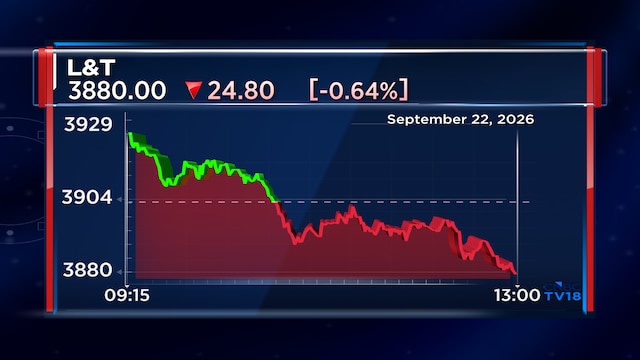
Post its first quarter earnings, L&T told CNBC-TV18 that the first quarter operating environment was volatile and geopolitical developments led to supply chain disruption.
Apart from JPMorgan, only two other brokerages have target prices of ₹5,000 and above for L&T — Jefferies and ICICI direct both have price targets of ₹5,000 apiece.
A total of 32 analysts have coverage on L&T. Of these, 26 have a “buy” rating, five have a “hold” rating and one has a “sell” rating.
Shares of L&T ended 0.7% lower on Tuesday at ₹3,877. The stock is down 6% so far this year.
Also Read: JPMorgan prefers largecap power utilities over expensive equipment suppliers